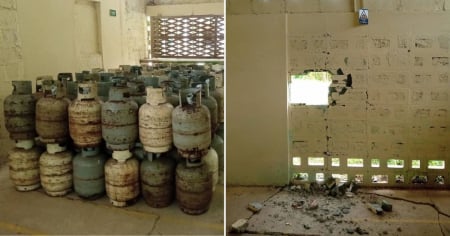
The sale of liquefied petroleum gas (LPG) has been suspended in almost all provinces of Cuba, as the inventory from the last ship that arrived in the island in May has been exhausted, confirmed Irenaldo Pérez Cardoso, the deputy director of Unión Cuba Petróleo, to Granma.
The distribution of LPG continued for more than 30 days, but currently, it will only be available when a new ship arrives, which is in national waters; however, its unloading depends on the country completing payment to the supplier, authorities acknowledged.
Official data indicates that the previous inventory covered 66% of sales in Havana, Artemisa, and Mayabeque, while in the rest of the country, the figures ranged from an average of 50% to 60%.
Meanwhile, the government assures that vital socioeconomic centers will not be left without supplies, as part of the limited national production of LPG from the Cienfuegos refinery and the Energas plant in Puerto Escondido will be allocated to maintain prioritized services.
This new crisis highlights Cuba's extreme dependence on the arrival of ships and the vulnerability of domestic gas supply, as it is not unusual for vessels to spend days without entering port due to delays in payments, a pattern that has repeated itself in recent years.
The regime attributes these limitations to a lack of funding and to the economic sanctions imposed by the United States, which it characterizes as part of a "multidimensional blockade."
This phenomenon is not new: for months and even years, Cuba has been facing periodic interruptions in domestic gas distribution, almost entirely dependent on the arrival of ships and the government's ability to make timely payments.
Every time supplies run out, the population is left facing long waits and uncertainty about when they will be able to cook with gas again.
Far from being resolved, the situation appears to be worsening in a country engulfed in a complete crisis, with an economy sinking under inflation, shortages of food and medicine, and increasing social discontent.
As of today, there is no clear solution in sight to overcome the extreme reliance on specific imports to ensure a basic service like liquid gas.
Frequently Asked Questions about the Liquefied Gas Crisis in Cuba
Why has Cuba suspended the sale of liquefied gas?
The sale of liquefied gas in Cuba has been suspended due to non-payment to international suppliers, which has prevented the unloading of ships carrying the fuel. This situation has left several provinces without supply, impacting thousands of households that rely on this resource for cooking.
How does the liquefied gas crisis affect the Cuban population?
The liquefied gas crisis severely affects the Cuban population, forcing many families to turn to alternative methods such as firewood or charcoal for cooking, which reflects a regression in living conditions and poses health risks. Furthermore, the lack of gas adds to the power outages and the scarcity of other basic products, increasing precariousness and social discontent.
What measures has the Cuban government taken in response to the lack of liquefied gas?
The Cuban government has attempted to manage the arrival of new tankers in order to resume the distribution of liquefied gas. It has also promised prioritized distribution for certain sectors of the population, although these measures have not effectively solved the shortage nor alleviated the frustration of the citizens.
What are the causes of the liquefied gas shortage in Cuba?
The shortage of liquefied gas in Cuba is due to financial issues that have made it difficult to pay international suppliers, as well as delays in importing the product. In addition, the shutdown of the Cienfuegos refinery and inadequate domestic production exacerbate the situation, leaving the population without regular access to this essential resource.
Filed under: