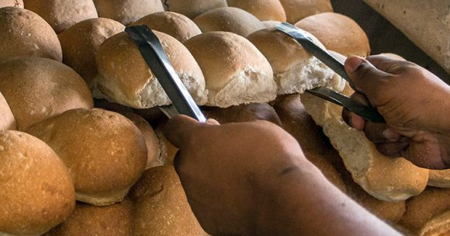
Starting this Friday, July 4th, the Food Production Company in Villa Clara will resume daily distribution of basic basket bread across the 13 municipalities in the area, confirmed its director, Odel Dueñas, after months of increasing tension due to instability in the delivery of this essential food item.
However, the promise comes with a host of conditions. The energy crisis affecting the country prevents the normal use of electric ovens, which means that a significant portion of the production will have to rely on traditional ovens.
Cited by the provincial radio station CMHW, Dueñas indicated that "organizational measures are being taken to use traditional ovens and ensure production in those places where the necessary conditions do not exist," a statement that suggests more uncertainty than certainty.
Quality is also in question. The executive acknowledged that the available flour “is not the most suitable for production processes due to the storage time of the wheats”.
Nonetheless, he assured that they are working with municipal teams to provide a product with "the best possible quality," although he did not specify how they will sustainably address that technical precariousness.
The weight of the bread remains at 60 grams, according to the authorities. However, due to the poor quality of the supplies and energy limitations, consumers will have to wait to see if this daily distribution turns out to be more than just another announcement that loses momentum over time.
The wheat flour supply crisis in Cuba has forced restrictions on the production and distribution of regulated bread in several provinces.
In Artemisa, for example, the regulated bread is sold only on alternate days and with "innovative" mixes of sweet potato, yuca, and pumpkin to stretch the little raw material available. In Guantánamo, the distribution of regulated bread is limited to those under 13 years old and social institutions, while the price of free-market bread has risen significantly.
Cienfuegos has implemented new prices that reach up to 150 CUP for a 200-gram piece, in response to rising production costs.
In Santiago de Cuba, only between one and two truckloads of flour are received every two days, a quantity insufficient to meet the demand for bread in the provincial capital and its municipalities.
After a prolonged shortage, the liberated bread recently reappeared in Isla de la Juventud, although its return is far from easing the family's economic situation: sold at 110 pesos for a unit of soft crust weighing 200 grams, the product reaches consumers thanks to the purchase of flour and sugar through mipymes, a process that inevitably increases its final price.
The quantities produced are minimal compared to the demand. Bakeries are directed to produce between 180 and 300 loaves of bread per day, and distribution is determined by the length of the queue: two per person if there are many people, more if there are few.
The National Office of Statistics and Information of Cuba (ONEI) reported that, during last April, the price of unregulated soft round bread (80 grams) reached 60 Cuban pesos (CUP) in Santiago de Cuba, the highest figure recorded in the country that month. The minimum price was 18 CUP in Ciego de Ávila, which highlights a marked regional inequality in access to this staple food.
In Havana, prices ranged from 21.42 to 58.33 CUP per unit, making it one of the provinces with the greatest internal disparity. Matanzas was the only province to report a consistent price of 39 pesos, without any variations, while maximum values exceeding 50 CUP were also recorded in Cienfuegos and Villa Clara. Provinces like Guantánamo, Holguín, and Las Tunas showed more contained prices, although still high in relation to average wages.
Frequently Asked Questions About the Bread Crisis in Cuba
Why has the daily sale of bread resumed in Villa Clara?
The daily sale of bread in Villa Clara has resumed in response to the instability in food distribution in previous months. The Food Production Company of the province has chosen to use traditional ovens due to the energy crisis that prevents the use of electric ovens. However, there are concerns about the sustainability of this measure due to the low quality of the available flour and technical limitations.
What problems does bread production in Cuba currently face?
The production of bread in Cuba faces significant challenges due to the shortage of wheat flour and the energy crisis. This has led to the implementation of measures such as the use of traditional ovens and the sale on alternating days in several provinces. Additionally, the quality of the flour and the rise in prices have generated discontent and concern among the population.
How is bread rationing being managed in different Cuban provinces?
The rationing of bread in Cuba varies by province, with measures ranging from sales on alternate days to limited distribution for certain population groups. In Guantánamo, for example, standardized bread is distributed only to children under 13 years old and to social institutions. In Artemisa, bread is sold on alternate days and is supplemented with mixtures of sweet potato, cassava, and pumpkin to stretch the available raw materials.
What are the current prices of bread in Cuba and how do they affect the population?
The prices of bread in Cuba have increased significantly due to the supply crisis and production costs. In Cienfuegos, for example, bread can cost up to 150 CUP for a 200-gram piece. This rise, along with the low quality of the product, has caused discontent among a population already affected by stagnant wages and high inflation.
Filed under: