
Related videos:
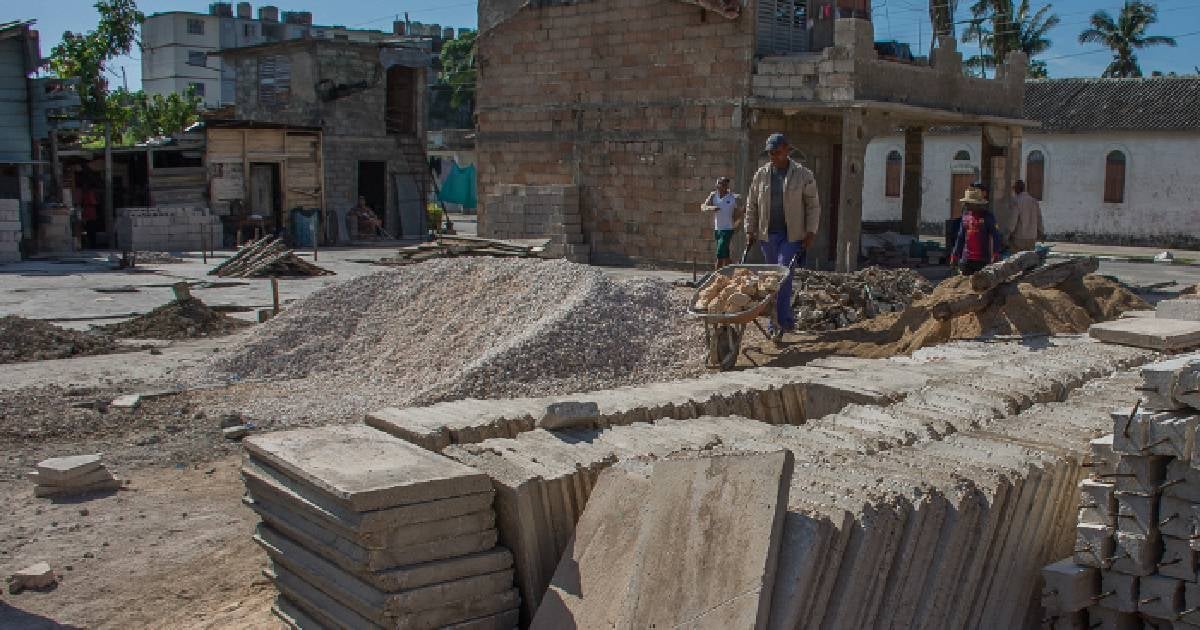
With only 44% of the housing plan fulfilled in 2024 and over 6,600 unresolved weather-related issues, Camagüey highlights the inefficacy of a state system that relies on individual efforts to support its housing program.
Last year in the province, only 381 buildings were constructed, which is equivalent to 44% of the overall housing construction plan proposed. Of these, 121 were completed through state means, representing a modest 33%, while 250 relied on the individual efforts of the population, the only section that exceeded expectations.
This is explicitly stated in the report of Accountability to the National Assembly of People’s Power that must be presented by the territory's governor, Jorge Enrique Sutil Sarabia, at the V Ordinary Session of the Cuban parliament, starting on July 16th.
The subsidies, which should serve as a means to support the most vulnerable sectors, accounted for only 10 homes throughout the entire year.
In the first three months of 2025, only 60 new houses were constructed: 18 through the state, one through subsidy, and 41 through personal effort.
The rehabilitation of the housing stock also leaves much to be desired, with only 353 homes upgraded to the “good” category in 2024 and an additional 48 in the first quarter of this year, despite the ongoing and alarming deterioration of the overall housing infrastructure.
The delay in addressing climate-related impacts worsens the situation. Although 619 cases were resolved by December 2024, 6,602 remain pending. Only 55 were addressed in the first quarter of the current year, a figure that highlights the slow response rate to accumulated needs.
According to the report, attention to priority groups is also progressing slowly. Throughout 2024, only the housing needs of 11 mothers with three or more children, 15 elderly individuals, and seven young couples were addressed.
By 2025, only five additional solutions have been reported, aimed at mothers and the elderly. Regarding rural areas, only 30 houses were completed throughout the previous year.
The report acknowledges that local production of materials fails to meet the demand of the construction program. There is a persistent deficit in key elements such as pipes, sanitary fittings, floor tiles, blocks, and bricks.
Although the use of alternative technologies such as rasilla and "terso" —a type of cement without industrial components— is being promoted, these solutions have yet to achieve the necessary impact in addressing the urgent need to improve the housing conditions of thousands of people in Camagüey.
In 2017 Camagüey recorded a shortfall of 71,000 homes and was, after the provinces of La Habana, Holguín, and Santiago de Cuba, the area with the highest housing deficit in Cuba.
Cuban authorities claim that the housing deficit on the island amounts to 856,500 homes.
In 2018, the government announced a housing plan with the stated goal of eliminating the housing deficit in ten years. According to official figures, the country then had 3.8 million homes, of which 402,000 needed repairs and 527,000 new ones needed to be built to cover the shortfall of 929,695 units.
Analysts and independent experts have pointed out that, in practice, state resources have been primarily allocated to the construction of hotel complexes -especially luxury ones- instead of prioritizing solutions to the critical housing situation affecting the population. This investment policy has raised questions about the government's true priorities.
Amid the profound housing crisis affecting the island, the government is trying to promote several projects that include buildings made from shipping containers in Holguín, as part of its proposals to alleviate the housing shortage in the eastern province.
Meanwhile, in Santa Clara and Remedios, homes are being built without cement or steel, which are expected to be completed by December, in order to "demonstrate this alternative that helps cope with the rising costs of construction materials," recently explained the governor of the province, Milaxy Sánchez Armas.
However, the "star solution" - the experimental houses - does not include a large-scale implementation plan, it does not explain what alternative materials they are using, nor how they will ensure the durability of these constructions.
Only 1,344 houses were built in the first quarter of 2025, which represents just 12.4% of the official plan of 10,795. This figure not only confirms the collapse of the state construction program but also highlights the structural crisis in the sector and the government's inability to address one of the population's most urgent needs.
Frequently Asked Questions about the Housing Crisis in Camagüey, Cuba
What is the current status of the housing plan in Camagüey?
Camagüey has only fulfilled 44% of its housing plan for 2024, which reflects significant state inefficiency. Of the houses built, only 33% were constructed by the state, while individual efforts exceeded expectations. The shortage of construction materials, such as cement and bricks, further exacerbates the situation.
How does the deficit of construction materials affect the housing plan in Cuba?
The shortage of construction materials, particularly cement and sanitary fittings, has halted the production of housing in Cuba. In 2024, only 10% of the installed capacity for cement production was utilized, which has severely impacted the fulfillment of the housing construction plan. This crisis has been worsened by the lack of investment and maintenance in the country's cement plants.
What alternatives has the Cuban government proposed to alleviate the housing crisis?
The government has attempted to implement alternative technologies such as building homes without cement or steel, and the use of shipping containers in several provinces. However, these measures have not had a significant impact due to the lack of a comprehensive plan and limited assurance of durability. Furthermore, the partial reactivation of some cement plants has been announced, but these initiatives still lack clarity and visible resources.
What is the situation of housing for vulnerable groups in Camagüey?
In 2024, only 11 housing needs for mothers with three or more children and 15 for the elderly were addressed. In 2025, only five additional solutions have been reported. The attention to these groups is progressing slowly, reflecting the government's inability to prioritize the most disadvantaged sectors amid the housing crisis.
Filed under: