
Related videos:
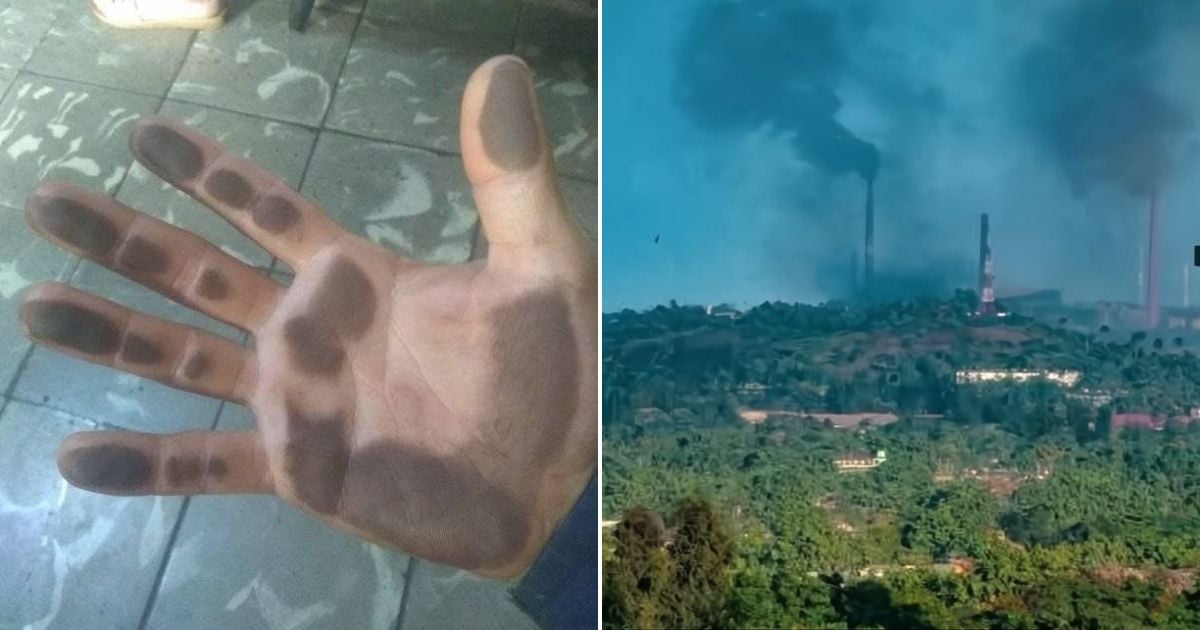
The Ministry of Energy and Mines of Cuba confirmed this Wednesday that there have been dust emissions exceeding legal limits at the Reduction Furnaces plant of the Comandante Ernesto Che Guevara Enterprise, located in the municipality of Moa, Holguín.
The entity justified the incident as a result of a planned shutdown and technical failures in the environmental control systems.
According to an official statement published on Facebook, the situation arose following an industrial shutdown that took place on July 7 to carry out cleaning and minor repairs on the plant's gas ducts.
Although the permit granted was for 48 hours, the work was completed in 24. However, the deterioration of the electrofilters, essential for particle control, contributed to the increase in pollution, emphasized the official statement.
The company operates under Law No. 150 “On Natural Resources and the Environment” and claims to have complied with the required protocols, including requesting a special permit from the environmental authorities, although the reality is far from what is on paper.
The ministry reported that accelerated repairs of the equipment are underway and contingency protocols have been activated in coordination with CITMA and local authorities to mitigate the impacts on the population.
Among the measures highlighted by the Cuban regime are the installation of air monitoring stations, the implementation of bag filters that have reduced previous emissions, and the reforestation of exploited areas.
They also mentioned partnerships with Canada in the field of clean energy and environmental mitigation technologies.
Although the Ministry reiterated its commitment to "responsible and sustainable" mining in Moa, ensuring transparency and continuous improvements, what occurred— and was not announced in a timely manner—contradicts that official rhetoric.
"Moa exemplifies the balance between industrial production and sustainability, in compliance with Law 155 and its regulations," emphasized the official statement amid a barrage of criticism on social media due to severe pollution.
Hours before the statement from the Ministry of Energy and Mines, some official journalists requested explanations from Cubaníquel following the reports of pollution in Moa.
The official journalist Lázaro Manuel Alonso used his social media to share the complaint from his colleague Yulieska Hernández García, who warned about the ongoing emission of mineral dust from the Comandante Ernesto Che Guevara factory, which is owned by the Cubaníquel Business Group.
"More information is needed on this issue," Alonso asserted, indicating that, in addition to the environmental protocols, communication also failed.
In his post, Hernández described a situation that is "extremely uncomfortable," which has affected the quality of life in Moa for weeks. "The worst moment occurred in the last 24-48 hours, following the most intense discharge of ore from the reduction furnaces," he wrote.
The journalist criticized the lack of official communication: “The major spill occurs without an explained cause and without timely prior notice.”
However, although it may seem ironic, the same journalist praised in a report in June the "excellent results in environmental management" achieved by companies such as Moa Nickel SA Pedro Sotto Alba, CEPRONIQUEL, CEXNI, and Cediniq Moa in the first half of 2025.
The interviewed officials warned that the Cuban industry was preparing for an increase in its production, but they did not mention the implications this would have on the population's quality of life.
Frequently Asked Questions about Pollution in Moa
What caused the pollution at the Moa plant?
The dust emissions at the Moa plant were caused by technical failures in the environmental control systems, specifically in the electrofilters, and a planned shutdown for minor repairs. These factors resulted in emissions exceeding the established legal limits.
How has the Cuban government responded to the environmental crisis in Moa?
The Cuban government has activated contingency protocols and is working on repairing damaged equipment. Among the measures taken are the installation of air monitoring stations and the implementation of sleeve filters to reduce emissions. Furthermore, international partnerships have been established to enhance environmental mitigation technologies.
What impact does pollution have on the health of residents in Moa?
Residents of Moa have described living under a constant cloud of black dust, which has affected their quality of life and health. There are testimonies from residents reporting symptoms such as cough and breathing difficulties due to prolonged exposure to these adverse environmental conditions.
What is the importance of nickel and cobalt to the Cuban economy?
Nickel and cobalt are essential for the Cuban economy, as they are highly valued metals in the international market. The exploitation of these resources in Moa has been crucial for the regime's economy since the 1950s, and the government continues to seek to increase production to take advantage of global demand.
Filed under: