
Related videos:
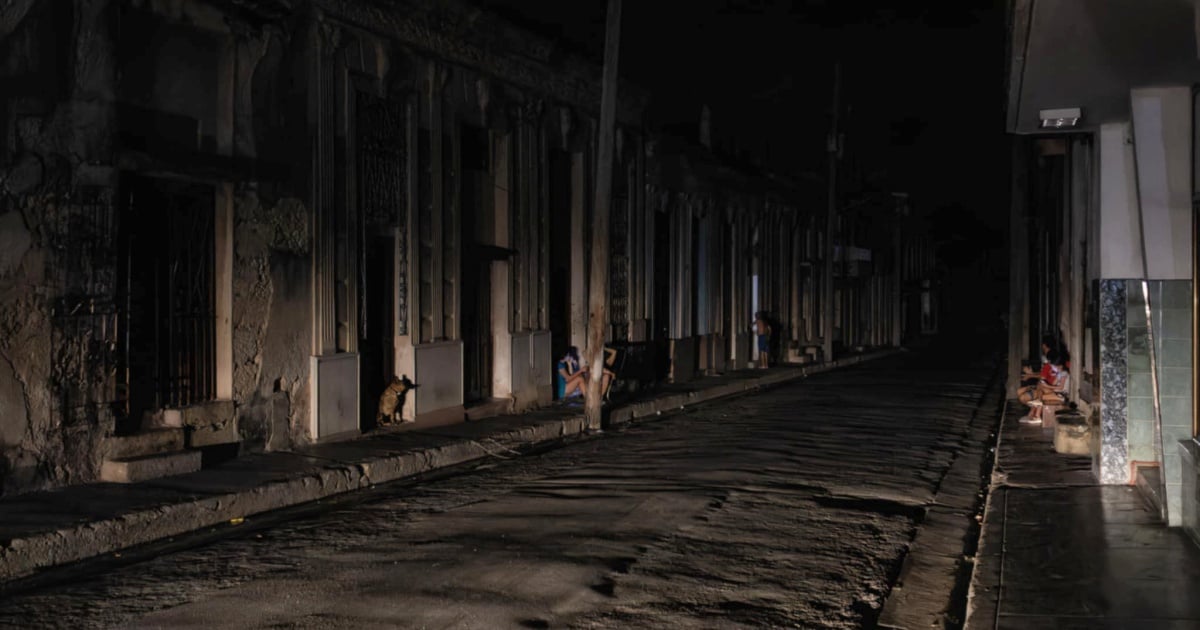
The Cuban Electric Union (UNE) reported this Wednesday that the country experienced power outages throughout the day yesterday and into the early morning today, with a maximum impact of 1,767 MW at 11:20 p.m., right at the peak demand hour.
According to the official report, the figure exceeded expectations due to higher consumption than estimated. On July 9, at 7:00 a.m., the National Electric System (SEN) had only 2,020 MW available, against a demand of 3,200 MW. The deficit due to lack of capacity reached 1,242 MW, and for midday, an impact of 1,180 MW is expected.
The situation remains compromised due to multiple incidents
Unit 2 of the Felton thermal power plant is out of service due to a malfunction, while five other units are undergoing scheduled maintenance: Unit 8 in Mariel, Unit 2 in Santa Cruz, Unit 4 in Cienfuegos, the Unit 1 of Felton, and Unit 5 in Renté.
Additionally, there are thermal limitations that take 634 MW offline. One of the main issues continues to be the lack of fuel, which has kept 76 distributed generation plants out of service, resulting in a loss of 581 MW.
Although the recovery of 100 MW from generators is anticipated in the afternoon, the forecast for peak hours is not encouraging. A supply of 2,120 MW is expected against a maximum demand of 3,680 MW, which would create a deficit of 1,560 MW and an estimated impact of up to 1,630 MW at that time of day.
Meanwhile, the 19 new photovoltaic solar parks contributed 1,938 MWh to the system the day before, with a maximum power output of 385 MW at noon, which was insufficient to meet the growing national demand.
The energy crisis continues to impact the daily lives of Cubans, who are facing prolonged outages with no immediate solution in sight.
Frequently Asked Questions about the Energy Crisis in Cuba
What is the main cause of blackouts in Cuba?
The main cause of blackouts in Cuba is the deficit in electric generation, which has exceeded 1,600 MW. This deficit is due to multiple factors, such as the deterioration of thermal power plants, the lack of fuel, and issues in distributed generation.
What measures is the Electric Union taking to address the crisis?
The Electric Union (UNE) has implemented scheduled maintenance on several generating units and is attempting to recover some of the lost capacity by repairing distributed generation engines. However, these measures have not been sufficient to resolve the current deficit.
How does the lack of fuel affect electricity generation in Cuba?
The lack of fuel is one of the biggest problems facing the Cuban electric system, leaving numerous distributed generation plants out of service. This significantly contributes to the energy deficit, as it restricts the country's ability to generate electricity in a stable manner.
What impact do solar parks have on the energy crisis in Cuba?
Although new photovoltaic solar parks have been added, their production remains insufficient to offset the energy deficit. These parks contribute a limited percentage of the total energy needed, which does not significantly alleviate the current crisis.
Filed under: