
Related videos:
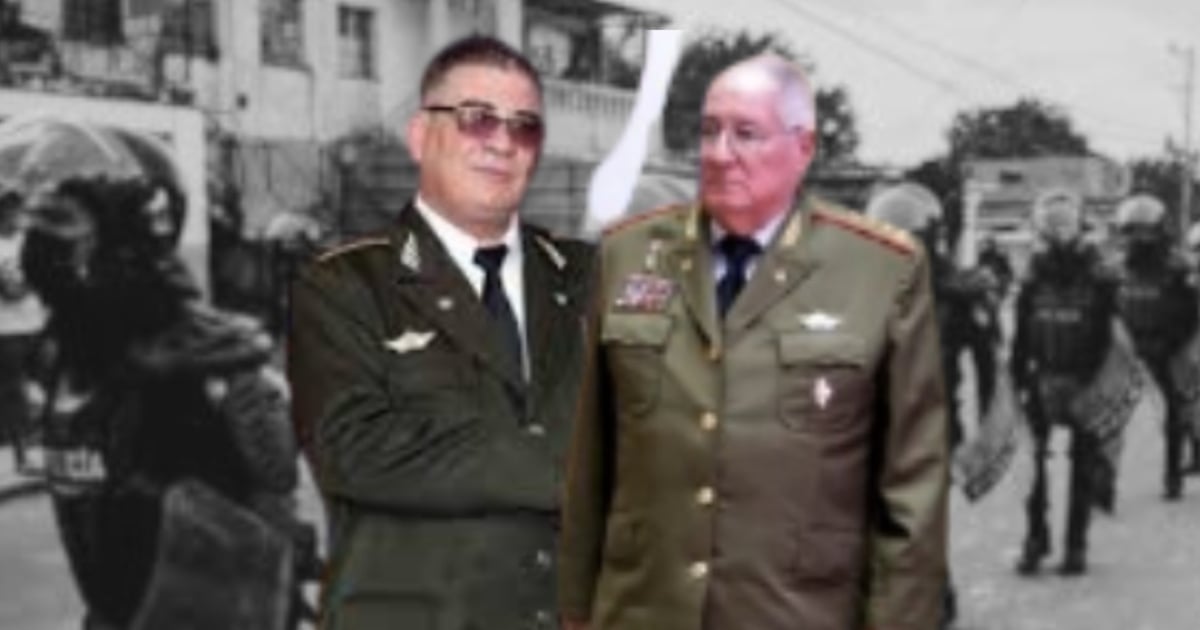
The United States government imposed sanctions this Friday on the minister of the Revolutionary Armed Forces of Cuba (FAR), Álvaro López Miera, and the minister of the Interior (MININT), Lázaro Alberto Álvarez Casas, prohibiting them and their immediate family members from entering the country.
The measure, announced by the Miami Herald based on statements from a senior official at the State Department, is part of a series of actions aimed at holding high-ranking officials of the Cuban regime accountable for systematic human rights violations.
The sanctions, which include the revocation or denial of visas, were imposed under section 7031(c) of the Department of State Appropriations Act for fiscal year 2025. This legislation establishes that foreign officials involved in significant acts of corruption or serious human rights abuses are ineligible to enter U.S. territory.
The decision is framed within the commemoration of the fourth anniversary of the popular uprising on July 11, 2021, during which thousands of Cubans took to the streets to demand freedom.
The state response was a coordinated massive repression, in which both ministers played a key role, according to various human rights advocacy organizations.
"Four years after the brutal repression by the Cuban regime against the protesters, the State Department is restricting visas for the leaders of the Cuban regime, Díaz-Canel, López Miera, Álvarez Casas, and their accomplices for their role in the regime's brutality against the Cuban people," wrote Marco Rubio on social media platform X.
"The State Department also added the regime-controlled K Tower to the Cuba Restricted List to prevent U.S. dollars from financing the repression of the Cuban regime. While the Cuban people suffer from shortages of food, water, medicine, and electricity, the regime lavishes money on its infiltrators," he added.
López Miera, already previously sanctioned by the Joe Biden administration in 2021, is the head of the FAR and one of the most powerful military figures on the island. Meanwhile, Álvarez Casas had been included by the Trump administration on the list of specially designated nationals under the Global Magnitsky Act, also due to his connection to arbitrary detentions and summary trials following the protests of 11J.
In addition to these sanctions, the State Department announced visa restrictions against several Cuban judicial and prison officials, although their names were not disclosed due to immigration confidentiality regulations.
The action was also accompanied by the inclusion of new properties in the List of Prohibited Accommodations in Cuba, focusing on infrastructures linked to the military conglomerate GAESA.
The U.S. administration reaffirmed its support for the Cuban people and its commitment to holding the regime accountable for its repressive actions. Meanwhile, Cuban authorities have remained officially silent in response to this new round of sanctions.
Frequently Asked Questions about U.S. Sanctions on Cuban Officials
Why did the United States impose sanctions on Cuban ministers López Miera and Álvarez Casas?
The United States sanctioned López Miera and Álvarez Casas due to their involvement in systematic human rights violations in Cuba, particularly concerning the repression of the protests on July 11, 2021. These sanctions aim to hold high-ranking officials of the Cuban regime accountable for their role in oppressing their people.
What does the entry ban to the U.S. for sanctioned Cuban officials and their families imply?
The entry ban means that sanctioned Cuban officials and their family members are not allowed to enter U.S. territory. This restriction, imposed under section 7031(c) of the Department of State Appropriations Act, aims to limit the ability of these individuals to travel to the U.S. and participate in international events or activities within the country.
How do these sanctions affect the economy and tourism in Cuba?
The sanctions include the addition of 11 Cuban hotels to the List of Prohibited Accommodations, limiting access to resources generated by international tourism. These actions aim to prevent tourism revenue from flowing into the repressive forces of the regime, which may discourage foreign companies from investing in the Cuban tourism sector at a critical time for the island's economy.
What other measures has the U.S. taken against the Cuban regime recently?
In addition to sanctions on individuals, the U.S. has expanded its visa restriction policy to Cuban officials involved in the labor export program, particularly in medical missions. It has also strengthened the economic embargo, prohibiting financial transactions with entities linked to the Cuban military, and has intensified economic sanctions against the regime.
Filed under: