
Related videos:
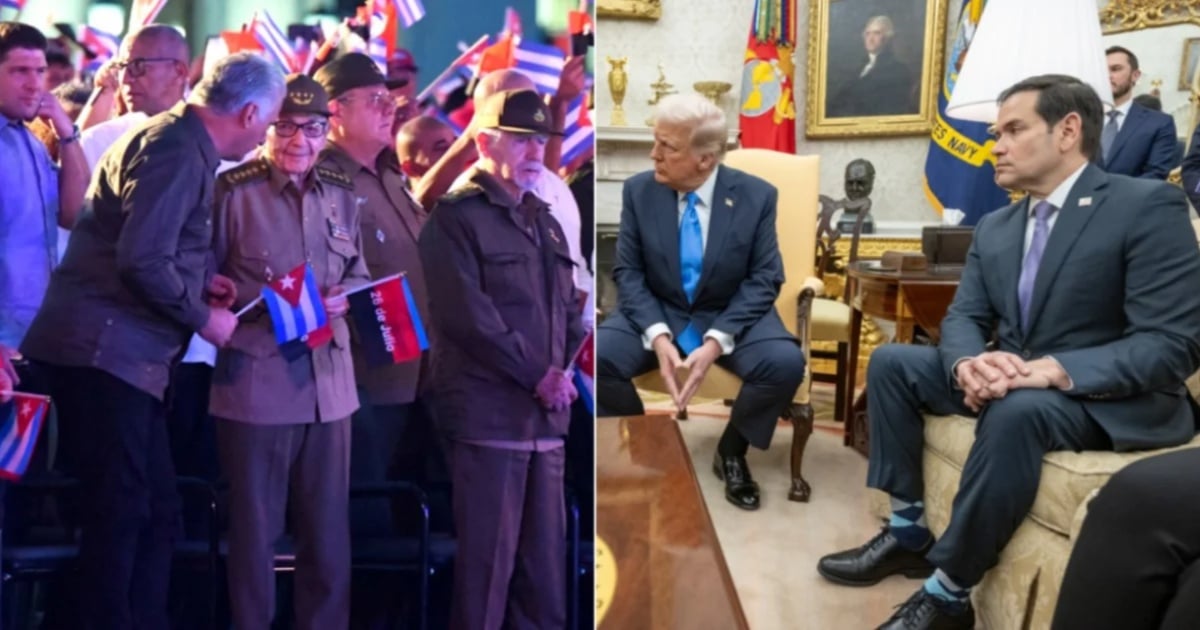
The Secretary of State, Marco Rubio, reaffirmed this Friday the commitment of the United States to the defense of human rights in Cuba, after announcing the imposition of sanctions against the Cuban leader Miguel Díaz-Canel and other high-ranking officials of the regime.
We are restricting visas for key figures of the Cuban regime,” wrote Rubio on the social media platform X, referring to Díaz-Canel, Defense Minister Álvaro López Miera, and Interior Minister Lázaro Álvarez Casas.
Rubio's statement comes during the fourth anniversary of the popular uprising on July 11, 2021, when thousands of Cubans took to the streets to demand freedom and were severely repressed.
The State Department announced the entry ban to the United States for the three mentioned officials, as well as for their immediate family members, due to their involvement in serious human rights violations.
The sanctions are based on a provision of the Department of State Appropriations Act for fiscal year 2025, which prevents entry into U.S. territory for foreign officials involved in corruption or repression.
According to Rubio, these actions aim to hold “the heads of the regime” accountable for “their role in the brutality against the Cuban people.”
In addition to the visa restrictions, the State Department has included Torre K, a newly opened luxury hotel in Havana, and another 10 properties linked to the military conglomerate GAESA, on its List of Prohibited Accommodations in Cuba.
“While the Cuban people suffer from shortages of food, water, medicine, and electricity, the regime lavishly funds its infiltrators,” Rubio denounced in his post.
These sanctions are in addition to previous measures imposed by Joe Biden, who had already designated López Miera and Álvarez Casas for their role in the repression of the 11J protests. Organizations like Justicia 11J have documented over 1,500 arrests related to the protests, many of which were followed by summary trials and lengthy sentences.
Meanwhile, the official reaction from the Cuban government has not been made public, although historically, Havana has rejected such sanctions, deeming them to be interfering.
International pressure regarding the human rights situation in Cuba continues to grow.
Frequently Asked Questions about the United States Sanctions on the Cuban Regime
Why is the United States imposing sanctions on Díaz-Canel and other Cuban officials?
The sanctions against Miguel Díaz-Canel and other high-ranking Cuban officials, such as Álvaro López Miera and Lázaro Álvarez Casas, are due to their involvement in serious human rights violations. These measures aim to hold them accountable for their role in the repression of the protests on July 11, 2021, when thousands of Cubans took to the streets to demand freedom and were met with harsh repression.
What does the visa restriction announced by Marco Rubio entail?
The visa restriction imposed by the U.S. Department of State prevents sanctioned Cuban officials, as well as their immediate family members, from entering U.S. territory. This action is part of a broader effort to hold the Cuban regime accountable for its repressive policies and human rights violations.
What is the List of Prohibited Accommodations in Cuba and why has it been updated?
The List of Prohibited Accommodations in Cuba includes hotels and properties linked to the Cuban regime that are banned for U.S. tourism. The recent update added eleven new hotels, such as Torre K, to restrict the regime's access to foreign currency generated by tourism, which is used to finance repression on the island.
What has been the reaction of the Cuban government to these sanctions?
So far, the Cuban government has not issued an official reaction to the new sanctions, although historically it has labeled such actions as interventionist and aggressive. However, it is common for the regime to use these measures to reinforce its narrative of victimization to its population and the international community.
Filed under: