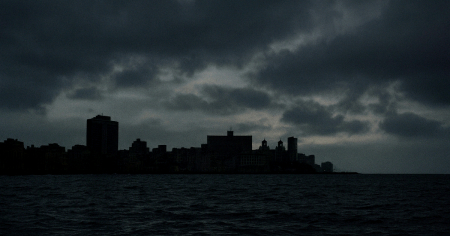
The energy crisis in Cuba is worsening. The Electric Union (UNE) reported this Saturday that the National Electric System (SEN) will continue to be affected by generation deficits, with widespread blackouts throughout the day and an estimated shortfall of 1,540 megawatts (MW) during peak hours.
According to the official report, on Friday, July 11, the electricity service was interrupted for 24 hours, and the early hours of this Saturday continued to be affected.
The maximum impact on Friday was 1666 MW at 9:10 PM, a figure higher than planned, mainly caused by the lack of fuel in the floating generation barges in Havana.
At 7:00 AM today, the generation availability of the SEN was 2000 MW, while the demand reached 3050 MW, resulting in an immediate impact of 1065 MW due to capacity deficit.
By noon, the UNE estimates an impact of about 980 MW.
Main causes of the collapse
Two units from the Felton and Renté thermoelectric power plants are out of service.
Additionally, four blocks of the CTE Mariel, Santa Cruz, and Renté remain inactive for maintenance.
Thermal limitations: 382 MW are offline due to technical failures in other plants.
But the most critical factor continues to be the lack of fuel, which has paralyzed a significant portion of distributed generation:
79 distributed generation plants out of service (586 MW), the Melones facility has five engines shut down (80 MW) and the Regla facility has three engines shut down (20 MW).
Total power out due to fuel: 686 MW
Solar contribution and insufficiency
Despite the addition of 19 new photovoltaic solar parks, which generated 2012 MWh on Friday, with a peak of 483 MW during the hours of maximum irradiation, solar energy is still insufficient to offset the significant deficits of the SEN.
Forecast for peak hours
The UNE expects a partial recovery in generation overnight with the addition of 80 MW from distributed generation motors (currently inactive due to lack of fuel), the reactivation of the five motors at the Melones station (80 MW), and the three at the Regla station (20 MW).
This would raise the estimated availability to 2180 MW, compared to a peak demand of 3650 MW, resulting in a deficit of 1470 MW.
However, the UNE forecasts a greater impact: 1540 MW.
Frequently asked questions about the energy crisis in Cuba
What is the main cause of blackouts in Cuba?
The lack of fuel is the most critical factor that has paralyzed a significant portion of distributed generation. Additionally, breakdowns in thermal power plants and the maintenance of several units exacerbate the situation, leading to an electricity generation deficit exceeding 1,500 MW.
How does the energy crisis affect the Cuban population?
Daily blackouts impact the economy, everyday life, and basic services across the island. The Cuban population is facing prolonged interruptions in electricity service, creating an atmosphere of uncertainty and despair, as a short-term solution seems far off.
What measures is the Cuban government taking to address the energy crisis?
Despite the announcements about the incorporation of solar parks and plans to increase the use of renewable energy, the government's solutions have not addressed the underlying problem. The lack of investment and the obsolescence of the infrastructure remain significant barriers to overcoming the energy crisis.
What is the forecast for the energy deficit in Cuba in the short term?
The forecast for the energy deficit in Cuba remains discouraging. A reduction of up to 1,540 MW is expected during peak hours, which means that blackouts will continue to affect large segments of the population with no immediate solution in sight.
Filed under: