
Related videos:
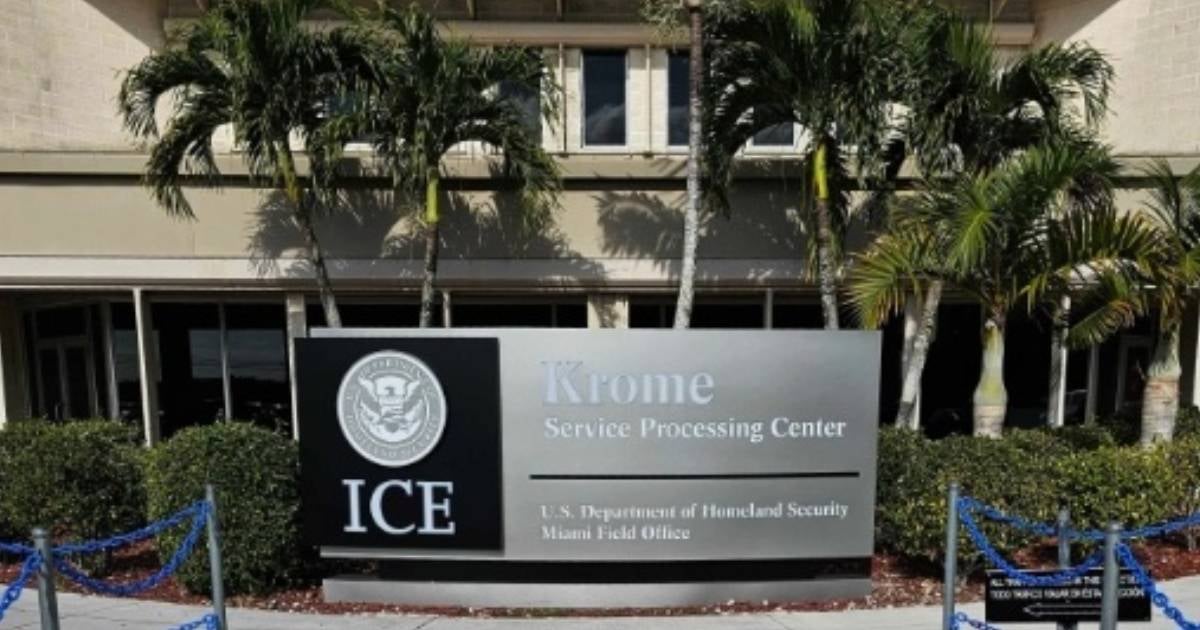
Dozens of calls to 911 from the Krome Detention Center, located in the southwest of Miami-Dade, have revealed troubling reports about the health conditions of immigrants held at the facility.
According to a report by NBC6, the calls - recorded between April and June 30 - reveal a pattern of medical negligence and serious omissions by the center's staff.
The call logs include testimonies from relatives of detainees as well as from employees of the center itself who, facing a lack of internal response, turned to emergency services to request urgent medical attention.
The detailed descriptions point to serious health situations, a lack of medical follow-up, and an apparent institutional refusal to provide immediate assistance.
One of the most disturbing calls occurred on June 6. In it, a relative of a 29-year-old detainee reported on the young man's critical health condition.
"It's in very poor condition. He has been sick for two weeks and is now coughing up blood; he says he can't breathe. He is in a lot of pain, especially in his joints," said the person who called.
When the 911 operator asked why medical assistance had not been requested from the center itself, the response was blunt: "They were told that no one would be called and that nothing would be done."
According to the account, the detainee was promised an ambulance within an hour, but it never arrived. "They told him about three hours ago that they would call an ambulance in an hour. Then the shift changed, and this new person... told him they were not going to call anyone."
In addition to this call, other recordings reviewed by NBC6 describe similar symptoms in various detainees.
Some displayed signs of severe respiratory illnesses, while others, according to employee reports, exhibited behaviors associated with psychosis and catatonic states.
These revelations arise in a context of overcrowding: according to figures quoted by the agency AP, the population of the Krome Detention Center has reached nearly three times its original capacity of 600 individuals.
The center, which is the oldest immigration facility in the country, has a long history of reports of mistreatment, abuse, and negligence.
This new scandal comes weeks after Cuban-American Congressman Carlos Giménez made a supervisory visit to Krome in response to multiple complaints about the conditions at the center.
Their conclusions following the visit were harshly criticized by the families of detained migrants.
Giménez then stated that "there is enough space, bathrooms, and showers" and that "the food is good." He also affirmed, "What I saw is not deplorable; it is a detention center, not a hotel."
However, relatives of detainees interviewed by Univisión 23 accused him of ignoring reality by not speaking directly with the prisoners.
"Sixty-two people are sleeping on the floor, in a space where they don't fit. On Monday, they received a toothbrush for the first time. It’s inhumane," detailed the wife of a Cuban migrant with I-220A who was arrested after attending his court date.
Laura García, the wife of another Cuban, recounted that there are more than 120 people in one room. "They have nowhere to sleep; some are sleeping on the floor, sitting down, on cots, there are not enough bunk beds for everyone."
Another woman stated that her husband has bathed only twice since his admission on June 17 and barely receives food.
Although Giménez stated that the center housed 311 people—which is well below its declared capacity—multiple testimonies confirm that the actual number is much higher.
On June 5th, inmates at Krome used sheets to form a distress message: "SOS", visible from the air.
Since March, the Krome Detention Center has been the subject of multiple complaints.
The case of Octavio Pérez Rodríguez, a 36-year-old Cuban detained on February 25, is another example of the humanitarian crisis taking place in the facility.
A month later, the man was very ill and in pain; his suffering was so great that he even requested his deportation to Cuba, an extreme plea that was merely a reflection of the harsh conditions he was enduring, his wife clarified.
The family, who resides legally in the United States, pleads for their case to be reconsidered to avoid deportation.
This week, NBC6 reached out to officials from the U.S. Customs and Immigration Enforcement (ICE), as well as representatives from the Krome Detention Center, and is awaiting an official response regarding these serious allegations.
Frequently Asked Questions about the Situation at the Krome Detention Center
What complaints have been made regarding medical care at the Krome Detention Center?
The complaints include medical negligence and lack of attention to serious emergencies. The detainees and their families have reported critical health situations, such as severe respiratory illnesses and symptoms of psychosis, without receiving the necessary medical attention. The 911 call logs reflect a pattern of omissions by the center's staff.
What is the current capacity of the Krome Detention Center and how does it affect the detainees?
The Krome Detention Center was designed to hold 600 people, but currently it houses nearly 1,700 detainees, almost triple its original capacity. This overcrowding has resulted in inhumane conditions, where detainees suffer from a lack of access to basic services such as drinking water, adequate food, and proper medical care.
What actions have the authorities taken regarding the conditions at Krome?
So far, the actions have been insufficient. The ICE has acknowledged the overcrowding and is constructing temporary structures like tents to manage capacity. However, criticisms persist due to the lack of substantial improvements in the detention conditions and medical care for migrants.
What impact have the reports about the conditions at Krome had on the migrant community?
The complaints have created an atmosphere of concern and alarm among the migrant community. Especially among Cubans in Miami, who fear for the safety and well-being of their detained compatriots. Peaceful protests, such as the formation of the SOS signal, reflect the desperation and urgency for reforms in detention conditions.
Filed under: