
Related videos:
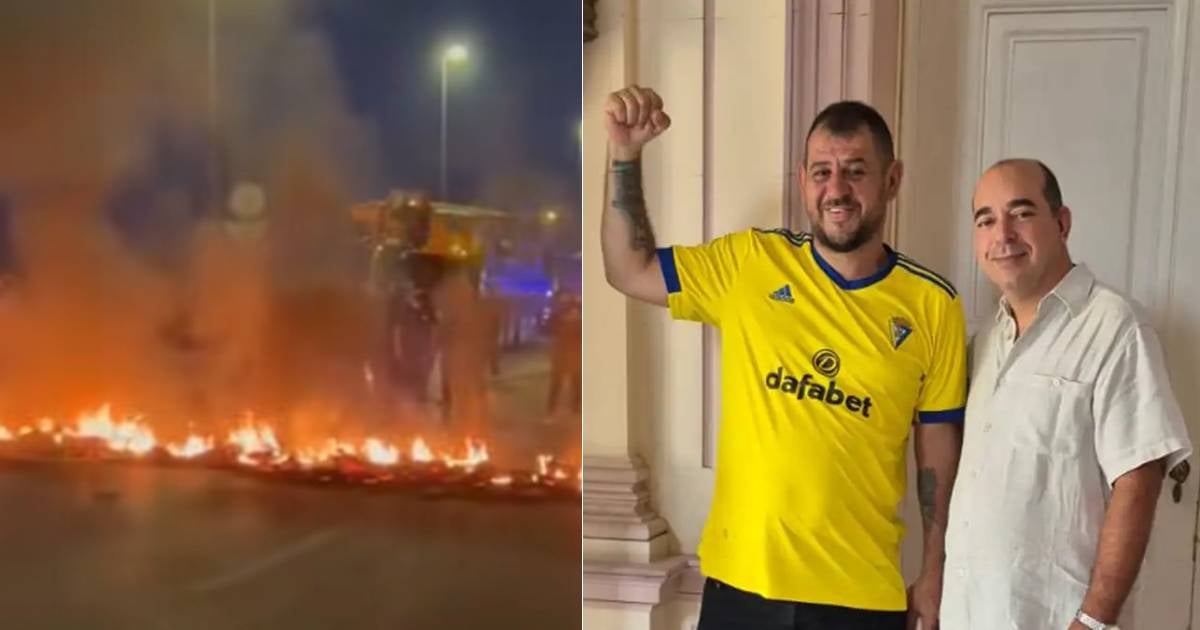
A young Spaniard accused of participating in the riots during the recent metal workers' strike in Cádiz has been welcomed in Cuba with honors by the Cuban Institute of Friendship with the Peoples (ICAP). The scene, which may seem like a noble act of support for social causes, reveals a deep contradiction: on the island, those who protest are considered enemies of the State.
The young man, whose arrest at the Madrid airport was treated as a possible escape attempt by the Spanish police, ultimately succeeded in flying to Cuba with his wife after being released without precautionary measures. The trip was part of their honeymoon, but on the island, he became a political symbol, reported CádizDirecto.
“We have been made to feel like defenders of a cause, not criminals,” said the Spanish man's wife after they were officially received by ICAP authorities, led by the director for Europe, Rigoberto Zarza Ross.
The issue is not in the gesture towards the couple, nor in their struggle: workers' demands and union organization are fundamental rights that must be respected. The real question is why the Cuban regime applauds this type of activism when it occurs in another country, but incarcerates, represses, and stigmatizes Cubans who do the same in their own land.
The same Cuba that offers hospitality to this Spaniard has labeled its own citizens who peacefully demonstrated on July 11, 2021, as "mercenaries". Several of them are still serving sentences of up to 20 years in prison. No official institution has referred to them as "fighters" or extended a "solidarity welcome" to them.
“After everything we have been through, this is like breathing fresh air,” added the woman, in a statement that might sound ironic to many Cubans who lack freedom of movement, independent justice, or the right to protest without being criminalized.
From being detained in Barajas to "friend of the Cuban people"
The young man's detention in Barajas occurred as part of the police operation "Fuego," following protests by the metal sector in Cádiz, which resulted in over twenty arrests. Authorities accuse him of public disorder and assault against authority, but they did not impose precautionary measures, allowing him to travel.
The couple arrived in Cuba this weekend and was welcomed with "affection and respect," according to their account. "Here we have been treated like fighters", they said. For the ICAP, the gesture aligned with its traditional support for "persecuted social movements" in other parts of the world.
However, this narrative contrasts sharply with the internal politics of the regime, which has harshly suppressed any attempt at independent organization, from human rights activists to union members, journalists, or ordinary citizens seeking change.
This is not the first time the Cuban government has politically leveraged its hospitality towards foreigners. It has done so previously with members of the Zapatista movement, with former Latin American militants, and more recently, with Basque or Catalan political prisoners. For many, this is a propaganda strategy aimed at reinforcing its image as a "bulwark of just causes," while overlooking its own issues.
The case of this tourist turned symbol of "resistance" seems to follow that same logic. It is a story of a disrupted honeymoon, transformed into a political showcase to cleanse the image of a system that, behind closed doors, denies its citizens the same rights that it champions for others.
This episode brings to light the regime's double standards once again. It is not about questioning the legitimacy of social struggles in Spain, nor about undermining support for workers' causes. It is about highlighting a systematic hypocrisy: the official Cuba praises foreign activists while condemning its own citizens for daring to raise their voices.
Frequently Asked Questions about the Reception of Foreign Activists in Cuba and the Regime's Double Standard
Why was the Spanish citizen detained in Barajas received with honors in Cuba?
Spanish was received with honors by the Cuban Institute of Friendship with the Peoples (ICAP) as part of the regime's support for foreign social movements, despite the fact that any form of similar protest is repressed in Cuba.
What is the contradiction in the Cuban regime's stance on protests?
The Cuban regime openly supports foreign demonstrations and activists, while repressing and criminalizing its own citizens who attempt to exercise similar rights, such as the right to peaceful protest.
What does the reception of Spanish by the ICAP symbolize?
The reception symbolizes a propaganda strategy of the Cuban regime to reinforce its international image as a defender of just causes, while ignoring human rights violations within the country.
What consequences do Cubans face for protesting peacefully?
Cubans who peacefully protest are often imprisoned, stigmatized, and sentenced to long prison terms, as evidenced after the protests on July 11, 2021, where several participants received sentences of up to 20 years.
Filed under: