
Related videos:
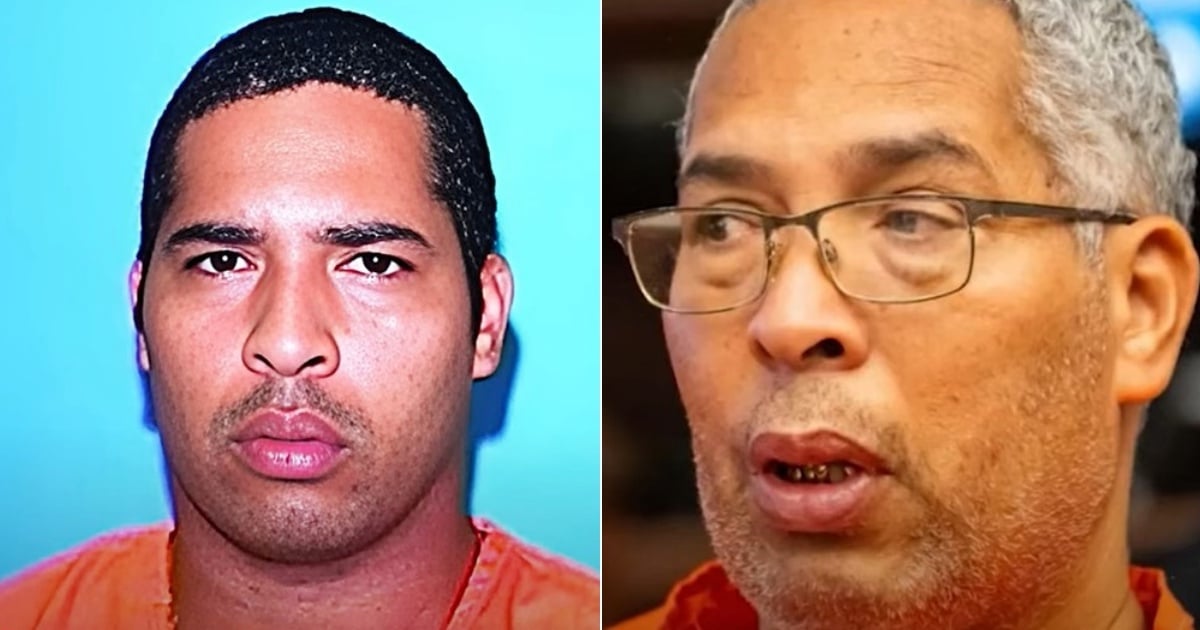
Michael Bernard Bell, a man convicted of the shooting murders of two people in 1993 in the city of Jacksonville, was executed on Tuesday night by lethal injection at the Florida State Prison in Raiford.
With this execution, the state has become the one that has applied the most capital sentences so far in 2025.
Bell, 54, was pronounced dead at 6:25 p.m. after receiving the lethal injection, according to Bryan Griffin, spokesman for Governor Ron DeSantis.
The execution was carried out meticulously and in the presence of officials from the Florida Department of Corrections (FDC), who described the procedure as "strictly compliant with established protocols."
The Bell case has drawn attention not only for the brutality of the crime committed over three decades ago but also for the personal background that motivated it: a revenge attempt due to the death of his brother, as reported by the agency EFE.
A double murder for revenge
In December 1993, Bell thought he saw parked in front of a bar the car of the man who had murdered his brother Lamar earlier that year.
What I didn't know was that the vehicle had already been sold to someone else: Jimmy West, 23 years old. Bell, convinced that he had the chance to avenge his brother, called two friends, took an AK-47 rifle, and headed to the location.
According to court records, the vehicle was parked in front of a liquor store in Jacksonville.
Bell and his companions waited until West, 18-year-old Tamecka Smith, and another woman exited the establishment. It was then that he opened fire, killing West instantly and severely injuring Smith, who died shortly thereafter at the hospital.
The third woman managed to escape unscathed. Eyewitnesses stated that Bell also fired at a crowd before fleeing.
The police arrested him the following year, and in 1995 he was sentenced to death. The evidence was overwhelming: testimonies, ballistic evidence, and the discovery of the incriminating weapon.
More crimes behind the convicted
Bell's criminal history did not end with that attack.
Later, he was convicted of three other murders: that of a woman and her young son in 1989; and that of his mother's partner, whom he killed just four months before the events in Jacksonville.
Bell was also part of the group of inmates who, during his childhood, attended the Florida School for Boys, also known as the Dozier School for Boys, a juvenile correctional facility infamously known for its history of physical and psychological abuse, and even covered-up deaths.
In 2016, a team of anthropologists discovered 55 clandestine graves at the site.
The institution was closed in 2011 and served as inspiration for the novel The Nickel Boys by Colson Whitehead, which won the Pulitzer Prize.
Last moments of Bell
On Tuesday, Bell woke up at 6:30 a.m., according to the official report. He had his last meal, which included an omelet, bacon, fries, and orange juice. Later, he met with a spiritual advisor, but did not receive any other visitors.
In the execution chamber, Bell remained calm and looked around as the drugs were administered to him.
When the warden asked him if he had any final words, he replied: "Thank you for not making me spend the rest of my life in prison."
After two minutes, he closed his eyes. His breathing became irregular and then stopped. The prison doctor certified his death at 6:25 p.m., according to local press reports.
Resource denied
Bell's attorneys filed an appeal with the Florida Supreme Court in the days leading up to this, and subsequently with the United States Supreme Court, claiming the existence of new evidence related to the testimony of key witnesses.
However, both courts unanimously rejected the request for suspension, and the state court noted the "overwhelming evidence of guilt" in a 54-page opinion.
A year with record numbers in Florida
With the execution of Bell, Florida matches its historical annual record of death sentences since the reinstatement of the death penalty in 1976, with eight executions, a figure previously reached in 1984 and 2014.
If the planned schedule holds, the record will be broken on July 31 with the execution of another condemned inmate.
In 2025, Florida leads the list of executions in the United States, ahead of Texas and South Carolina, which have each carried out four.
Nationwide, 26 people have been executed so far this year, the highest number since 2015, when 28 executions were recorded.
This upsurge has raised concerns among human rights organizations and religious leaders, who recently sent a letter to Governor Ron DeSantis asking for a halt to the executions.
Since 2023, the president has signed orders that have resulted in fifteen executions.
Florida has also amended its legislation to facilitate the implementation of the death penalty.
In 2023, the state became one of only two in the country, alongside Alabama, where unanimity from the jury is not required for the imposition of the death penalty: a majority of 8 out of 12 members is sufficient.
Frequently asked questions about the execution of Michael Bernard Bell in Florida
Who was Michael Bernard Bell and why was he executed?
Michael Bernard Bell was executed for the shooting murder of two people in 1993 in Jacksonville, Florida. His crime was motivated by a desire for revenge for the death of his brother. Bell was also convicted of three other murders and was part of a group of inmates who suffered abuse in their childhood at the Florida School for Boys.
What was the reason for the crime committed by Michael Bernard Bell?
The motive for the crime was an attempted revenge for the death of his brother Lamar. Bell mistakenly believed he was shooting at his brother's killer but ended up killing innocent people. The error in victim identification reflects a tragic case of misdirected vengeance.
What controversies surrounded Bell's trial and execution?
The trial and execution of Bell were marked by controversies due to new evidence and testimonies that questioned the legitimacy of his conviction. Key witnesses confessed to having lied under police coercion, which raised doubts about the validity of the judicial process. Furthermore, appeals were submitted to the Supreme Court of Florida and the United States, both of which were denied.
How has Florida positioned itself regarding the death penalty in 2025?
In 2025, Florida has led the number of executions in the United States, with eight capital sentences applied to date. The state has made the application of the death penalty easier by not requiring jury unanimity for its imposition, with a majority of 8 out of 12 members being sufficient. This approach has been promoted by Governor Ron DeSantis, generating criticism from human rights organizations.
Filed under: