
Related videos:
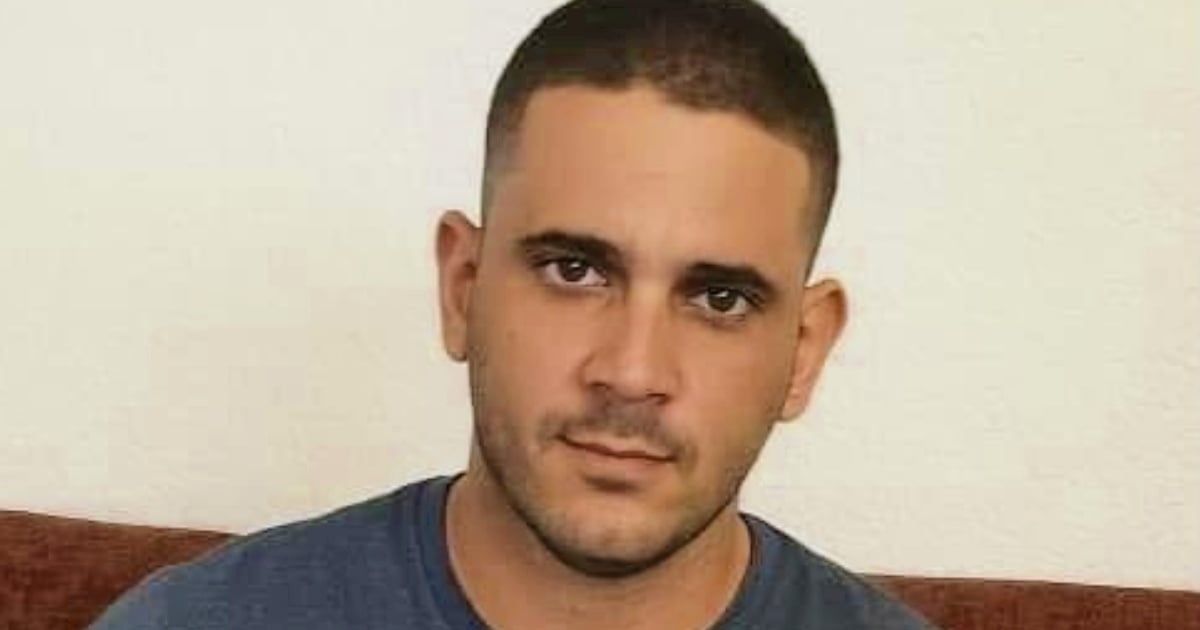
Osvaldo David Rodríguez Donate, a young Cuban from the municipality of Fomento in the province of Sancti Spíritus, lost his life in a drone attack in Ukraine after having been recruited by the Russian army.
Rodríguez Donate went to Russia three years ago in search of opportunities, right after completing his Military Service in Cuba, as reported by the news portal La Tijera.
However, the dream turned into a nightmare: he was arrested during an immigration raid and locked up in a Russian jail.
While in prison, he was offered an escape: to go to the front lines in Ukraine with the promise of being repatriated to Cuba if he survived. Unfortunately, he has not
The source mentioned revealed that the young man's family received the devastating news through another Cuban family that has a son in Russia, a country where several Cubans have already died as a result of the armed conflict.
Another young Cuban who dies far from his homeland, a victim of hunger, despair, and manipulation.
Community Pain: Voices from Fomento
The reaction in Fomento has been unanimous: shock, sorrow, and helplessness.
"I never tire of seeing you, my life, how you left us in the saddest way possible, my boy. All the families from the Fomento sugar mill are devastated by your departure," wrote Estrella Zúñiga, a neighbor of the young man.
Juan Pablo Hernández, a close friend, expressed: "Rest in peace to my brother Osva, so many plans and it all ended in tragedy. May God hold you in glory."
Many other comments highlight that Osvaldo was a noble, respectful young man, without malice, loved by all.
His death not only represents a human loss but also reflects the generational despair of many young Cubans caught between local misery and the empty promises of abroad.
Heated debate: Victim, mercenary, or both?
On social media, Osvaldo's case has sparked a heated debate.
Some comments accuse the young Cubans recruited by Russia of being "mercenaries," aware of what they were doing.
Other users reject this approach with indignation and condemn the lack of empathy. Some point out that young people like Osvaldo were not volunteers, but rather victims of desperation and manipulation in an unjust system.
The discussion escalated to ideological accusations, cross insults, religious references, and a heated exchange that highlights how divided and wounded Cuban society is in the face of these tragedies.
Public opinion: between mourning and criticism of the system
Amidst the pain, voices rose pointing to the root of the problem: the Cuban dictatorship.
“One sole guilty party, a dictatorship that has a people plunged into misery, where the youth have no opportunities whatsoever.”
Others pointed out the role of the Russian regime, which would have turned Cuban migrants into forced prisoners of war.
“The Russians don’t care for Cubans; they only use them as cannon fodder,” commented another user. “Why, if they brought Elián, don’t they bring those young people trapped in the war from Russia?” a Cuban woman wondered.
"Getting out of one dictatorship only to enter a worse one and in a state of war would never be a good option,” wrote another.
There were also those who tried to soften the more rigid positions.
Claudia Cáceres clarified: "He didn't spend three years killing anyone. He was imprisoned and negotiated his freedom. He didn't go to war by choice, but out of desperation."
Most commentators lament that so many young people are being deceived with false promises, forced to sign contracts in Russian without translation, and then sent to the front lines, with no option to refuse under the threat of remaining in prison.
In the words of one of the most moved commentators: “May this death not be in vain. May families become informed, may they not allow their children to fall into that fatal game. There are many who still live that tragedy, fighting for a country that is not theirs.”
Osvaldo's story should not be buried in yet another comment on social media. His life, his death, his devastated community demand answers, memory, and justice. Because no young Cuban should die in a foreign war merely for trying to escape hunger and despair.
The Cuban government is washing its hands of responsibility
The Cuban government claims that it bears no responsibility for the recruitment of Cuban citizens to serve as mercenaries in the war between Russia and Ukraine, despite the reports and testimonies that have shaken families both inside and outside the island.
In an interview with the U.S. program Democracy Now!, Cuban Deputy Foreign Minister Carlos Fernández de Cossío recently stated that Havana "made public and denounced" the phenomenon of Cubans being enrolled as soldiers in that armed conflict.
Fernández de Cossío assured that Cuban citizens have been identified fighting on both sides of the conflict: "Cubans have been detected on the side of Russia and Cubans have been detected on the side of Ukraine."
According to the deputy foreign minister, recruitment networks in Europe were responsible for attracting citizens from various countries, including Cubans, to send them to the front lines.
"Our laws prohibit a citizen under our jurisdiction from participating in the wars of other countries. It is something that is punished by law in Cuba," he stated.
Testimonies that contradict the regime
However, multiple investigations and testimonies from Cubans involved in the conflict present a very different picture. A report from the Ukrainian outlet Schemes revealed the presence of several hundred Cubans fighting for the Russian army, many of whom are part of the 106th Airborne Division, active in some of the bloodiest battles of the war, such as the one in Bakhmut. Cuban fighters were even identified wearing Wagner group insignia and promoting war propaganda on social media.
One of the most poignant cases was that of Cuban youths Andorf Velázquez and Alex Vega, both only 19 years old, who reported being deceived with false promises of construction jobs and ended up recruited at a Russian military base.
Also, a Russian official revealed to the Moscow Times that many of these recruits come directly from Cuba, sign contracts with the Russian Ministry of Defense, and are sent to the front lines. “There were only Cubans and Serbs there”, he confessed.
Through social media, individuals like Elena Shuvalova have promoted contracts with the Russian army, offering salaries, immigration benefits, and accommodation, without requiring valid passports.
According to Shuvalova, several Cubans have been "successfully" sent to war. Her social media profile shows connections to pro-Russian propaganda, as well as posts offering "help" to enlist despite their immigration status.
Silence, contradictions, and more questions
Although the regime insists that it has no connection to the recruitment, it has also acknowledged in a statement from MINREX that an investigation is underway into a network of human trafficking for military purposes that may have operated out of Russia and Cuba. However, it has not provided clear figures, details about the mentioned legal proceedings, or assurances regarding the protection of those affected.
Meanwhile, Cuban mothers are desperately seeking news about their children, young migrants who have disappeared in the war machine of the Kremlin, while the island's authorities choose denial or ambiguity.
In the midst of the economic crisis affecting the island, many see these military contracts as a desperate “escape”. Others, victims of deception, have found themselves caught in a foreign war that now haunts them with trauma, fear, and silence.
Filed under: