
Related videos:
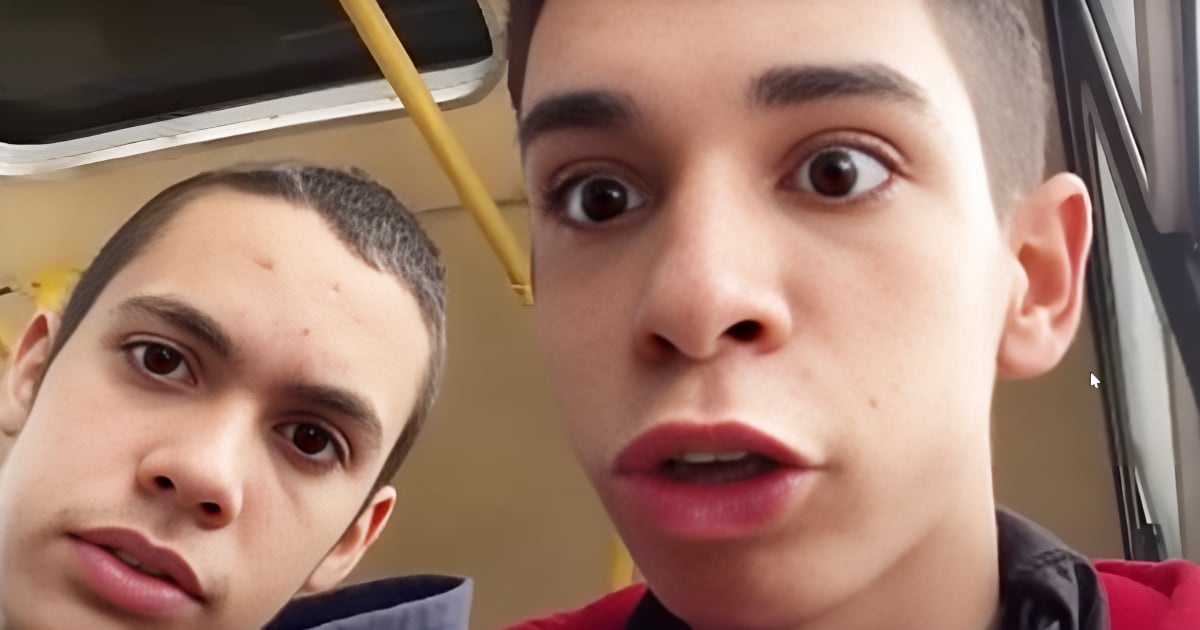
At the end of August 2023, the young Cubans Alex Rolando Vega Díaz and Andorf Antonio Velázquez García, both just 19 years old, broke the silence and made public a rumor that had been gaining traction on social media and among international analysts: the recruitment of Cuban mercenaries to fulfill the imperial ambitions of Vladimir Putin.
From a Russian military base where they were sent under false promises, they recorded a video. Tired, with muffled voices and eyes marked by fear, they exposed what until then was merely a rumor: Cuba was sending young people as cannon fodder for the Russian invasion of Ukraine.
The video, sent to the influencer Alain Paparazzi Cubano, became undeniable proof. “We are a bunch of 19-year-olds, we are in Russia supposedly for a contract, but it has all been a scam, a deception,” they said in the recording that opened Pandora's box.
"They told us we were going to work in construction, to fix the houses devastated by the war, trenches, move debris... It has all been a scam. They haven't paid us, we don't have our passports, we have no documents. They took everything as soon as we got here," the young men added, claiming to be speaking from a hospital room.
The phenomenon of the recruitment of Cuban teenagers by the Russian army had just exploded.
The deception: Working in Russia, trench in Ukraine
Both young individuals were recruited in July 2023. In their testimony, they recounted being promised jobs as laborers or warehouse staff in Russia, with salaries ranging from $2,000 to $2,500 per month.
"They told us not to worry, just to sign. We signed. They sent us to Ukraine. We ended up in Ukraine, on the third line, everything calm... We fell ill and they sent us here, but some of our friends are on the front line. No one said anything about this," they added in an interview with Alain Paparazzi.
Without speaking Russian, the inexperienced mercenaries signed incomprehensible contracts. Once on the ground, they were taken directly to military units, where they were issued uniforms, bulletproof vests, and rifles.
“It's not true that Cubans are doing well... many Cubans are missing, nothing is known about them, and it's all a scam. The contract was not created by a Cuban woman and a Russian one. We haven't been paid so far, we're stuck here in this hospital and no one knows anything,” they insisted in a cry for help that turned into the first report of a macabre scheme.
His recruitment was not an isolated case. According to the database leaked by the "I Want to Live" project analyzed by CiberCuba, at least 12 Cubans under the age of 20 have been documented as mercenaries hired by the Russian army.
"We are afraid": The voice from the base
On September 2, a new recording confirmed the seriousness of the situation. In it, Vega Díaz and Velázquez García, along with other young individuals, stated that they wanted to return, but they had been moved to a military training camp in Ryazan.
“Please, help us, try to get us out of here as quickly as possible because we are afraid,” said Vega Díaz to Cuban journalist Rolando Nápoles from AmericaTeVé.
"We are fine, but we are scared," the young people insisted in a conversation where they stated that their phones had been returned to them "due to media pressure," but that they remained under surveillance.
The testimony of Velázquez García represented one of the harshest messages heard from these young Cubans. “We don’t sleep, we can’t sleep because we never know if at any moment they might come in and do something to us while we’re asleep. We are very scared.”
In addition, the youth revealed that Vega Díaz suffered from generalized arthritis and that Velázquez García only had one kidney. Both also reported being victims of torture.
"They beat us while we were naked. They took all our clothes and beat us. For no reason, because we spoke to them in English, and they told us that the Americans had sent us here and that we should confess," said Vega Díaz, as his companion confirmed that they were naked and had been beaten "with punches" by three torturers.
Finally, Velázquez García thanked his father for fighting for him, and he asked the Cuban government for help: “May they intercede and bring us back.”
The parents: Anguish, calls, official silence
The parents of the young people also spoke. Interviewed in late August 2023 by Juan Manuel Cao for AmericaTeVé, Caridad Díaz (Cary), mother of Vegas Díaz - a resident of the city of Santa Clara - explained that her son discovered the job offer through Facebook. She confirmed that it was a Russian woman and a Cuban woman who formalized the alleged contract.
"They read him the document that outlined all the benefits he would receive. I also read the document, which was for that purpose, for 'forced labor' [workforce]," the woman explained during the interview for the channel.
She assured that she asked one of the individuals involved—whom she spoke to on the phone—several times if there was any connection to the war, and that she said no. “She told me that no Cuban was authorized at any time to go to the front lines, that they were going to support whatever they were assigned to,” she explained.
They asked Vegas Díaz if he had a passport, and after handing it over, he was quickly expedited through Varadero airport, where his family went to see him off on the 6th of a month that the interviewee did not specify. His mother emphasized that at no point were they told they were going to war, and she stressed that her son had no military training.
My child is a very good boy, he is a very healthy child, very loved. Everyone in the neighborhood is worried about him, crying in the street, praying for him," the woman added.
"The last time he spoke to me, he said he was going to a paratrooper unit to support the paratroopers, and that they also paid well there. They had the right to citizenship, a Russian passport, and the ability to bring their parents, wives, and children. After filling everything out, they gave him a Russian phone line and a thousand rubles," the interviewee specified about the alleged advantages of the murky contract.
It seems that he got caught up in trying to improve the economic situation here, justified the young man's mother, who also mentioned that he would be paid a salary for the contract and another for the position where he would be assigned to work. She also noted that there were Cubans reportedly imprisoned in Russia for refusing to go to the front lines.
For his part, Mario Velázquez, father of Velázquez García, appealed to the international community to prevent the Cuban regime from continuing to send young people hired by Russia to participate in the invasion of Ukraine.
“I call on the international public opinion, the UN, and the countries that oppose this dirty war, to prevent thousands of young people from Cuba from being sent to that slaughterhouse, so to speak,” said the father at the beginning of September 2023 in a post on his social media.
From Mexico, the country where he resided, Velázquez called on his fellow citizens to protest against the web of mafia and imperialist interests that connect the Palace of the Revolution with the Kremlin.
"The person in the photo is my son... My son was deceived like many other young people who were sent by the Cuban government to a war that, in my opinion, belongs only to them [the regime], not to the Cubans," he said.
"I make this call to parents as well, to unite and prevent more children from Cuba from losing their lives in this cruel and ruthless conflict. Now is the time; tomorrow it could be your child, mother, father, who is reading this. If we don't do something, it may be too late," added the desperate father.
Official recognition: Too late and avoiding responsibility
On September 5th, the Cuban government, through its Foreign Ministry, issued an official statement acknowledging “attempts at recruitment to participate in the war in Ukraine”.
Although he claimed they were already acting "against this network," he did not provide specific data or a clear repatriation strategy. Days later, the Ministry of the Interior (MININT) stated that 17 individuals had been arrested for links to recruitment, without mentioning any higher institutional responsibilities.
However, before this half-hearted acknowledgment from the regime, a Russian official had revealed to the media The Moscow Times that many young Cubans were being trained by the military, and that their presence was "part of an unformalized collaboration".
Adolescents to war: The pattern revealed by the data
The case of Alex Rolando Vega Díaz and Andorf Antonio Velázquez García was neither an exception nor an oversight. The data confirm it. Analyzing the list of 1,028 mercenaries leaked by the "Quiero vivir" project reveals a disturbing truth: at least 12 Cubans were recruited at under the age of 20.
Most were 18 or 19 years old when they signed their contracts. They were not soldiers or reservists. They were teenagers without military training, enlisted as if they were part of a social experiment with lethal consequences.
On September 6, 2023, Ukrainian hackers from the Cyber Resistance team leaked the identities and contracts of dozens of Cubans recruited by Russia to fight in the war against Ukraine.
The hackers delivered to the Ukrainian agency Inform Napalm evidence of the recruitment, training, and transportation to Russia of about 199 Cubans to participate in the attack against Ukraine.
Among them, data was obtained from the youngest of all Cuban mercenaries whose identities have been revealed so far. His name (Yoender Raúl Mena Álvarez-Builla) also appears on the list published by "Quiero Vivir," which indicates his birth in March 2005 and his recruitment in August 2023, five months after he turned 18 years old.
The leak from Cyber Resistance also revealed an interesting fact: among the youth were siblings, such as the twins Luis Antonio and José Antonio Stable González, the latter also present in the "I Want to Live" list.
It is noteworthy that José Antonio was recruited on August 10, 2023, and the date of issuance of his Cuban passport was July 11, 2023, which means one month before traveling to Russia to enlist in the army. His brother Luis Antonio obtained his passport a little earlier, in mid-May. Both were 26 years old at the time of their recruitment.
What is most revealing is not just the age, but the timing. All the contracts were signed between July and September 2023, just as the first public testimonies emerged and evidence began to arrive from the front.
In that quarter, with the machinery already in motion, these young individuals with valid passports were recruited, organized trips were arranged, and an itinerary was mapped out to Russian military bases. It was not a series of individual decisions; it was a coordinated operation, executed with precision and under institutional cover.
This pattern confirms what their parents recounted with trembling voices before the cameras: their children did not leave on their own nor were they inadvertently recruited. They signed papers they did not understand, driven by promises and pushed by misery, while a structured network, with access to newly legal minors and logistical support, took care of the rest.
The coldness of the figures reveals an uncomfortable truth: the Cuban youth were seen and used as raw material for the war of another country, a war that promised them salaries and citizenship, but delivered trenches, rifles, and betrayal.
Complicity or negligence?
The accumulation of evidence (testimonies, documents, videos, and official data) reveals that the Cuban government, at best, was negligent. At worst, it was a silent accomplice.
At a minimum, it allowed minors to leave the country legally for a foreign war, without effective immigration control, warning, or oversight. The airports in Varadero and Cayo Coco, among other airfields in tourist areas, served as departure points for these flights filled with mercenaries who declared "tourism" as the reason for their travels.
Some parents reported having turned to Cuban institutions seeking help, without receiving a response. Instead of activating a rescue protocol, the authorities chose diplomatic denial until the scandal became international.
Conclusion: The Truth, Through the Words of Two Teenagers
The case of Vega Díaz and Velázquez García broke the silence pact. Their faces, names, and words brought to light hundreds of young people who have not been able to speak.
They were not only the first to dare, but also the first to confirm that today’s impoverished Cuba is willing to sacrifice its children in the name of survival.
In their own words: “We were deceived. We want to go home. Help us.” Since then, nothing more is known about these young people who appear in the list revealed by Ukrainian intelligence, but their fate remains unknown.
The desperate plea for help they made continues to resonate.
Filed under: