
Related videos:
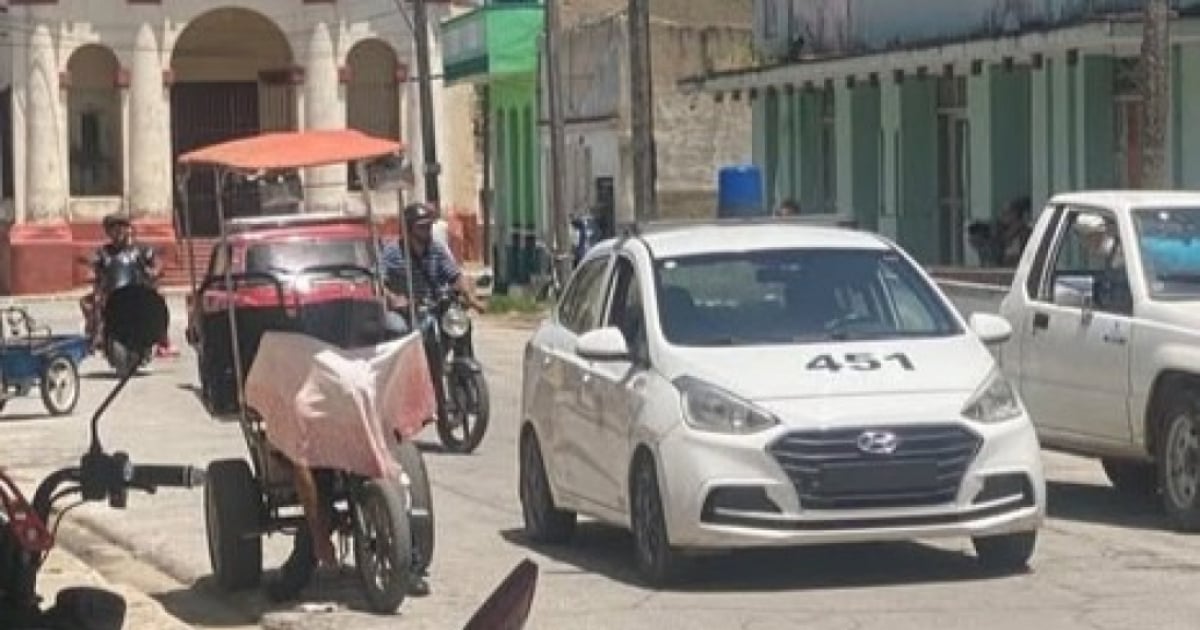
A Camagüey taxi biker who passed away Thursday morning while working remained in the public street for several hours before being taken to Legal Medicine.
The incident occurred at the intersection of General Gómez and San Miguel streets, in the historic center of the city, under intense heat reaching 34 °C, with a perceived temperature exceeding 39 °C.
According to the independent outlet La Hora de Cuba, the man died on top of his bicycle taxi around 11:00 am.
"A police officer checked his pulse and said he was dead. There was no first aid. They covered him with some plastic and he lay there for several hours, in view of dozens of onlookers and three police officers with their car. At 1:30 PM, the body was removed from the scene by the authorities," the text details.
The official cause of death has not yet been disclosed, but in a previous publication, the Cuban Observatory of Human Rights (OCDH) indicated that the deceased had walked about two kilometers from the provincial hospital before collapsing.
The agency accompanied the publication with a pixelated image—to protect the identity of the deceased—in which the body could be seen still on the seat of the tricycle, leaning forward, surrounded by a police patrol and several witnesses.
"Bicitaxi drivers often do their work pedaling for hours under the sun, earning payments that range from 30 cents to 10 dollars, depending on the distance covered and the load carried. Authorities prohibit the installation of electric motors on their vehicles, a solution many consider to safeguard their health, although they risk fines or confiscations," specified La Hora de Cuba.
"Along with the heat and physical effort they exert, the terrible situation regarding access to food, medicine, and adequate healthcare makes these men easy targets for fatigue and various illnesses," he concluded.
In the comments on the post, a young woman identified as Tahimi Carballo, residing in the United States, claimed to be her foster granddaughter.
"They don't know the sadness it brings me to see that photo; it's my grandfather, and the saddest part is that I couldn't say goodbye to him," she expressed.
Carballo denied that his grandfather was an elderly man. He clarified that he was only 56 years old, seemed to be in good health, and no one in the family anticipated such a sudden death.
"He had been in that profession for over 20 years. I only managed to get him to leave it for a job at a company once, and he lasted less than a year before returning to the bike taxi. He seemed to be healthy, but the stress of daily life takes its toll," he detailed.
The photo of the deceased, shared on social media, sparked outrage on the Internet.
The inaction of the police generated harsh criticism.
"I once learned that if you come across a case like this, even if you think the person is deceased, you should say that you find a pulse, with the aim of sending them urgently to a hospital. This prevents the body from being exposed to curious onlookers for hours and hours, left lying there until Forensic Medicine arrives..." remarked a user.
"They should have taken him to the hospital; he might have just fainted. If the police are illiterate, how would they know anything about pulses?" questioned another.
"It was probably hypoglycemia," affirmed an electrical technician.
"They are not doctors; they cannot declare someone dead without a healthcare professional examining them. It might have been hypoglycemia, a fainting spell, or something reversible if acted upon in time," questioned a healthcare worker. "They left him lying there as if he were trash," wrote another user.
"The police are not doctors to testify that he is deceased; they should have called a healthcare professional to confirm the diagnosis. It's horrifying what we're experiencing, each news report worse than the last. It's shameful to see the ridiculous things that are happening. Who knows if they were providing first aid..." questioned a healthcare worker.
In Cuba, bicitaxi drivers—often older men—spend long hours under the sun for just a few dollars a day.
Authorities prohibit the installation of electric motors on these vehicles, forcing workers to rely solely on their physical effort, even in extreme weather conditions and without minimal health or safety guarantees.
This tragic episode once again highlights the institutional neglect suffered by thousands of elderly Cubans, forced to continue working until they collapse in a country with an increasingly deteriorating social safety net.
While the regime insists on narratives of resistance, the reality for many is summed up in fatigue, misery, and a silent death in the streets.
Frequently Asked Questions about the Situation of Bicitaxi Drivers and the Institutional Response in Cuba
Why did the corpse of the bicycle taxi driver remain on the street for several hours?
The body of the cycle rickshaw driver lay in the street for several hours due to the lack of a timely response from the authorities. According to witnesses, a police officer confirmed his death but no first aid was provided, nor was the body moved immediately, which sparked outrage among those present. This incident highlights the collapse of emergency services in Cuba and the disrespect shown towards deceased citizens.
What are the working conditions of the bicitaxi drivers in Cuba?
Bicitaxi drivers in Cuba work under extremely harsh conditions, pedaling for long hours under the sun for a minimal pay. Authorities prohibit the use of electric motors, forcing workers to rely solely on their physical effort. Additionally, they face problems accessing food and adequate healthcare services, which makes them vulnerable to illnesses and extreme fatigue.
What criticisms have arisen regarding the police's actions in this case?
The police's actions have been harshly criticized for failing to provide first aid or ensure immediate medical attention. Many citizens questioned that police officers are not doctors and should not declare someone dead without a health professional's confirmation. The delay in transferring the body and the lack of timely medical intervention have been seen as a sign of institutional negligence.
How does the economic crisis in Cuba affect older workers like bicycle taxi drivers?
The economic crisis in Cuba forces many older workers to continue working under precarious conditions to survive. Pensions are not sufficient to cover basic needs, and retirements do not provide enough to live with dignity. This compels the elderly to take on exhausting jobs, such as driving bike taxis, exposing themselves to risky situations for their health and well-being.
Filed under: