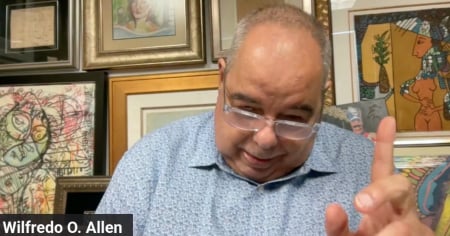
Lawyer Willy Allen, an expert in Immigration in Florida, has defined who the Cubans with I-220A are that have "a blessing." In his opinion, these are individuals who do not have a court date, do not have an appointment with ICE (Immigration and Customs Enforcement), and have a valid work permit for five years.
"They are the I-220A with the greatest blessing. In other words, we are talking about blessings. They don't have to report to ICE, they don't have to go to court, they have no risk of being detained as long as they don’t rob a bank, get into a street fight, or start selling drugs. Live your life peacefully, be patient, and your residency will come to your home," said Allen on his weekly program that airs on Mondays at 11:00 AM on CiberCuba.
In these cases, the lawyer clarified, it is perfectly fine for someone to call USCIS (U.S. Citizenship and Immigration Services) to inquire about their legal status. "You can always call USCIS and ask how your application is progressing. Ultimately, these I-220A will be legalized," he insisted.
Willy Allen made these statements one day before Cuban-American Congresswoman María Elvira Salazar presented an improved version of her Dignity Act in Washington, now with the support of Democrat Verónica Escobar, becoming, in this way, the first bipartisan proposal to reach Congress in decades, according to Salazar's office.
"Let's see what version of dignity she will present tomorrow (on Tuesday). Look, at the end of the day, if she proposes this law, wonderful. She is addressing something that is necessary, a comprehensive immigration reform. I suspect that this law will have little support and it will take a while to progress. I don't know if it will have the backing to go to Committee or for discussion, but at least I believe that the fact that she is talking about immigration reform and discussing the legalization of individuals instead of stopping and deporting them is a positive thing. The idea of discussing this law is interesting, but I can't express an opinion without seeing the details. Still, I think the effort she is making, at least to mention it, deserves some credit," said the lawyer, who has harshly criticized the congresswoman on other occasions, believing that the I-220A could be eligible for the Cuban Adjustment and that this avenue should be prioritized.
In any case, Willy Allen emphasizes that this María Elvira Dignity Law, if it moves forward, could solve the problem in the future, but in the short term, it leaves immigrants at the mercy of mass deportations. "The issue is not a future law; the problem is an immediate one, because today there are immigration courts. Today, they are going to detain Cubans, Nicaraguans, Venezuelans, Hondurans, and Guatemalans in the immigration courts that are being held," he stated in remarks to CiberCuba.
"Today they are going to a labor center, just like they did in North Carolina, and they are going to detain the workers who are there, doing work that is needed in this country. Today some sort of response is needed to the mass detentions that are occurring," he emphasized.
Willy Allen also criticized the statement that Alligator Alcatraz was for criminals. He explained that he has two clients locked up in that detention center in Florida. "They are not criminals; they are two Cubans with I-220A who have each been in the United States for over three years, appeared in court, and were detained," he concluded.
Filed under: