
Related videos:
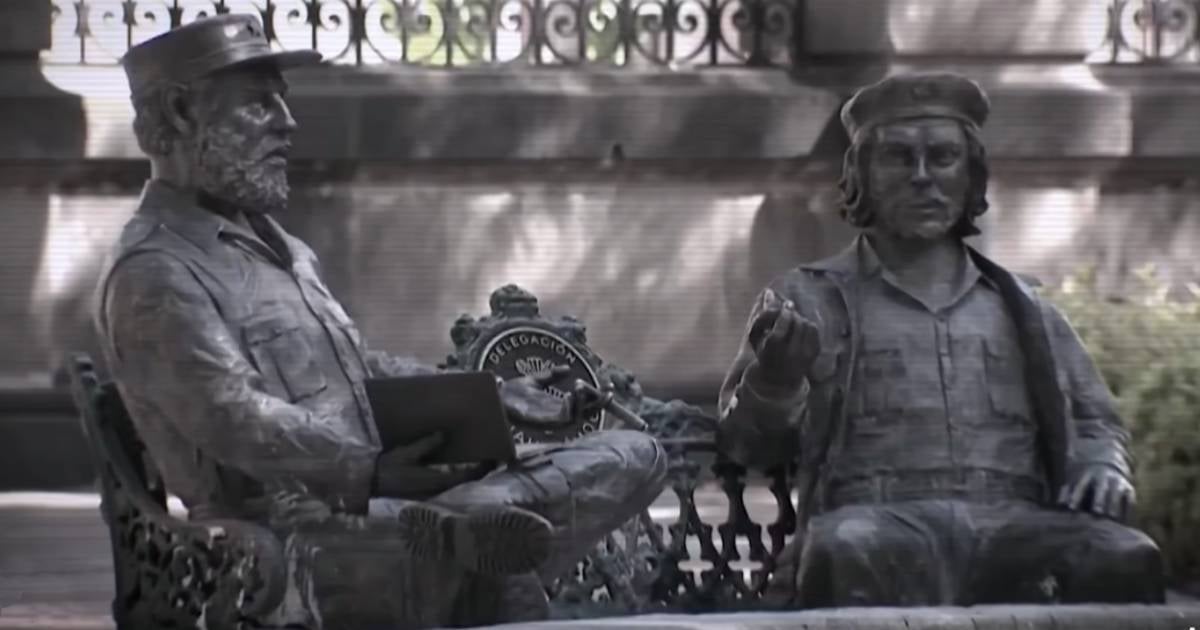
The mayor of Cuauhtémoc, Alessandra Rojo de la Vega, publicly defended the decision to remove the statues of Fidel Castro and Ernesto "Che" Guevara from the Tabacalera park in Mexico City, which has sparked a widespread debate on social media and in the media.
The measure - finalized on July 17 - has sparked controversy, particularly among the vocal supporters of the Cuban Revolution in Mexico, but Rojo de la Vega reaffirmed his stance, arguing for respect for human rights and the will of the neighborhood in the community.
"Citlali, dictatorships and repressive regimes are bad no matter where they come from. A killer is a killer whether they are from the right, center, or left," the mayor wrote on her X account (formerly Twitter), in response to criticisms from Senator Citlalli Hernández. "If you have a totalitarian agenda, just say it and that's it."
“Fidel and Che are not the Cuban people,” he emphasized.
In another post, Rojo de la Vega clarified that the removal of the statues is not due to a personal whim but rather in compliance with legal procedures requested by the citizens.
"It's not bureaucracy, it's the law... it's not my arguments, it's the proper administrative processes," she pointed out. "I believe in democracy and legal certainty," the mayor defended.
The official stated that it has historically been the neighbors who have requested the recovery of public space, and emphasized that her government is based on democratic principles, not on ideological impositions.
In another statement, the mayor compared the figure of Fidel Castro to that of Adolf Hitler, asserting that both leaders do not represent their people. She also acknowledged that in the past she took a photo in front of a mural of the Cuban revolution, an act she would not repeat today.
"Yes, I went to Cuba. Yes, I met its beautiful, creative, strong people... trapped in a dictatorship that has failed, which grants more rights to tourists than to its own people," she wrote. "Growing—also politically—is about recognizing, learning, changing. And taking a stand: #DictaduraNuncaMás."
The decision was supported by some members of the Cuban community in Mexico. Cuban journalist José Raúl Gallego clarified that the majority of Cubans residing there favor the removal of the statues.
"Cubans in Mexico appreciate the removal of the statues," Gallego wrote on X.
He also recalled that "the one calling for that 'demonstration' (which opposes the removal of the statues) is the Association of Cubans Residing in Mexico, a quasi-state organization controlled by the Cuban embassy," and that in previous years it has served as a repressive apparatus against activists and opponents of the regime.
Over the years, the Mexican Movement of Solidarity with Cuba and the aforementioned Association have been criticized for their close ties to the Cuban regime and for adopting repressive stances against activists who criticize the dictatorship on the island.
Various cases document campaigns of intimidation, harassment on social media and institutional pressure against exiled Cubans and Mexicans who denounce human rights violations in Cuba.
In particular, it has been reported that associations controlled by or aligned with the Cuban embassy in Mexico have organized public events to discredit opponents, as well as influencing university forums, cultural activities, and demonstrations to silence dissenting voices, sometimes with support from sympathetic political sectors.
These practices have been criticized by human rights organizations for replicating the censorship methods of the Cuban regime in exile.
Frequently Asked Questions about the Removal of the Statues of Fidel Castro and Che Guevara in Mexico
Why were the statues of Fidel Castro and Che Guevara removed in Mexico City?
The statues were removed due to administrative irregularities and neighborhood complaints. Mayor Alessandra Rojo de la Vega explained that the necessary permits from the Committee of Monuments and Artistic Works in Public Spaces (COMAEP) were not obtained for their installation, in addition to having received multiple complaints from residents in the area.
What do Cubans living in Mexico think about the removal of the statues?
Most Cubans living in Mexico support the removal of the statues. Cuban journalist José Raúl Gallego pointed out that many of the protests against the removal are organized by associations controlled by the Cuban embassy, which do not represent the majority of Cubans residing in Mexico.
What has been the Cuban government's reaction to the removal of the statues?
The Cuban ambassador in Mexico, Marcos Rodríguez Costa, downplayed the removal of the statues by stating that the true revolution is the transformed consciousness, avoiding direct reference to the mayor's decision. This stance reflects an attempt to divert attention from the criticisms directed at the Cuban regime.
What does the mayor of Cuauhtémoc argue about the removal of the statues?
The mayor Alessandra Rojo de la Vega defends the withdrawal as an act of respect for human rights and democracy. She asserts that the decision reflects the will of the residents and complies with the law, rejecting any ideological imposition.
Filed under: