
Related videos:
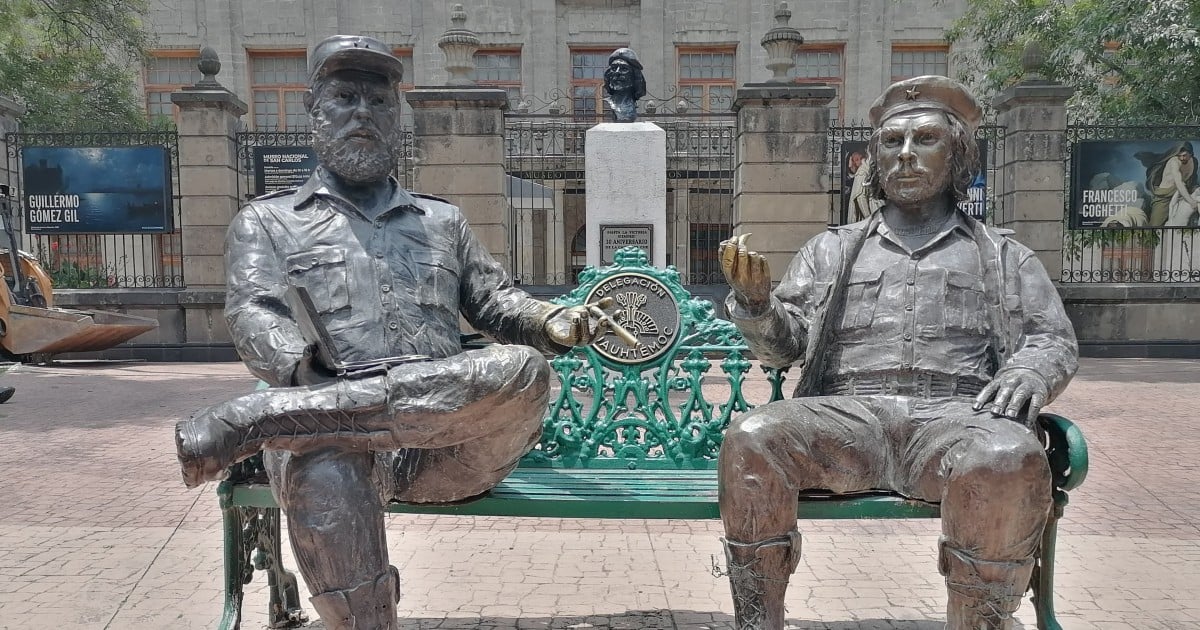
The recent decision to remove the statues of Fidel Castro and Ernesto Che Guevara from a park in Mexico City has sparked a wave of reactions, including one from the Cuban ambassador, Marcos Rodríguez Costa, who attempted to downplay the measure with grandiose and evasive statements.
"The true Revolution is not made of stone or bronze: it is transformed consciousness, the collective will to fight and build a fairer world," expressed the diplomat on X, refraining from directly addressing the resolution of the Cuauhtémoc mayor's office.
Rodríguez Costa accompanied his message with a quote from Fidel Castro: "...there is no force in the world capable of crushing the power of truth and ideas," he wrote, overlooking the reality: the late ruler was one of the longest-serving and most repressive dictators in history.
The Communist Party of Mexico also reacted vehemently to the removal of the monument, describing the act as "an offense to the friendship between Cuba and Mexico" and calling for protests.
The party fervently defended figures widely criticized for human rights violations, the execution of opponents, and the criminalization of dissidents, without offering a single word about the legal reasons that led to the withdrawal.
In contrast, the mayor of Cuauhtémoc, Alessandra Rojo de la Vega, who ordered the removal of the statues, demonstrated a respect for legality and common sense.
"Neither Che nor Fidel asked for permission to settle in Cuba… nor at the Tabacalera. But here the law is upheld. Cuauhtémoc is free," he said, in a statement that summarized the citizens' rejection of the glorification of two leaders responsible for thousands of executions and political persecutions.
The President of Mexico, Claudia Sheinbaum, on her part, took an ambiguous and accommodating stance, suggesting that the statues could be relocated elsewhere.
By insisting that they represented a "historic moment" between Mexico and Cuba, Sheinbaum overlooked the discontent of numerous residents, as well as the symbolic damage those figures represent for many victims of Castroism.
The removal of the sculptures was prompted not only by administrative irregularities - such as the lack of permits from the Committee of Monuments and Artistic Works in Public Spaces - but also by years of neighborhood complaints, vandalism, and public rejection.
The sculptural ensemble, popularly known as the bench of Che and Fidel, has been a subject of controversy since its placement in 1917, and again in 2020 when it was reinstalled without formal authorization.
For some, it was a legitimate tribute to the historical ties between Mexico and the Cuban revolution, while many saw it as an offense, an urban homage to two men responsible for extrajudicial executions, incarcerations without trial, and the establishment of an oppressive system in Cuba.
For now, the sculptures remain under protection while their final destination is determined.
In times when historical memory is contested in the public sphere, the decision by the Cuauhtémoc mayor's office sets a precedent: not every historical figure deserves a statue, especially when their legacy is marred by repression and violence.
Frequently asked questions about the removal of the statues of Fidel Castro and Che Guevara in Mexico
Why were the statues of Fidel Castro and Che Guevara removed in Mexico City?
The statues were removed due to administrative irregularities in their installation, lack of permits from the Committee of Monuments and Artistic Works in Public Spaces, and years of neighborhood complaints that included vandalism and public disapproval.
Who ordered the removal of the statues of Fidel and Che in Mexico?
The mayor of Cuauhtémoc, Alessandra Rojo de la Vega, was the one who ordered the removal of the statues. She argued that their installation did not comply with established legality and that their presence lacked the necessary formal support.
What was the Cuban government's reaction to the removal of the statues?
The Cuban ambassador, Marcos Rodríguez Costa, attempted to downplay the measure by highlighting the importance of revolutionary ideas over physical monuments. However, this response failed to address the legal reasons and public disapproval that led to the removal.
What position did the president of Mexico take regarding the statues?
The President of Mexico, Claudia Sheinbaum, suggested that the statues could be reinstalled elsewhere, highlighting their historical value, although her stance was criticized for overlooking the discomfort that these figures generate among the residents of the area where they were originally located.
How did the Communist Party of Mexico react to the removal of the statues?
The Communist Party of Mexico described the act as an "affront to the friendship between Cuba and Mexico" and called for protests against the decision, expressing its disagreement with the measure and defending the figures of Fidel Castro and Che Guevara.
Filed under: