The Cuban government allocated over 204.9 million dollars for the import of food and agricultural products from the United States between January and May of 2025.
The data from the Department of Agriculture of that country indicates that the figure represents an increase of 16.6% compared to the same period last year, when purchases were reported at 175.7 million dollars.
Only in May, imports reached $37.2 million, surpassing the $34.6 million of May 2024 and the $25.5 million from the same month in 2023. In April, the amount had been $37.8 million.
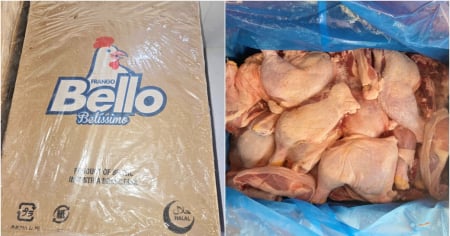
As usual, chicken meat tops the list of purchased products, with a value of 15.7 million dollars in May, representing 42.4% of the total for the month.
Imports of this product from the U.S. have become the main source of meat protein on the Island. In January, chicken sales to Cuba increased by 21% in value and 27.6% in volume compared to December 2024.
The average price of chicken exported to Cuba was $1.28 per kilogram in January 2025, slightly below the value recorded a month earlier. Although the government remains the main buyer, micro, small, and medium-sized enterprises (MIPYMES) have gained ground as players in these operations, reflecting the internal transformations in Cuban foreign trade.
One of the most notable figures from May was the purchase of an unprecedented amount of milk powder, valued at 7,357,388 dollars. Additionally, sanitary products were imported for 52,281 dollars, 1.1 million in rice, 3.8 million in pork, and nearly 480,000 dollars in coffee.
These products, which were produced locally in past decades, now reflect the growing food dependence of the country.
The Cuba-U.S. Economic and Trade Council also reported sales of motorcycles amounting to 1.35 million dollars, as well as humanitarian donations valued at 10.7 million.
Another growing sector is the purchase of new and used vehicles, including trucks, motorcycles, mopeds, and their parts. Between January 2023 and May 2025, Cuba has allocated over 115 million dollars to this sector: 67.2 million in 2024, 10.5 million in 2023, and more than 20.5 million just in the first five months of 2025.
All these operations are conducted under the provisions of the Trade Sanctions Reform and Export Enhancement Act (TSREEA) of 2000, which authorizes agricultural and humanitarian sales to the Island.
Since its implementation in December 2001, Cuba has spent over 7.885 billion dollars on food imports from the United States.
While these million-dollar purchases continue, the Cuban regime keeps blaming the U.S. embargo for the shortage of basic products, without acknowledging the actual volume of imports allowed under legal exceptions.
Frequently Asked Questions about Food Imports from Cuba to the U.S.
Why does Cuba import food from the United States?
Cuba imports food from the United States due to the insufficiency of its national production to meet the food needs of its population. Despite the embargo, imports occur under legal exceptions such as the Trade Sanctions Reform and Export Enhancement Act, which allows for the sale of agricultural products to Cuba.
What is the main food product that Cuba imports from the United States?
The main food product that Cuba imports from the U.S. is chicken. In May 2025, chicken imports reached a value of 15.7 million dollars, representing 42.4% of the monthly total. Chicken is the primary source of meat protein on the island due to the local agricultural crisis.
What impact does food importation have on the Cuban economy?
The importation of food has a significant impact on the Cuban economy as it reflects its dependence on external supply to meet the basic needs of its population. This is due to the decline in domestic production of essential food items, which forces the allocation of large sums of money to imports, affecting the country's trade balance.
How has the agricultural crisis in Cuba affected its dependence on imports?
The agricultural crisis in Cuba has increased its dependence on food imports due to a significant drop in the production of staple goods such as pork, rice, and milk. This situation forces the country to constantly resort to imports in an attempt to meet the domestic food demand.
What are the criticisms of the Cuban government concerning food imports?
Criticism of the Cuban government focuses on its inability to ensure sufficient food production and its reliance on imports, while it continues to blame the U.S. embargo for the shortages. However, these critiques point out that the regime does not acknowledge the actual volume of imports allowed under legal exceptions and does not effectively tackle the internal food crisis.
Filed under: