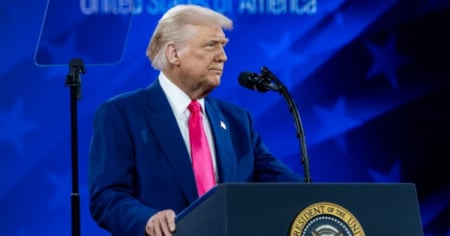
The President of the United States, Donald Trump, has raised the possibility of using the revenue generated from tariffs imposed on trade partners to send refund checks to American citizens.
This proposal, which could lead to a new economic stimulus for certain sectors of the population, also considers the alternative of allocating those funds to the payment of the growing national debt.
"We are actually thinking about that, we have so much money coming in that we are considering a small rebate," Trump declared to the press last Friday at the White House, before departing for Scotland.
The official specified that the beneficiaries would be "people with a certain level of income", he said, without providing further details about the eligibility criteria.
Record revenues from tariffs
In the current fiscal year, revenue from tariffs has exceeded 100 billion dollars for the first time, reaching a record of 113 billion by June, according to data from the U.S. Department of the Treasury.
In June alone, 27 billion were collected, reflecting the tightening of trade policy driven by Trump, focused on imposing tariffs on imports to attract more manufacturing to the country.
Treasury Secretary Scott Bessent estimated that if this trend continues, the United States could bring in up to $2.8 trillion over a decade due to tariffs.
Refunds or debt reduction?
The idea of issuing refund checks with the raised funds adds to the alternative of using that money to pay down the national debt.
"The main thing we want to do is pay off the debt. But we are considering a reduction," Trump insisted, highlighting the dual objectives of his administration: easing the economic burden on citizens and curbing the growth of federal debt, which currently exceeds $36 trillion.
However, the impact of this tariff collection is limited compared to the size of the U.S. fiscal deficit.
In the first nine months of fiscal year 2025, the deficit reached 1.34 trillion dollars, a figure slightly higher than in the same period the previous year.
Who really pays the tariffs?
Despite Trump's assertions that tariffs are paid for by foreign trading partners, multiple studies and economic analyses reveal that the impact of these measures primarily falls on American companies and consumers, who bear the brunt of rising prices on imported goods.
The debate over the true effect of tariffs is intensifying amid the possibility that these funds will become a new stimulus program.
The proposal, if it moves forward, would require specific legislation from Congress authorizing the Department of the Treasury to issue payments, as has occurred in previous instances with economic stimulus checks.
An uncertain legislative future
Although Congress recently approved a comprehensive tax and spending law with new exemptions, this legislation does not provide for refunds based on tariffs.
This suggests that any attempt to implement Trump's idea will require a new legislative initiative, the success of which will depend on the political composition of the legislature and the support it receives among its members.
Tariffs, debt, and economy
The Congressional Budget Office (CBO), an independent agency, warned in January that Trump's fiscal policy could add $3.4 trillion to the U.S. deficit over the next decade.
Furthermore, it is projected that public debt will reach a historic proportion in relation to GDP in just four years, even surpassing the levels recorded after World War II.
The economic context, characterized by high fiscal deficits and inflationary pressures, raises questions about the viability and sustainability of this proposal.
Meanwhile, Trump continues to leverage the discourse of economic relief and industrial revitalization as central pillars of his governance strategy.
Frequently asked questions about Trump’s refund checks and tariffs in the U.S.
What does Donald Trump propose with the rebate checks?
Donald Trump has proposed the possibility of sending refund checks to certain American citizens using the revenue generated from tariffs imposed on trading partners. This measure aims to provide additional economic stimulus to some segments of the population. However, there is also consideration to allocate those funds to pay down the national debt, revealing a duality in the objectives of his administration.
Who would be the beneficiaries of the refund checks?
Donald Trump mentioned that the refund checks would be aimed at "people with a certain income level," although he did not provide specific details about the eligibility criteria. This lack of clarity has raised questions about who the actual beneficiaries of this proposal would be, and whether legislation will be enacted to define the eligibility conditions.
How have Trump's tariffs impacted the U.S. economy?
The tariffs imposed by Trump have generated record revenue for the government, exceeding $113 billion by June 2025. However, these taxes have negatively impacted U.S. businesses and consumers, who bear the burden of rising prices on imported goods. Despite Trump claiming that the tariffs are paid for by trading partners, multiple studies show that the actual impact primarily affects American consumers.
What implications does Trump's proposal regarding refund checks for the national debt have?
Trump has stated that the priority of his administration is to use tariff revenues to reduce the growing national debt, which exceeds 36 trillion dollars. However, the impact of tariff collection is limited compared to the size of the fiscal deficit, which reached 1.34 trillion dollars in the first nine months of fiscal year 2025. This situation raises doubts about the feasibility of simultaneously allocating funds to both initiatives.
What is needed to implement Trump's proposal for refund checks?
The proposal to issue refund checks would require specific legislation from Congress authorizing the Department of the Treasury to issue the payments. So far, Congress has not considered tariff-based refunds in recent tax legislation, indicating that a new legislative effort will be necessary to move forward with this idea. The success of such an initiative will depend on the political composition of Congress and the support it receives from its members.
Filed under: