
Related videos:
Chapter I
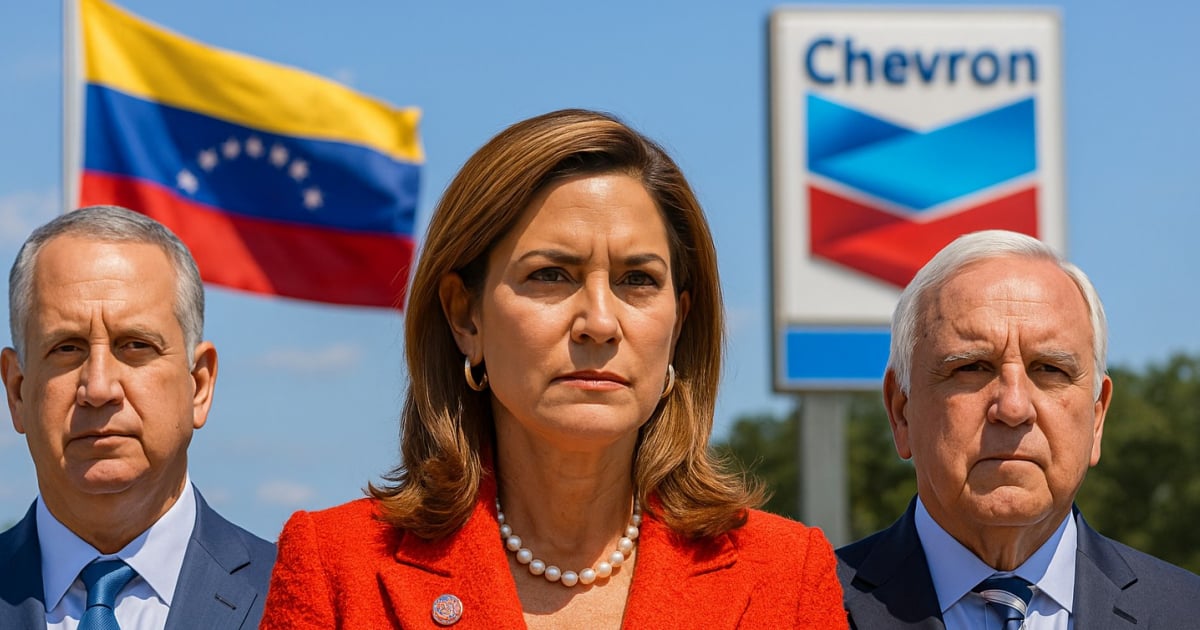
In May of last year, instead of using their political capital to pressure Donald Trump on immigration issues — such as halting ICE raids or supporting I-220A and beneficiaries of humanitarian parole — the three Cuban-American congressmen from Miami chose a different strategy: they discreetly threatened to withdraw their support in the House of Representatives for the BBB bill (Big Beautiful Bill) if the president opted to revive Chevron's operations in Venezuela.
In February, the White House had revoked the license of the oil corporation to operate in the South American country, but by then that decision was about to be reversed following secret negotiations between Nicolás Maduro and the special envoy Richard Grenell, Trump's preferred choice for dealing with Caracas.
According to revelations from the news site Axios, representatives Mario Díaz-Balart, María Elvira Salazar, and Carlos Giménez visited the White House to express their dissatisfaction directly to Trump. A week later, Díaz-Balart contacted the president by phone through the Speaker of the House, Mike Johnson, and reminded him once again of his anti-Maduro commitment.
None explicitly threatened to withdraw their vote or to engage in a quid pro quo regarding the negotiations on the Budget Law, which at that time consumed Trump’s mind 24/7. However, they made it clear that a deal with Caracas would amount to “extending the lifeline” thrown by Joe Biden when he eased sanctions on Venezuela in 2022.
“They are going to go crazy, and I need their votes,” Trump explained to two confidants quoted by Axios when he seemed inclined to let the negotiations to reactivate Chevron's license die.
The Secretary of State himself, Marco Rubio, urged Trump to discard the agreement negotiated by his rival Grenell, arguing that giving oxygen to Maduro would be “a political and moral mistake.”
Finally, Trump decided ―now we know it was only temporary― to cancel the license for the multinational, and the "Three Crazy Cubans" (in Johnson's words) got their way and voted Yea for the BBB.
Díaz-Balart, Salazar, and Giménez immediately rushed to the media to sing the president's praises for cutting off the sources of income to the Venezuelan dictatorship through Chevron's exports.
Chapter II
On July 24, the newspaper The Wall Street Journal (WSJ) revealed that Trump—as has become customary—had changed his mind once again and authorized a new license for the oil giant to continue crude extraction in Venezuela.
Many of the provisions of the new "specific license" remain unclear, but according to WSJ, under the new agreement, neither profits nor taxes derived from them would end up in the hands of the Maduro regime.
Despite this, some former officials from the Venezuelan state-owned company PDVSA quickly flooded platform X with arguments that a crude oil payment to Caracas would, in fact, represent a significant source of income for its government.
As of today, the White House has not confirmed the agreement, nor are the details of the contract known, but Maduro himself appeared exuberantly on national television to confirm the resumption of Chevron's operations in the country.
The new agreement was revealed just days after a swap of 252 Venezuelans who had been deported to the CECOT prison in El Salvador for a dozen Americans detained in Venezuela (including a former marine with dual nationality serving time for a multiple murder in Spain).
WSJ reported that both Trump and Secretary of State Rubio were "involved in the discussions" for the exchange. When Maduro was asked if the prisoner swap was part of the negotiations to reactivate the license for Chevron, he responded sarcastically: "During my years in the Foreign Service, I learned that sometimes you have to say: 'No comments'."
Epilogue
As news about Chevron spread rapidly, past statements (from 2022, 2023, 2024, and 2025) from three Cuban-American congress members surfaced, fiercely attacking the Biden Administration for having extended an initial license to Chevron as part of an agreement that included the release of political detainees and a national pact for holding elections. “Either the Biden Administration is foolish, or it is betraying the cause of democracy in Venezuela,” Díaz-Balart angrily summarized.
But after the reactivation of the agreement by Trump, there was a 180-degree turnaround in Miami. Now the "Three Crazy Cubans" support Chevron's business with Maduro.
Just a tweet, shared on X word by word by the three Republican lawmakers, in English and Spanish, in an unsuccessful attempt to clarify their position: “There is no greater defender of the cause of freedom for the Venezuelan people than President Trump. His record is very clear when it comes to confronting the anti-American dictators of the Western Hemisphere who constantly seek to undermine the national security of the United States.”
Not a single criticism, not a single reservation regarding decisions that they themselves had unequivocally condemned as idiotic or treacherous.
In the end, it seems that the political calculation did not work out for them. In order not to discomfort Trump, they avoided using their influence to defend hundreds of thousands of immigrants—like themselves or their parents once were—threatened with deportation back to the same dictatorships they fled from.
They believed they could please the core of their local electorate by showing firmness towards Venezuela—a less contentious issue with Trump and Maga than immigration—and they bet everything on Chevron.
The result: Trump ignored them on both fronts. He played with them and gave them absolutely nothing, other than an expensive lesson: no progress on immigration, no victory with Chevron. On top of that, he continues to deprive them of oxygen in the electoral arena, with decisions perceived as openly hostile by large segments of the Hispanic community.
The Secretary of State, for his part, has been playing on all fronts. Shortly before the affair Chevron, Rubio had published a memorandum announcing a drastic change in foreign policy: from now on, the State Department will refrain from public comments on foreign elections (including Venezuela’s?) and will instead focus more on the "strategic interests of the United States" above the values—or anti-values—of other nations.
Regarding Chevron, Rubio moved from opposition to transaction in broad daylight, like a postmodern Fouché, without a hint of shame. He is making a strong bet to become the designated hitter for 2028, seeking to position himself above James David Vance. And to achieve this, he knows he only has to respond with two words: “Yes, Sir.”
Frequently asked questions about Chevron's operations in Venezuela and Trump's policy
Why do Cuban-American congress members avoid criticizing Trump after the agreement with Venezuela?
The Cuban-American congress members, Carlos Giménez, Mario Díaz-Balart, and María Elvira Salazar, avoided criticizing Trump to avoid discomforting him and to preserve their political influence. Although they previously criticized Biden for his approach to Venezuela, they adopted a supportive stance toward Trump and his decision to allow Chevron to resume operations in Venezuela, in order to maintain their political alignment and avoid tensions with their pro-Trump electoral base.
What does the resumption of Chevron's operations in Venezuela imply?
The resumption of Chevron's operations in Venezuela suggests a shift in Trump's policy towards Maduro's regime. Despite previous sanctions, Trump has authorized Chevron to extract oil once again in Venezuela. This has been interpreted as an attempt to balance the energy needs of the U.S. with geopolitical tensions, although the terms of the agreement are not entirely clear.
How does the Chevron agreement affect Trump's immigration policy?
Chevron's agreement with Venezuela is linked to immigration policies, as a prisoner exchange and the acceptance of deported Venezuelans have been mentioned. This move suggests that energy decisions are being used as a leverage tool in other political arenas, particularly in the management of migration and bilateral relations with Venezuela.
What are the consequences of Trump's decision regarding Chevron's license in Venezuela for Cuba?
The resumption of operations by Chevron could indirectly affect Cuba, as Venezuela may redirect its oil production towards its strategic partners, such as Cuba. This could alleviate the fuel crisis on the island, as Venezuela could increase crude oil shipments to Cuba, offsetting the loss of exports to the U.S.
Filed under:
Opinion article: Las declaraciones y opiniones expresadas en este artículo son de exclusiva responsabilidad de su autor y no representan necesariamente el punto de vista de CiberCuba.