
Related videos:
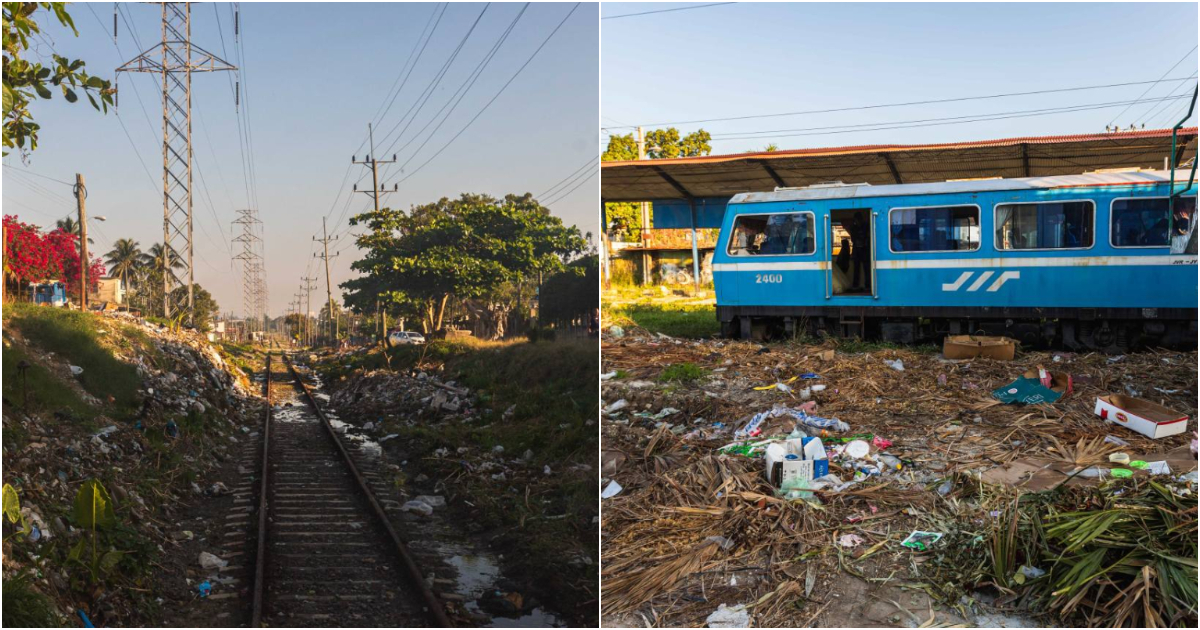
The Railway Construction Company "Comandante Tony Santiago" reported the uncontrolled increase of solid and liquid waste dumped on the country's railway infrastructure, a practice that seriously compromises operational safety, public health, and the resilience of a system that barely holds up on its own.
The alert, shared via the Facebook profile of the Cuban Railway Union, explained that the illegal dumping of waste directly affects key components such as the ballast (the stone that supports the sleepers), the fastenings, the sleepers, and the embankments. All of this shortens their lifespan and necessitates emergency cleanups that halt rail traffic.
In urban areas and throughout towns, piles of garbage are part of the landscape.
It's not just an aesthetic or environmental issue: drainage systems—ditches, culverts, and channels—are being obstructed by waste, which worsens the operational conditions of trains and can lead to accidents or prolonged disruptions, the entity reported.
The infrastructure, battered by years of underinvestment, is further compromised by collective neglect.
Railway authorities emphasize that the most affected are the workers in the maintenance crews, who must operate amidst mountains of garbage, in deplorable hygienic conditions, and with a high risk of illnesses due to direct contact with hazardous waste.
In this regard, they made “an urgent call to the public to avoid throwing garbage in the streets, to report these practices, and to raise awareness in communities about the impact of this issue.”
But the problem, like so many others, cannot be resolved with a Facebook post. It requires shared responsibility, yes, but effective management, institutional action and real oversight.
The accumulation of garbage and the lack of timely waste collection have become a recurring problem in several Cuban cities, with serious implications for public health.
Although the authorities have called for discipline among the population in waste disposal, the state response has been insufficient to contain the deterioration of the urban environment.
In the face of increasing unhealthiness, constant foul odors, and the proliferation of rats, flies, mosquitoes, and cockroaches, some people set fire to garbage containers and collection tanks.
The fire destroys some of the waste, the vectors that develop there, and forces the authorities to take action, but it poses a real danger to homes and individuals nearby.
A young Cuban recently shared on social media her testimony about the neglect and accumulation of waste on the Vía Blanca in Matanzas, one of the busiest avenues in the city and considered a tourist area due to its proximity to the sea.
“Little by little, garbage is taking over the most beautiful places in our province,” he claimed.
The situation on the Vía Blanca resembles other recent scenes, such as the trash accumulated on the beaches of the Matanzas coast, where plastic waste and even appliances invade areas frequented by bathers.
In another instance, residents of a neighborhood showcased how they organized to clean the areas around a school due to the lack of services, concerned about the impact on children's health.
In Santiago de Cuba, the old Hotel Venus has been turned into a dump due to lack of state management, amidst the neglect of architectural heritage.
Meanwhile, in Vedado, Havana, residents have reported the proliferation of unhealthy hotspots even near the Institute of Hematology and Immunology, which has led to rodent infestations and concerns about a potential larger health crisis.
Frequently Asked Questions about the Trash Crisis in Cuba and Its Impact on Railways
What risks does the accumulation of trash on the railway tracks in Cuba pose?
The accumulation of trash on the railway tracks seriously compromises operational safety and public health. The illegal dumping of waste affects key components of the railway infrastructure, such as ballast and sleepers, shortening their lifespan and requiring emergency cleanups that halt rail traffic. Furthermore, drainage works become blocked, which can lead to accidents or prolonged interruptions.
Why haven’t the Cuban authorities resolved the garbage problem?
Despite calls to the public to avoid littering and report such practices, the state's response has been insufficient. The problem lies in the lack of effective management, institutional action, and real oversight. The garbage crisis in Cuba has been exacerbated by the lack of resources, such as collection trucks or fuel, and state inaction, which has caused discontent among citizens.
How does the accumulation of garbage in Cuban cities affect public health?
The accumulation of trash in Cuban cities creates serious health problems. The proliferation of vectors such as rats, flies, mosquitoes, and cockroaches is a constant danger, affecting the health of citizens and increasing the risk of diseases. In some cases, residents have decided to set the trash heaps on fire to combat the unsanitary conditions, which poses an additional danger to nearby homes.
What measures are citizens taking in response to the lack of state action regarding the trash crisis?
In the absence of effective actions by the State, citizens have begun to organize themselves to clean their communities. In some neighborhoods, residents have taken the initiative to collect the trash themselves, aware of the impact on their health and environment. However, this temporary solution does not address the structural problem of waste management in Cuba.
Filed under: