
Related videos:
The beauty that makes it desirable has also put an endemic species of Cuba at risk of extinction, the Polymita, a reason that led Cuban and British specialists to collaborate on a project to save it from extinction.
From Cuba, conservation biologist Bernardo Reyes-Tur, a professor at the University of Oriente in Santiago de Cuba, and in the United Kingdom, evolutionary geneticist and mollusk expert Angus Davison, an academic at the University of Nottingham, are leading a mission to prevent the extinction of the six known species of Polymita from their native forest habitats in the eastern part of the island, revealed a report from BBC News this Monday.
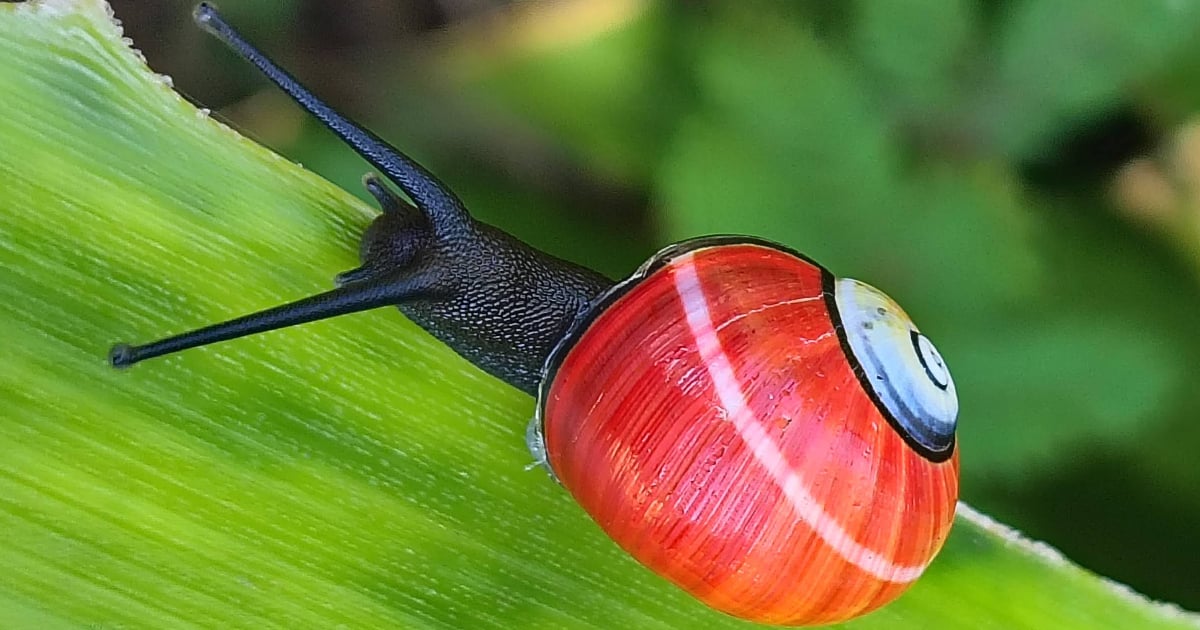
The Polymita is a genus of land snails endemic to Cuba, regarded as the most beautiful in the world due to their bright colors and distinctive patterns on their shells.
However, unfortunately, the characteristics that make them precious and unique have also turned them into threatened animals, due to their capture by collectors and for the trade of their shells as decorative items.
Precisely, the collaborative project that brings together specialists from both countries aims to "better understand how snails evolved and provide information that aids in conservation."
According to BBC News, Cuban professor Reyes-Tur is breeding Polymita snails in his own home, facing challenges such as power outages due to "unreliable energy supplies," and the high temperatures typical of the climate in the eastern part of the island.
"They haven't raised any yet, but they're doing well," she stated during a video call interview. "But it's a challenge; we have blackouts all the time."
Meanwhile, in the modern laboratories of the University of Nottingham, Davison and his team store samples of snail tissue in cryogenic freezers for genetic research.
The specialists "can use this material to read the genomes of animals: the biological set of coded instructions that defines each snail," the report emphasizes.
The information they obtain during the study will allow them to confirm the number of existing species, their relationships to each other, and which part of their genetic code gives them their unique color patterns.
“The east of Cuba is the only place in the world where these snails are found. That is where the experience is, where the people who know, love, and understand these snails live and work,” Davison told BBC News.
The scientist expressed his hope of "being able to use the genetic information we can provide to contribute to its conservation."
Although there are international regulations in place to protect polimitas, they are not being fully enforced. The Convention on International Trade in Endangered Species of Wild Fauna and Flora (CITES) considers it illegal to remove the snails or their shells from Cuba without authorization; however, their sale in other countries is not illegal.
In an internet search conducted by the author of the report, Victoria Gill, and Professor Davison, several sites appeared where sellers from the United Kingdom were offering Polymita shells. On one of the platforms, a collection of seven shells was for sale at a price of 160 pounds.
In Cuba, the poaching of these snails is common, primarily to obtain their shells, which have been sold for years—and continue to be sold—to tourists in craft and souvenir shops, both state-owned and private, as well as in the black market.
A report from the official newspaper Granma, in 2015, revealed that the areas where the illegal trade of the mollusk was booming at that time were in the Guantanamo municipalities of Baracoa, Imías, and Maisí, due to the negligence of the authorities.
There are six known species of polimitas, of which the most threatened is Polymita sulphurosa, described by BBC News as “lime green with patterns of blue flames around its spirals and bright orange and yellow bands along its shell.” However, all are very colorful, an extraordinary trait “that constitutes an evolutionary mystery in itself.”
In June, a milestone was achieved with the publication of the genome of Polymita picta, a research project by academics Reyes-Tur and Davison and their respective teams, presented in the Journal of Molluscan Studies under the title “The mitochondrial genome and phylogenetic placement of the most beautiful snail in the world, Polymita picta.”
The Polymita picta was declared Mollusk of the Year 2022, according to an international survey organized by the Loewe Center for Translational Biodiversity Genomics (TBG) in Germany and the World Society for Molluscan Research (Unitas Malacologica). It had also been nominated for the award in 2021, where it came in second place.
Frequently Asked Questions about the Collaboration to Save the Polymita in Cuba
What is the main objective of the collaboration project between Cuban and British specialists?
The main objective of the project is to save the Polymita, a snail endemic to Cuba, from extinction. The collaboration aims to better understand how these snails evolved and provide genetic information that aids in their conservation. The Polymita is known for its beautiful and colorful shells, which has made it vulnerable to illegal capture and trade.
What challenges do Cuban specialists face in the captive breeding of Polymita?
The Cuban biologist Bernardo Reyes-Tur faces several challenges in breeding Polymita in captivity, such as the lack of electricity due to prolonged blackouts and the high temperatures in eastern Cuba. Despite these obstacles, the snails are doing well, although they have not bred yet.
Why is the Polymita endangered?
The Polymita is endangered mainly due to its capture by collectors and the trade of its shells as decorations. Despite international regulations that protect the species, such as CITES, these are not adequately enforced, allowing for the illegal sale of its shells in other countries.
How many species of Polymita are there, and which one is the most threatened?
There are six known species of Polymita, and the most threatened is the Polymita sulphurosa. This species is characterized by its lime green color with patterns of blue flames and bands of orange and yellow on its shell. All species of Polymita are very colorful, which represents an evolutionary mystery.
Filed under: