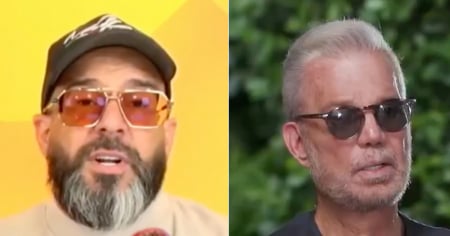
The Cuban presenter and activist Alexander Otaola reiterated this Friday his call for a “total halt” against the regime in Havana, stating that a complete stoppage of remittances, travel, and aid from abroad could bring down the system in less than three months.
During his program Hola! Ota-Ola on August 1, 2025, the influencer urged the Cuban community in exile to send massive amounts of emails and calls to members of Congress and senators in the United States, asking to cut off all economic and supply flow to the island.
"Stop the trips, stop the aid, stop the flights, stop the recharges, stop everything... The dictatorship can't sustain itself for three months with everything closed," he stated.
He also called for the Communist Party of Cuba to be declared a "terrorist organization" in Latin America and for the government of Cuba to be considered a "threat to the national security of the United States."
The presenter insisted that the current political moment, marked by the proximity of midterm elections, is favorable for the Cuban community to exert pressure on their federal representatives.
Otaola proposed to flood the offices of figures such as María Elvira Salazar, Mario Díaz-Balart, Marco Rubio, and other Florida lawmakers with thousands of daily messages urging their support for the measure. "It's simple: the majority rules, and politicians listen to the majority," he emphasized.
Background: the "January Halt" of 2020
This is not the first time the host has promoted such actions. In January 2020, Otaola launched the campaign known as January Shutdown, aimed at reducing the sending of remittances, travel, and top-ups to Cuba.
However, the state media claimed that the initiative had no significant impact on transactions. Additionally, leading companies providing services to Cuba from the United States, such as Cubamax, VaCuba, Supermarket23, Cuballama, and Fonoma reported increases in sales and services during that month.
The flow of remittances remained stable or saw growth, and phone top-ups increased by up to 35%, according to figures from companies in the sector. The majority of Cuban emigrants continued to send aid to their families on the island, even in the face of restrictions imposed by Washington.
The current context is not that of 2020
At the end of July, the Cuban Minister of Foreign Affairs Bruno Rodríguez Parrilla described a report from the U.S. Department of State that directly blames the regime for the severe economic and social crisis the country is experiencing as “lies” and “provocations.”
Rodríguez accused anti-Cuban sectors of acting "orphaned of support" both inside and outside of Miami.
"The disrespectful and irresponsible publications from the State Department reflect the frustration of anti-Cuban sectors in their inhumane aggression against the people of Cuba," the chancellor wrote on his official account on X.
In a later post, he accused the United States of fostering the separation of Cuban families, directly blaming the current Secretary of State, Marco Rubio, and other politicians of Cuban origin for tightening immigration policies against nationals from the island.
Otaola's new call for a complete halt to remittances, travel, and shipments to Cuba could provoke a significant reaction within the Cuban exile community, with consequences for the regime and for the Cubans who are trapped in a severe crisis on the island, struggling to survive in extreme poverty.
Frequently Asked Questions about Otaola's Call for a Total Lockdown in Cuba
What does Alexander Otaola propose with the total shutdown of Cuba?
Alexander Otaola proposes a "total halt" against the regime in Havana. This means stopping the flow of remittances, travel, and aid from abroad to bring down the system in less than three months. Otaola urges the Cuban community in exile to apply pressure on their representatives in the United States to achieve this goal.
What is the expected impact of a total shutdown in Cuba according to Otaola?
According to Otaola, the dictatorship cannot last three months with everything closed. He believes that stopping the economic flow to the island would cause the regime to collapse, as it relies heavily on remittances, travel, and other resources coming from abroad.
Has Otaola been successful in similar initiatives in the past?
In the past, Otaola launched the "January Standstill" campaign in 2020, which aimed to reduce the sending of remittances and travel to Cuba. However, the state media claimed that the initiative did not have a significant impact, as transactions and phone top-ups even increased during that period.
What is Otaola's stance on the Communist Party of Cuba?
Otaola has called for the Communist Party of Cuba to be declared a "terrorist organization". He argues that the Cuban regime poses a threat to the national security of the United States and seeks to strengthen sanctions against the Cuban government to advance the struggle for freedom on the island.
Filed under: