
Related videos:
A few hours before the fourth anniversary of the 11J, the Cuban regime has updated its controversial National List of People and Entities Linked to Terrorism, a legal tool that for many not only targets alleged perpetrators of violent crimes but also criminalizes political dissent from exile.
Resolution 13/2025 from the Ministry of the Interior, published this Wednesday in the Official Gazette, now includes 62 individuals and 20 organizations accused by the regime of “terrorist acts,” although no public evidence has been presented to support these allegations.
Most of them are Cubans residing abroad, particularly in the United States, especially in Florida, who are connected to political activism, independent media, or the digital environment.
Who are the new additions?
Among the five new names added to the list are Rolando Miguel Pérez Ruiz, Leordan Cruz Gómez, and Hamlet Pedraza Rivas, residents of the U.S. and accused of allegedly introducing weapons and sabotage. Also added were Armando Labrador Coro and Seriocha Humberto Fernández Rojas, members of the group Cuba Primero, accused of financing sabotage activities in Villa Clara and Havana.
Additionally, the Republican Party of Cuba, based outside the country, was designated as a “terrorist” entity, bringing the total number of included organizations to 20, among which were already Alpha-66, Brothers to the Rescue, Cuban American National Foundation (FNCA), Cuba First, the Assembly of Resistance, among others.
Figures of exile, politics, and digital activism
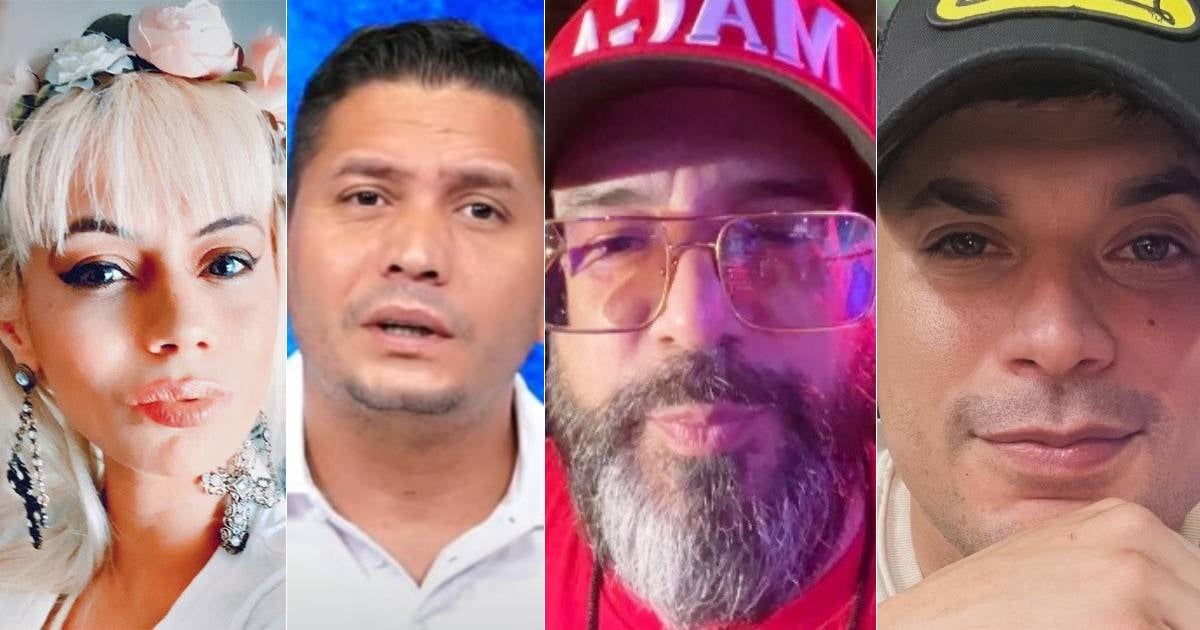
Among the most well-known names on the list are Alexander Otaola, Orlando Gutiérrez Boronat, Ana Olema Hernández, Ramón Saúl Sánchez, Eliecer Ávila, Manuel Milanés, Ultrack, and Alain Lambert (Paparazzi Cubano). Several of them are influencers or opinion leaders who are very active on social media, critical of the Cuban regime, and have significant visibility within the exiled community.
In many cases, the cited files date back to events that occurred in the 1990s, 2000s, or 2010s, with vague or generic accusations such as "financing," "organization," or "incitement" to actions against the state.
The resolution ensures that all those included have been subjected to criminal investigations, are "wanted" by Cuban authorities, and meet criteria established by national and international standards, without providing documentation to support this.
Despite the official tone and the supposed seriousness of the charges, being included on this list has no legal repercussions outside the island. In fact, in 2024 the Spanish Ministry of Foreign Affairs confirmed to CiberCuba that it had no official record of this list and that there is no active alert at Spanish airports concerning the individuals mentioned.
This means that many of the accused can continue to travel freely across Europe or Latin America, despite being considered by the regime as supposed "terrorists."
One of those included in the previous list and confirmed in this one, Alexander Otaola, host of the show Hola Otaola, reacted to the initial inclusion with irony and without showing concern: “Canel, look at what I do with extradition: I wipe my backside”, he said in a video he shared on his social media, showing a roll of toilet paper with the face of the ruler Miguel Díaz-Canel.
Otaola named the product "Canel Sanitario," using an advertising tone to mock the leader of the "continuity," in a response that blends humor, defiance, and contempt for the threat.
Even in December 2023, during the program Razones de Cuba, the Deputy Attorney General and senior officials from the Ministry of the Interior discussed the implementation of the new Penal Code to prosecute the accused, including sentences of up to 30 years, life imprisonment, or even the death penalty. There was also mention of the existence of Interpol red notices against some of them, although no confirmation was provided by that international organization.
Despite everything, the majority of those identified reiterated that they would continue to denounce the Cuban regime and would not allow this list to silence their voices or alter their activism.
A political use of "terrorism"
Human rights organizations and independent analysts have warned that the regime's use of the term "terrorism" aims more at intimidation than at justice. By criminalizing figures from the exile community and the digital sphere, the Cuban authorities appear to be trying to silence uncomfortable voices and reinforce a narrative of external siege.
The publication of the list also comes after the ratification of Cuba on the list of state sponsors of terrorism compiled by the U.S. and just days after U.S. President Donald Trump signed a memorandum that tightens U.S. policy towards the island.
During the presentation of the document, senior officials from the Ministry of the Interior, the Prosecutor's Office, and the Foreign Ministry criticized the alleged inaction of the U.S. government, which they accuse of harboring "terrorists" on its territory. Deputy Minister Josefina Vidal described it as "cynical" for the U.S. to accuse Cuba of terrorism "when it is this country that fights against it."
The new list was officially sent to the UN and notified to the Cuban judicial, prosecutorial, and financial bodies, although its practical impact seems limited outside the internal framework of control and repression of the regime itself.
Filed under: