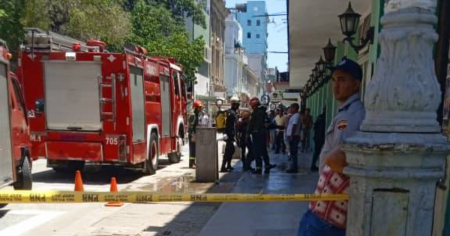
A new collapse shook the Cuban capital on Wednesday night when the balconies of a building located at 204 Laguna Street, between Lealtad and Perseverancia, in the San Leopoldo neighborhood, Central Havana, fell without warning.
The collapse occurred around 11:00 PM, when the second-floor balcony gave way and took down the first-floor balcony with it.
By pure coincidence, there were no people underneath at that moment, which prevented a tragedy.
The neighbors were grateful that the incident occurred in the early morning hours, when the sidewalk was empty, with no children playing or people sitting and chatting as usual.
A video shared by CubaNet shows debris scattered in the street hours after the incident, with no authorities having arrived to collect it or assess the safety of the structure.
This collapse is not an isolated incident; rather, it is part of a recent wave of failures that expose the chronic housing crisis and official neglect.
In recent days, Havana has witnessed collapses in municipalities such as Cerro, Regla, and other areas of Central Havana, some resulting in serious injuries and even fatalities.
Last Tuesday, at Castillo 216, in the Cerro municipality, a partial collapse left two people hospitalized, one of whom is in serious condition.
On Monday, in Regla, a nine-year-old girl was trapped under the rubble along with her mother and several neighbors, with no firefighters responding to the emergency despite the calls for help.
Just hours earlier, a five-month-old baby died when a wall of their home collapsed and the rainwater swept them from their mother's arms.
In another case recently reported in Centro Habana, a building declared "uninhabitable and irreparable" years ago on Mercado Street 79 suffered the collapse of a wall, trapping an elderly man and his 10-year-old son.
Officials from the Housing Directorate simply stated that residents should tear down the wall on their own, claiming that the agency "does not have the means" to do so.
The Cuban government continues to fail to implement a comprehensive plan for maintenance, prevention, and the relocation of families at risk.
Every rainy season, the streets of Havana become high-risk zones, where humidity, leaks, and structural deterioration turn many homes into death traps.
Criticism on social media has been swift. "Meanwhile, the birthday of the person responsible for all this disaster is being celebrated," wrote a user on social media, referring to the 99th anniversary of Fidel Castro's birth, which coincided with the series of collapses.
The residents of Centro Habana and other affected municipalities repeat the same complaint: the State is responsible for the lack of maintenance and the neglect of the structures.
Without real solutions, they warn, the collapses will continue to claim lives and leave families on the street.
Frequently Asked Questions about Collapses in Havana
Why do buildings in Havana collapse?
Buildings in Havana are collapsing due to structural deterioration, lack of maintenance, and adverse weather conditions such as intense rainfall. The situation is worsened by the age of the constructions and the government's lack of effective action to address the problem.
What response has the Cuban government given to the collapses?
The response from the Cuban government has been insufficient and ineffective. Often, the authorities fail to implement a comprehensive maintenance and prevention plan, leaving affected families without real solutions. Investment is prioritized in the tourism sector, while the homes of Cubans continue to deteriorate.
Which areas of Havana are most affected by collapses?
The areas most affected by the collapses in Havana include Centro Habana, Cerro, and La Habana Vieja. These municipalities have a high number of old and deteriorated buildings, which increases the risk of collapses, especially during the rainy season.
What consequences are the collapses having on the Cuban population?
Landslides are leading to victims, displaced families, and a fractured social fabric. Moreover, they create a sense of insecurity and abandonment among residents, who live with the constant fear of a possible collapse and without options for safe relocation.
How has the community reacted to the housing crisis in Cuba?
The community has expressed its frustration and anger through social media, criticizing the government for its inaction and lack of effective solutions. Cubans are denouncing that the regime prioritizes the construction of hotels while residential buildings collapse, leaving many people homeless and in constant danger.
Filed under: