
Related videos:
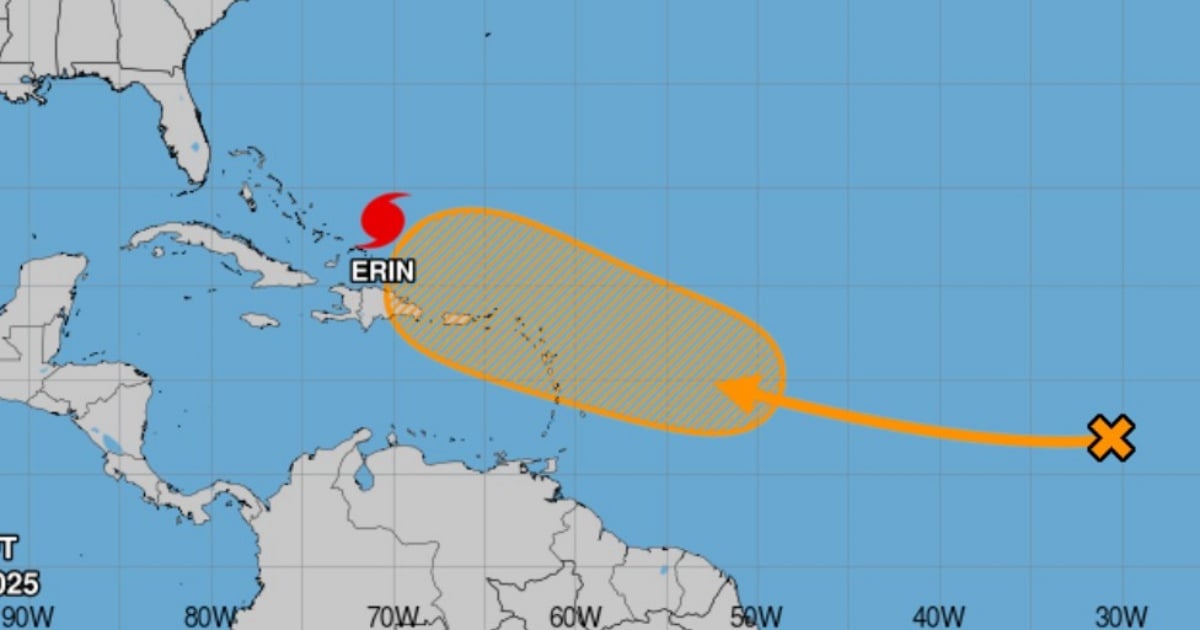
A new tropical wave in the eastern Atlantic has begun to attract the attention of the National Hurricane Center (NHC) due to its potential for development in the coming days.
Although it is currently an area of rain and disorganized thunderstorms, meteorologists warn that the environmental conditions could become more favorable by the end of the week, which could allow for the formation of a tropical depression.
The system, which shifts from west to west-northwest at about 32 km/h (20 mph), has a 50% chance of becoming a tropical cyclone in the next seven days, according to the latest bulletin from the NHC.
For now, the probability of formation in the next 48 hours is nil (0%), but if the trend continues, it could approach the Windward Islands - at the eastern end of the Caribbean - by Friday.
If it strengthens and reaches the category of tropical storm, it would be named "Fernand," the next name on the list of cyclone names for the 2025 season.
Favorable conditions for its development
NHC experts emphasize that this type of tropical wave can intensify rapidly if several factors come together, such as warm ocean waters, low wind shear, and a moist atmosphere.
This scenario is not unlikely, considering that the Atlantic basin is currently in its peak cyclonic formation period, which spans the months of August, September, and October.
In the words of the NHC itself: “The environmental conditions appear to be favorable for the gradual development of this system.”
Although the convective activity is still disorganized, if the system manages to establish a closed and persistent circulation, it could be classified as a tropical depression at any moment during the weekend.
These types of early formations can cause heavy rainfall, gusty winds, and swell even before they are officially designated as tropical cyclones, which is why authorities recommend closely monitoring their development, especially in the Lesser Antilles and the eastern Caribbean.
Erin is strengthening east of the Bahamas and creating dangerous conditions in the western Atlantic
Although the center of Hurricane Erin continues on its path away from land, its intensity and size make it a system to monitor closely.
In its intermediate advisory at 8:00 a.m. (Eastern Time) on Monday, the NHC classified Erin as a Category 4 hurricane, with maximum sustained winds of 130 mph (215 km/h) and a central pressure of 933 mb, making it a major and dangerous hurricane.
At that time, the center of Erin was located about 190 km north-northeast of Grand Turk Island, moving northwest at approximately 20 km/h.
It is expected to continue its movement east of the Bahamas and then advance between the east coast of the United States and Bermuda by the middle of the week.
Tropical storm conditions are already being felt in the Turks and Caicos Islands and the southeastern Bahamas, while parts of the central Bahamas are under warning.
Intense rainfall of between 2 and 6 inches is forecasted in some areas of Hispaniola, the Turks Islands, and the southeast of the Bahamas, which could lead to flash floods.
The NHC also advises caution along the southeast coast of the United States, where strong rip currents could be expected in the coming days, even without direct impacts from the hurricane.
Hurricane season: Activity on the rise
The official hurricane season in the Atlantic runs from June 1 to November 30, with its peak typically around September 10.
During this phase, the chances of cyclonic development increase significantly, as key factors align such as elevated ocean temperatures (above 26 °C), more favorable winds, and atmospheric humidity.
Erin is the fifth named tropical cyclone of 2025 and the first to reach hurricane status.
The previous ones - Andrea, Barry, Chantal, and Dexter - did not develop beyond tropical storm status.
Frequently Asked Questions about the Tropical Wave and Hurricane Erin in the Atlantic
What is the forecast for the new tropical wave in the Atlantic?
The new tropical wave has a 50% chance of becoming a tropical cyclone in the next seven days, although the probability of formation in the next 48 hours is absent. Environmental conditions are expected to become more favorable toward the end of the week, which could lead to the formation of a tropical depression. Coastal communities in the Caribbean are advised to monitor its development.
What are the necessary conditions for a tropical wave to become a cyclone?
The necessary conditions for a tropical wave to develop into a cyclone include warm ocean waters, low wind shear, and a humid atmosphere. These factors are critical for the system to intensify rapidly, especially during the peak of the hurricane season, which spans the months of August, September, and October.
What is the current situation of Hurricane Erin?
Hurricane Erin has strengthened east of the Bahamas, reaching category 4 with maximum sustained winds of 130 mph (215 km/h). Although Hurricane Erin does not pose a direct threat to land, caution is advised along the southeastern coasts of the United States due to the strong rip currents that could develop.
What measures should Caribbean communities take in preparation for hurricane season?
The Caribbean communities must stay vigilant to official reports and follow the recommendations of local meteorological authorities. The Atlantic hurricane season is at its most active period, and an increase in cyclonic activity is expected with the formation of several storms and intense hurricanes.
Filed under: