
Related videos:
In Cuba, it is enough to take a trip to any of the provinces to find evidence of the regime's inability to sustain any production, including the dairy industry.
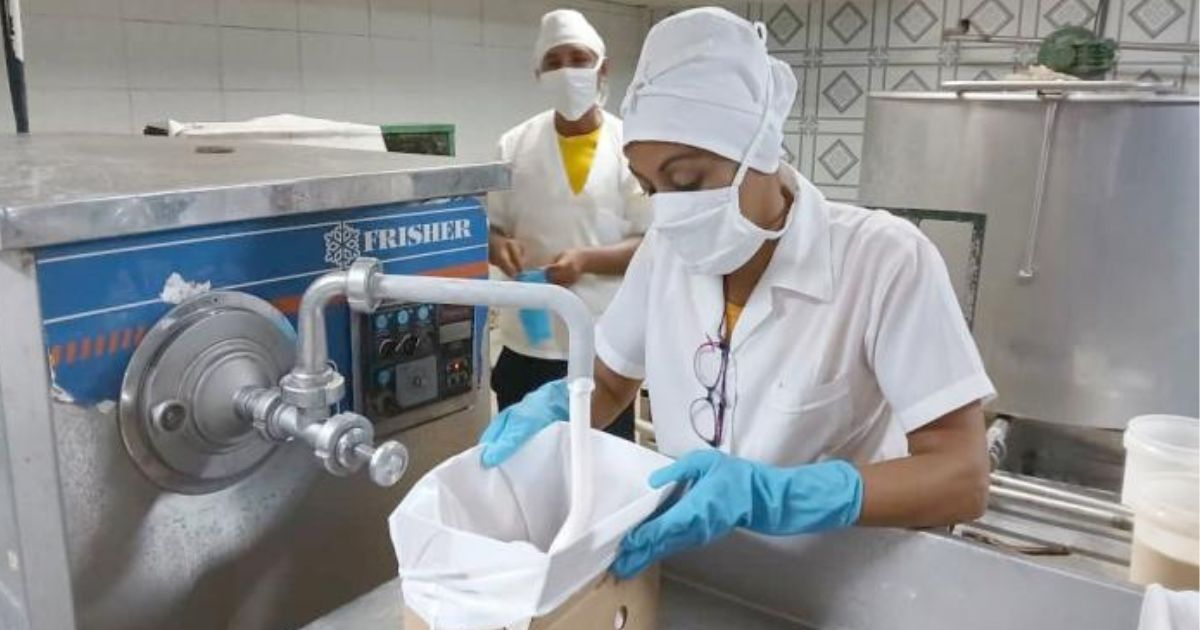
One example is the cream ice cream, a cultural symbol in Bayamo and part of the culinary identity of Granma, which is currently produced under delicate conditions and thanks to imports from private SMEs, with high prices and low availability, making its consumption a luxury for many families.
According to a report from the official newspaper Granma, the Bayamo Dairy Products Company (Granlac) relies heavily on imports of raw materials conducted by micro, small, and medium enterprises (mipymes) and private workers, following the collapse of state supply.
The partnership with these stakeholders allows for limited production in mini-plants, after the main factory remained inactive for four years due to technical issues and high energy costs.
The director of Granlac, José Ángel Fuentes Llanes, explained that private entities supply inputs such as stabilizers, sugar, flavors, milk, and packaging, while the company contributes its expertise and distributes the product with a commercial margin.
This scheme led to the creation of the brand Helados Cremas Manin, which produces traditional flavors such as vanilla, butter pecan, and strawberry using imported raw materials.
However, the milk collection crisis in Granma—which has dropped from being the fourth-largest producer in the country to the 13th position—further limits ice cream production.
A large portion of the milk is allocated for community consumption, which barely reaches the hands of consumers, and not for industry, reducing production capacity and maintaining supply instability.
Management of gastronomic units in Bayamo acknowledges that the state supply of ice cream is minimal and often nonexistent, leading them to rely on acquiring it from small and medium-sized enterprises or self-employed workers.
However, this private resource entails higher costs and refrigeration and transportation issues that impact the final quality.
The price also reflects the crisis: a tub of ice cream can cost up to 1,500 pesos, while a scoop ranges between 65 and 75 pesos, with some specialty flavors exceeding 200 pesos, distancing the product from its popular nature.
The strategy of relying on non-state actors has partially sustained the tradition, although the full recovery of ice cream production in Granma depends on investment in infrastructure and technology, as well as stable energy solutions.
The dairy industry in Cuba has been completely collapsed in recent years. Last April, it was reported that a debt exceeding 150 million pesos owed to private producers virtually halted milk production in Sancti Spíritus, one of the main supplying provinces in the country.
The situation directly impacted the supply of milk intended for vulnerable groups such as children, pregnant women, and individuals on medical diets.
Particularly significant has been the decline in ice cream production. In this regard, in 2024, Cuban authorities announced the reopening of a factory located in Mayarí, in the province of Holguín, after being halted for eight months.
However, for years, ice cream production in Cuba has been severely impacted. In 2022, for example, the ice cream production at the Base Business Unit (UEB) Dairy Products El Valle in Trinidad was heavily affected by power outages and the lack of raw materials.
That same year, the scarcity of raw materials for ice cream production struck the Cuban province of Ciego de Ávila, where a factory resorted to making the product with cornstarch and honey as substitutes in response to the lack of supplies.
Frequently Asked Questions about Ice Cream Production in Granma and the Economic Situation in Cuba
How is ice cream production maintained in Granma?
The production of cream ice cream in Granma is sustained thanks to private mipymes and private workers, who import the necessary raw materials. This collaboration has become vital due to the collapse of state supply and the technical and energy problems affecting Granlac's main factory, the Bayamo Dairy Products Company.
What are the main challenges in ice cream production in Granma?
The main challenges include the shortage of milk due to a collection crisis, high production costs, refrigeration and transportation issues, and reliance on imported supplies. Additionally, power outages and energy problems further complicate the production and distribution of ice cream, which has become a luxury for the population due to its high prices.
What impact does the crisis in the sugar sector have in Granma?
The crisis in the sugar sector has been devastating in Granma, with only 27% of the planned sugar produced. This situation is due to organizational issues, lack of resources, and power outages. The low production figures have impacted the local economy and the availability of sugar, an essential input for both the population and the food industry.
How does the energy crisis affect food production in Cuba?
The energy crisis in Cuba, characterized by extended blackouts, seriously affects food production. Power outages hinder production in factories, such as those for dairy and meat products, and the lack of energy and fuel limits fishing and ice manufacturing, which are essential for preserving food. This situation increases the scarcity of products and drives up prices, impacting the Cuban population.
Filed under: