
Related videos:
Deivy Alemán Oropesa, a Cuban at risk of deportation by U.S. immigration authorities, is requesting to stay in the country to care for his two-year-old daughter, a U.S. citizen, who is set to undergo her third open-heart surgery.
Alemán, 40 years old, has lived in the country for the past seven years. He works as an Uber driver, has no criminal record, and has fulfilled his tax obligations. His immigration status has remained unresolved; despite being married to a U.S. citizen, he has a final deportation order in place.
His daughter Keira has undergone surgery twice for a complex heart condition and, according to her family, she will need to have surgery again. She is currently at home, but under strict medical monitoring.
The family has warned that the deportation would separate the father just before a new surgery, scheduled in the coming weeks. The Immigration and Customs Enforcement (ICE) has given him until September 8 to leave the country voluntarily or face detention.
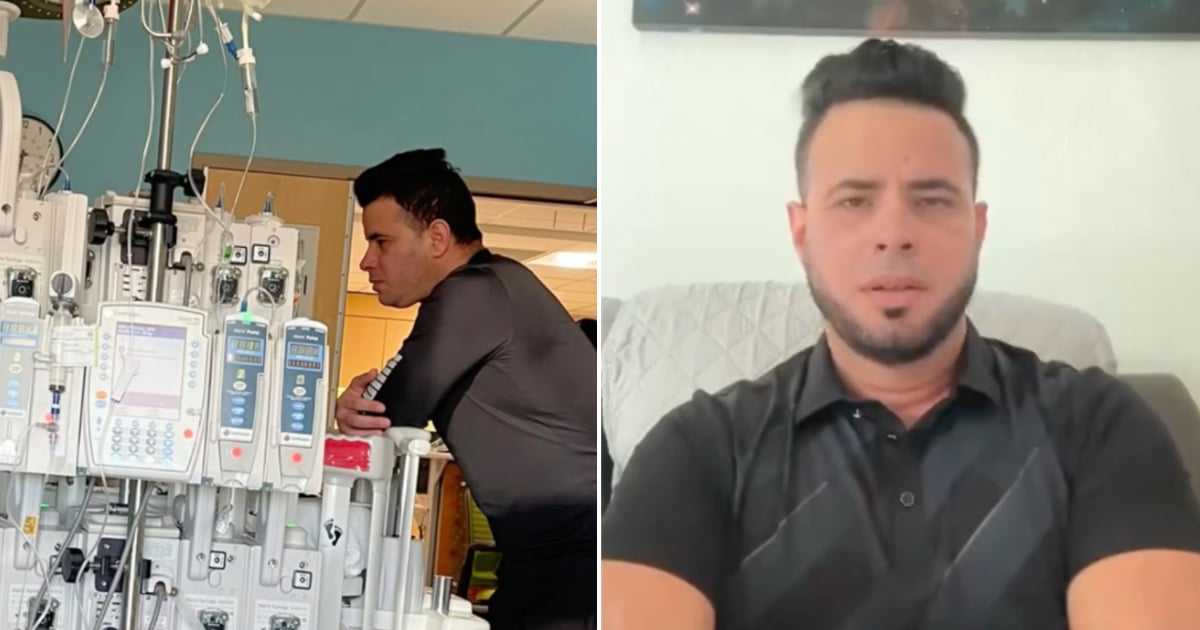
In a recent report from Univisión 23, journalist Javier Díaz shared on social media a video featuring the direct testimony of Deivy Alemán, who pleaded not to be deported: “She has had two open-heart surgeries and is at risk of needing another. I worry that I will be in Cuba and my wife will be alone with our daughter. All I ask is to stay in this great country. I came here seeking freedom and opportunity,” he expressed.
The video also includes images of the father accompanying the minor in the hospital during previous procedures.
According to what lawyer Ángel Leal explained to Univisión, since this is a person with a final deportation order, Alemán does not qualify for a humanitarian parole, but could request a deferred action through form I-246, a legal provision that allows for the temporary suspension of deportation for humanitarian reasons.
Previously, attorney Rosaly Chaviano had informed Telemundo 51 that Alemán is under a migration supervision order (form I-220B), and although he is married to a U.S. citizen and his daughter needs urgent medical attention, "humanitarian factors are hardly being taken into account" under the current migration policy.
The family, for its part, has submitted medical reports and letters from cardiologists in search of institutional or political support to halt the deportation.
The case of Deivy Alemán is not an isolated incident. In recent weeks, several Cubans in the United States have faced deportation proceedings under delicate circumstances. Ángel Luis Meléndez, for example, was transferred from Texas to the border and handed over to Mexican authorities, putting him in a legally uncertain situation after his asylum application was dismissed. In another case, Rainier Rodríguez Delgado was detained by ICE despite having an active process to regularize his status, and his wife has publicly pleaded for him not to be separated from their daughter.
Recently, Laritza López was also deported, a young Cuban who reported having experienced a violent arrest and who, according to her family, still required medical attention after several surgeries. Her case raised concerns among organizations and users on social media. These situations highlight the human impact of a stricter immigration policy towards Cubans, even when health issues, family reunification, or child protection are involved.
As these testimonies increase, the debate around the application of immigration laws in sensitive contexts grows, as does the discussion on the balance between legality, discretion, and compassion.
Frequently asked questions about the deportation of Cuban migrants in the U.S. and the case of Deivy Alemán
Why is Deivy Alemán facing deportation in the United States?
Deivy Alemán faces deportation due to a final deportation order, despite being married to a U.S. citizen and having a daughter with urgent medical needs. His situation is exacerbated by the lack of consideration for humanitarian factors under the current immigration policy.
What legal options does Deivy Alemán have to avoid deportation?
Deivy Alemán could request a deferred action through form I-246, which would allow for a temporary suspension of his deportation for humanitarian reasons. However, since he is a person with a final deportation order, he does not qualify for humanitarian parole. The family is seeking support from congress members or senators to halt the deportation.
How does deportation affect Cuban families in the United States?
Deportation has a devastating impact on Cuban families, as it separates parents from their children and leaves families without their primary economic support. The emotional and psychological trauma is substantial, especially for the children who witness their parents being detained and expelled from the country.
What does the I-220B form mean for Cuban migrants?
The I-220B form is a supervision order for individuals with a final deportation order. It does not guarantee protection against deportation and requires holders to report periodically to the Immigration and Customs Enforcement (ICE). Current deportation priorities include individuals with active orders, which exposes these migrants to detentions even during routine appointments.
Filed under: