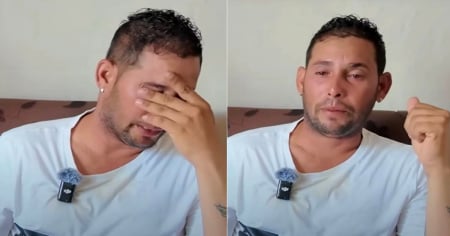
Two Cubans were questioned at Miami International Airport after returning from the island and heard from an immigration officer that they could lose their permanent residency in the United States.
Regarding this case, journalist Javier Díaz spoke with immigration attorney Patricia Hernández, who explained that each time a permanent resident leaves the country and reenters, they are subject to a CBP officer evaluating their immigration status.
"Every time a permanent resident arrives at a port of entry, they may be subjected to a deportation process if the officer finds them inadmissible or deportable," Hernández noted.
The risk increases for those who originally entered through the border and received humanitarian parole, with which they later adjusted their status.
"If you return to Cuba afterward, the officials may interpret it as fraud: 'The benefit of the parole allowed you to obtain residency, but if you repeatedly go back to the island, the official may consider that you lied and revoke your status,' he warned."
Díaz asked if what had happened in this case was a real threat, to which the lawyer replied that it seemed more like a warning.
"They were granted back their residence and admitted into the country. This makes me think that the official wanted to give them a scare, especially considering the frequency of their travels. They have been in the U.S. for just over three years and have already traveled to Cuba four times," he noted.
However, he insisted that under the current administration of Donald Trump and Secretary of State Marco Rubio, the immigration policy is stricter and there is an interest in increasing deportations: “It wasn't as problematic before, but now they are looking to take away papers from as many people as possible.”
"In the case of the two Cubans I was able to speak with personally, they have not received any letters at their mailing address regarding a court appointment," the journalist emphasized.
Regarding the protocol, Hernández explained that it is customary for a resident deemed inadmissible to be sent to "secondary inspection" or "the little room," where they receive a notification to appear before immigration court.
"Sometimes the residence card is even withheld: 'In this case, none of that happened, which reinforces that it was just a warning,' he added."
The specialist emphasized that every exit from the country means "requesting admission again" upon return, and this opens the door to background checks, fraud, or any reason for inadmissibility.
"The risk always exists. My advice is that Cuban residents should be very careful with their trips to the island," he concluded.
Other recent cases have also raised concerns within the Cuban community residing in the United States. In March of last year, there was a case involving another Cuban questioned at Miami Airport after returning from the island, an episode that highlighted the scrutiny faced by those who entered the United States claiming persecution and then return to their country of origin.
Months later, a Cuban resident in the U.S. recounted the questions she received upon arriving in Miami after a trip to Cuba, highlighting the pressure and the risk of losing immigration benefits.
In May of this year, another traveler who arrived in the U.S. after visiting the island warned about the potential consequences of returning to the country from which she declared she had fled, cautioning those who arrived through the southern border in recent years.
More recently, the issue has been viewed from the opposite side, when regulated Cubans reported that the regime is preventing them from returning to the United States, demonstrating that both departure and return can become points of friction with legal or political consequences.
Frequently asked questions about the risks of traveling to Cuba for permanent residents in the U.S.
Why can permanent residents in the U.S. lose their status when traveling to Cuba?
Permanent residents may lose their status if U.S. authorities believe that their travel patterns contradict the reasons for which they were initially granted residency. Frequent returns to Cuba may be interpreted as fraud if the resident claimed to be fleeing persecution on the island.
What consequences do residents face when they travel repeatedly to Cuba?
You could be subjected to a deportation process if a CBP officer determines that your behavior is inadmissible. Additionally, you may be taken to "secondary inspection" at the airport and receive notifications to appear before an immigration judge.
What is the "cuartico" at Miami airport and what happens there?
The "cuartico" is a secondary inspection room where CBP officers conduct more detailed interrogations of certain travelers. In this process, they may decide to withhold the residence card or issue a notice for the resident to appear before an immigration judge.
What should Cuban residents consider before traveling to the island?
It is crucial for Cuban residents to assess the risk of being deemed inadmissible upon their return to the U.S. The main advice is to be cautious about the frequency of trips to Cuba to avoid immigration issues. Additionally, they should be aware that each entry into the country is a new application for admission.
Filed under: