
Related videos:
Cuba's Electric Union (UNE) published a congratulatory message on Wednesday to mark the 65th anniversary of the Federation of Cuban Women (FMC), stating that amid power outages of up to 30 hours, Cuban women are "the ones who ignite the spark" and the "engine of progress."
“For the women who light up our world, not only with the energy that flows through the wires, but with the power of their talent, the brilliance of their ideas, and the warmth of their dedication. You are the true drivers of progress, those who ignite the spark of innovation and guide us toward a brighter future. Congratulations,” wrote Yurisnay Febles Abreu, an executive at the Cienfuegos Thermoelectric Company, in the official UNE publication on Facebook.
President Miguel Díaz-Canel also joined the celebrations, without taking responsibility for the crisis that continues to put pressure on and subject the women of the island to violence.
On her X account (formerly Twitter), she stated that “when I talk about creative resistance, I think of the Cuban woman. For her generous commitment to the common cause, smiling in difficulty and singing in triumph. Congratulations, dear companions, on this revolution within the Revolution that you lead.”
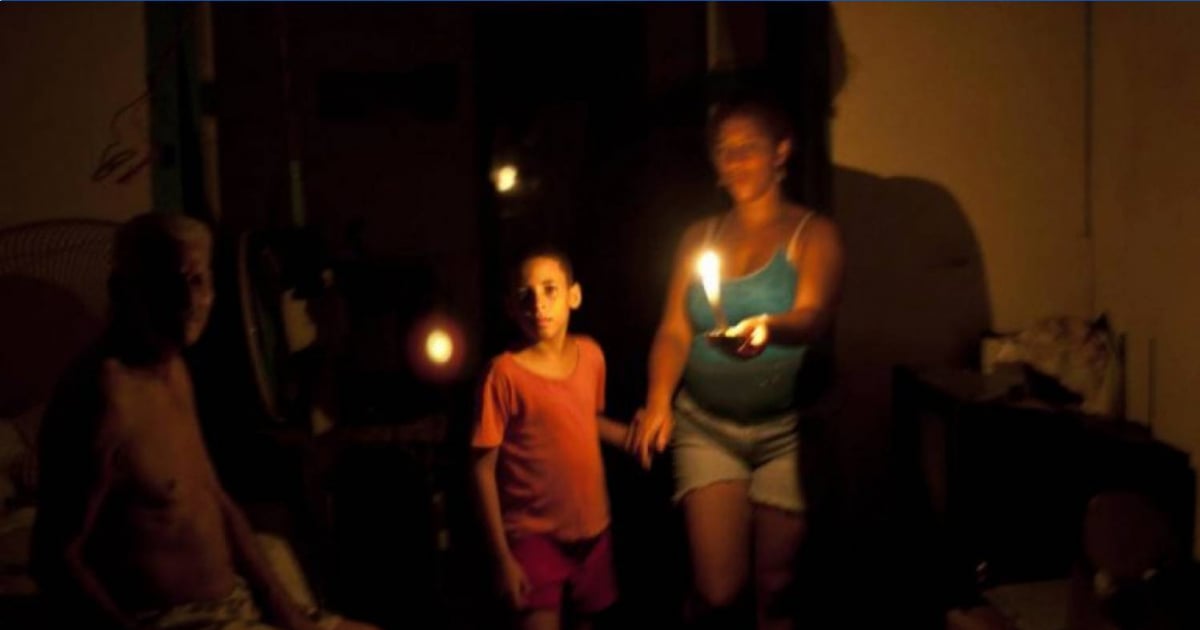
Congratulations arrive in a context marked by blackouts of up to 30 hours, shortages, and precariousness, which particularly impact mothers and families on the island.
On social media, the platform Enlavozdeellas, made up of women from Camagüey, shared a testimony that reflects another side of reality: “Being a mother in Cuba hurts.”
The text highlights how motherhood becomes an act of resistance amidst prolonged power outages, food shortages, and a lack of medications.
"It hurts when 20 hours go by without electricity, and the 4 hours you do have barely suffice to cook, wash, and iron. The pharmacy has not a single bandage, no antibiotics, no thermometer, nothing," the account notes, widely shared on social media.
The publication also highlights the constant fear of demanding better conditions, due to the fear of reprisals, although it emphasizes the role of women who mobilize with "buckets in hand and children in arms" to demand water or electricity.
The decline in daily life is reflected in food. A recent report from the Food Monitor Program estimated the monthly cost of the basic food basket for an adult couple at 40,000 pesos, a figure well above the average salary.
While the UNE congratulates women as "those who ignite the spark of innovation," in daily life millions face blackouts, hunger, and enforced silence.
Frequently asked questions about the energy crisis and the situation of women in Cuba
What is the current situation of the electrical system in Cuba?
The electrical system in Cuba is in a severe crisis, with blackouts lasting up to 30 hours, seriously affecting the daily lives of Cubans. A lack of maintenance, broken units, and outdated infrastructure contribute to the energy collapse, with no clear solutions in sight from the government.
How does this crisis affect Cuban women?
Cuban women face a significant burden due to blackouts and shortages. Motherhood becomes an act of resilience, as they must cope with the lack of electricity, food, and medicine, which worsens their already precarious economic and social situation.
What measures has the Cuban government taken in response to the energy crisis?
The Cuban government has attributed the crisis to external problems such as the U.S. embargo and has promised long-term investments to improve energy infrastructure. However, it has not offered immediate solutions to alleviate the ongoing blackouts affecting the population.
What role do renewable energies play in the Cuban energy crisis?
The Electric Union of Cuba has announced solar energy projects, such as the synchronization of 25 photovoltaic parks. However, these efforts have not significantly eased the crisis, as living conditions continue to deteriorate due to the lack of regular electricity.
Filed under: