
Related videos:
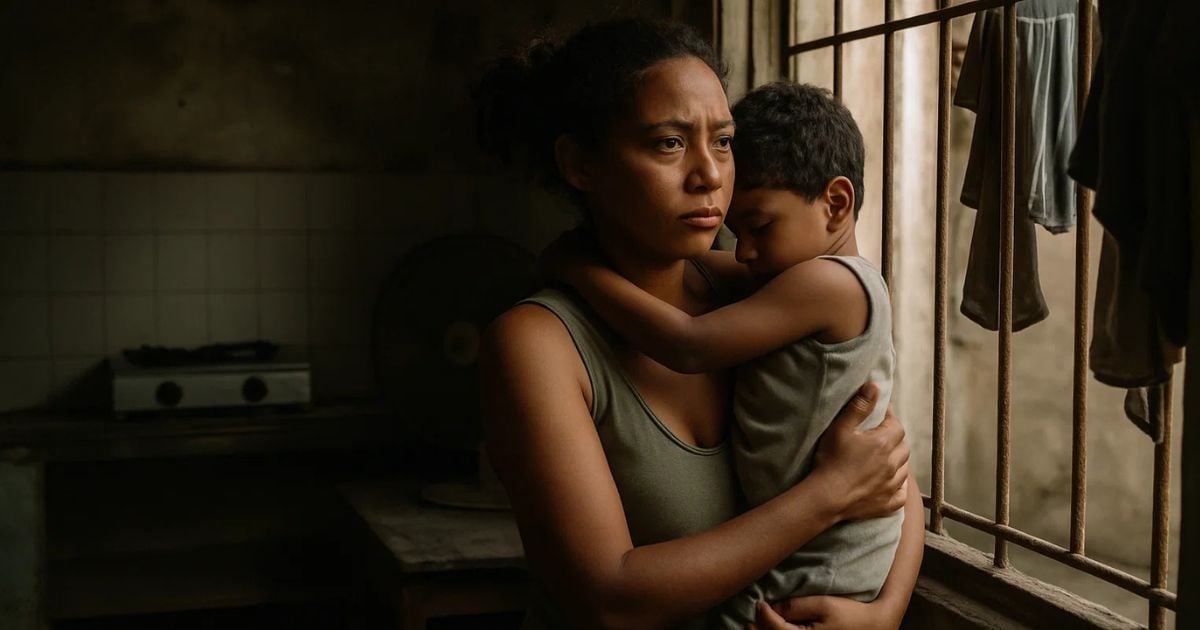
"Being a mother in Cuba hurts." This is how a post that has touched a sensitive chord on social media begins this Tuesday.
The text was shared by Enlavozdeellas, a platform for women in Camagüey that aims to "speak without fear" about the realities that many Cuban women face daily.
The narrative starkly reveals how motherhood on the island has become an act of resilience and sacrifice.
It hurts when there are 20 hours without power and the 4 hours you do have barely suffice for cooking, washing, and ironing,” states the text, which has been widely shared on social media.
The publication describes the helplessness that many mothers feel as they watch the little food they manage to buy go to waste, "making magic with a salary that isn't enough," and how they have to leave their children in the care of their grandparents in order to work multiple jobs.
One of the most poignant passages addresses the constant fear of a childhood illness.
There isn't even a band-aid at the pharmacy. There are no antibiotics, no thermometers, nothing at all," the message states, referring to the serious crisis in the public health system.
The text also denounces the implicit repression present in everyday life: “Because if you complain, if you raise your voice, it can turn against you. Because in Cuba, even the most basic demands become political.”
Despite this, the active role of many mothers stands out as they take to the streets with "buckets in hand and children in arms" to demand basic services such as water and electricity.
Amid uncertainty, the authors emphasize that motherhood is endured “like an illness without cure or treatment,” and lament that something as essential and human as nurturing has turned into a “constant sacrifice.”
Still, they conclude on a note of resilience: "Here we are. Even with our souls in tatters, we carry on. Because our children are not to blame for anything."
The food crisis in Cuba has reached a point where eating with dignity has become a luxury.
Food Monitor Program recently published a report on the high cost of the basic food basket, calculating it at 40,000 pesos the amount needed for a couple of adults per month, solely for food. This figure is well above the average salary.
The same organization has issued growing alarms about the deterioration of eating habits, pointing out that many Cubans can barely manage to have a single meal a day due to scarcity and inflation.
More than nine million people cook under precarious conditions, according to reports highlighting the lack of access to fuels and basic equipment.
This situation further exacerbates food insecurity, as it limits not only what can be eaten but also how meals are prepared in Cuban households.
In parallel, one in four people admits to having gone to bed without dinner, showcasing a stark example of how hunger has become normalized in the country.
The figures not only reflect poverty but also a structural food insecurity that affects millions of families every day.
All of this occurs in a context where the economic situation is compared to the Special Period, but with fewer state guarantees, greater reliance on the informal market, and a system of rationing that is virtually symbolic.
Frequently Asked Questions about Motherhood in Cuba Amid the Crisis
How does the energy crisis affect Cuban mothers?
The energy crisis in Cuba severely impacts the daily lives of Cuban mothers, who must deal with frequent blackouts that hinder basic tasks such as cooking, washing, and caring for their children. Prolonged blackouts exacerbate the heat and the presence of mosquitoes, which particularly affects children and forces many families to sleep in porches or seek shelter in houses with electric generators.
What challenges does motherhood face in Cuba due to shortages?
The scarcity in Cuba places mothers in a situation of constant sacrifice and creativity to feed their children. Many have to work multiple jobs and stand in long lines to obtain basic food items, while the lack of medication and hygiene products adds a layer of difficulty to their daily childcare responsibilities.
How does the lack of medical resources impact Cuban families?
The shortage of medical resources in Cuba is critical and severely impacts families, especially those with young children. The lack of basic medications, thermometers, and other essential medical supplies jeopardizes children's health and creates anxiety for parents who cannot access necessary treatments.
What role do social media play in denouncing the situation in Cuba?
Social media has been a crucial platform for Cuban mothers and other citizens who wish to highlight the harsh reality they face. Through these platforms, they share daily experiences of struggle and resilience, generating empathy and global awareness about the situation on the island.
What solutions are Cuban mothers seeking in response to the current crisis?
Cuban mothers seek creative and supportive solutions to face the crisis, such as exchanging goods with neighbors, cooking on charcoal stoves, and sharing food with those in need. They also demand concrete measures from the Cuban government that relieve the situation and allow them to live with dignity.
Filed under: