
Related videos:
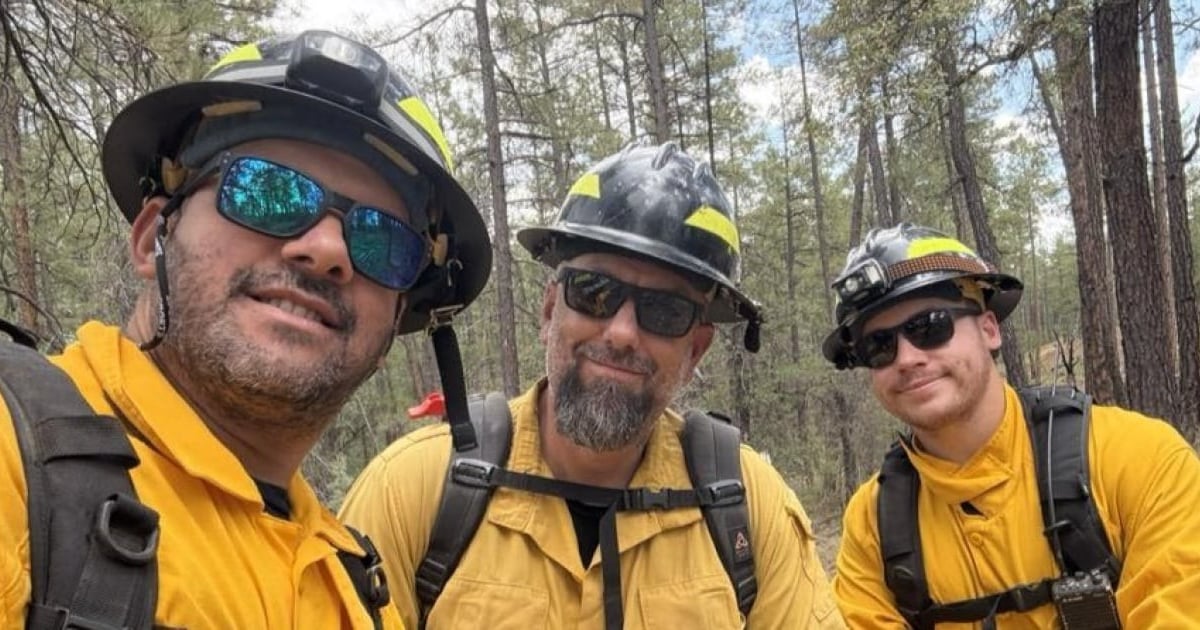
Two Cuban emigrants who arrived in the United States three years ago have joined the brigades fighting wildfires in Arizona, a commitment to public service that combines their previous experience on the Island with the training they have acquired in their new country.
The story was shared by El Toque on Facebook, where it posted a video featuring the testimonies of David Sánchez, Carlos Suárez, and American firefighter Eric Brink, who accompanied them in their integration into the crews.
According to reports, this season they have already responded to three incidents in Arizona.
For David Sánchez, who was a firefighter in Cuba, the leap to the United States did not extinguish his calling. "I arrived three years ago... here I have had the opportunity and the blessing to continue my dream," he explained.
He has just graduated from the EMT Academy (Emergency Medical Technician) and plans to enroll next year in the Structural Firefighter Academy to advance his career.
His compatriot Carlos Suárez is experiencing his first season as a forest firefighter in the country, and after responding to three wildfires, he emphasized the support from his community and the institutions that welcomed him.
"I am grateful to my family, friends, and the United States for allowing me to continue with what I have always loved: being a firefighter and a public servant," he expressed.
The American Eric Brink emphasized the speed with which both adapted to the local protocols.
"It was an honor to show you how we combat fires in the United States. David took the lead and did a great job, and Carlos did an excellent job supporting his team," he said.
Brink described the two Cubans as political refugees and expressed his pleasure in being able to lend a hand to ease their integration.
The experience in Arizona adds to a growing map of Cuban emergency professionals working in the United States.
In Florida, for example, the journeys of Rodney Ramos, Leonardo Suárez, and Alejandro Valdés - the latter a lieutenant in Charlotte County Fire & EMS - have been cited as examples of overcoming adversity.
All served as firefighters in Cuba before validating their training, becoming paramedics and rescuers and securing positions in various departments (Miami-Dade, Pasco, and Charlotte).
In interviews, Leonardo Suárez has provided technical context regarding the fire at the Supertankers in Matanzas (2022), which claimed the lives of 17 people, several of whom were firefighters.
In both Arizona and Florida, these stories share a common thread: rigorous training, resilience, and civic engagement.
In the case of David Sánchez and Carlos Suárez, the transition from Cuban experience to responding to wildfires in the southwestern United States reveals a dual belonging: that of those who honor their craft of origin while also contributing to the safety of the community that is now their home.
Frequently Asked Questions about Cuban Migrants as Firefighters in the U.S.
Why is it relevant for Cuban migrants to serve as firefighters in the U.S.?
The story of these Cuban migrants is an example of resilience and adaptation in a new country. Their involvement in fire departments in the U.S. not only reflects a commitment to their new community but also demonstrates the ability of migrants to integrate and contribute positively, despite the political and social challenges they faced in their home country.
How have Cuban firefighters adapted to U.S. protocols?
According to American firefighter Eric Brink, Cuban firefighters quickly adapted to local firefighting protocols. This demonstrates their ability to learn and adapt to new environments, which has been crucial for their success in the firefighting service in the United States.
What background do Cuban firefighters have before arriving in the U.S.?
Before moving to the United States, some of these firefighters were already practicing their profession in Cuba. For example, David Sánchez was a firefighter on the island, which allowed him to bring valuable prior experience that he has been able to complement with the training received in the U.S. to continue his professional career.
What challenges do Cuban migrants face when integrating into the U.S.?
Cuban migrants, like other groups, face challenges such as cultural adaptation, recognition of their qualifications, and legal hurdles to obtain residency or regular immigration status. However, their resilience and the support of local communities have enabled them to overcome these challenges and thrive in their new environment.
Filed under: