
Related videos:
The official data for the first half of 2025 confirms the collapse of international tourism in Cuba, with declines in visitors, revenue, overnight stays, and a hotel occupancy rate of only 21.5%, one of the lowest in the region, highlighting the failure of billions of dollars invested in the sector.
While sharing the indicators through his profile on X, Cuban economist Pedro Monreal summarized the results with a striking phrase: “Billions of dollars misinvested.”
The latest report from the National Office of Statistics and Information (ONEI) reveals that the total arrival of international visitors from January to June 2025 plummeted by 25% compared to 2024, decreasing from 1.3 million to just over 981,000 travelers, which also led to a drop of 27.8% in overnight stays, falling from 7.9 to 5.7 million.
The hotel occupancy rate dropped to a critical 21.5%, compared to 28.4% last year, leaving many of the rooms that the government continues to build empty, at the expense of the impoverishment of a majority of the population and the lack of adequate investment in critical infrastructure such as energy, telecommunications, transportation, and roadways, as well as in key sectors like food production or the healthcare system.
The revenues of tourism entities also took a substantial hit, falling from more than 70.8 billion Cuban pesos to 56.2 billion, a reduction of 20.6% in just one year.
By source countries, Canada remained the main market, although with a 26% decrease compared to 2024.
The United States, Russia, Germany, France, and Spain also drastically reduced the number of travelers, while only a few markets, such as Colombia, China, Portugal, Turkey, and Peru, showed a slight increase.
In contrast to these figures, the government of Havana continues to allocate enormous resources to hotel construction amidst an internal economic crisis, with underutilized tourist infrastructures and no clear prospects for short-term recovery.
Preliminary data from ONEI showed a few days ago that between January and July of this year, 1,577,330 travelers arrived in the country, which is 82.8% of the total received in the same period of 2024, representing a decrease of 328,126 visitors.
The decline has been particularly sharp in some of the main source markets. Russia, which in recent years had gained prominence as a source of tourists, shows the most notable decrease with only 71,797 visitors, a 58.2% drop compared to the same period last year. Following are Germany and Spain, with declines of 60.7% and 72%, respectively.
The Cuban tourism industry, affected by a decline in visitor arrivals, poor hospitality services, and low competitiveness, is struggling to take off even to sustain itself. This was acknowledged by the Minister of Tourism, Juan Carlos García Granda, who described 2024 as “the worst moment since September 11, 2001.”
The logic of "tourism first" has led to the systematic deterioration of the rest of the productive apparatus, but the regime, despite warnings from several deputies about the need to settle debts, decentralize payment schemes, and adjust supply to actual demand, remains anchored to a strategy that yields no results.
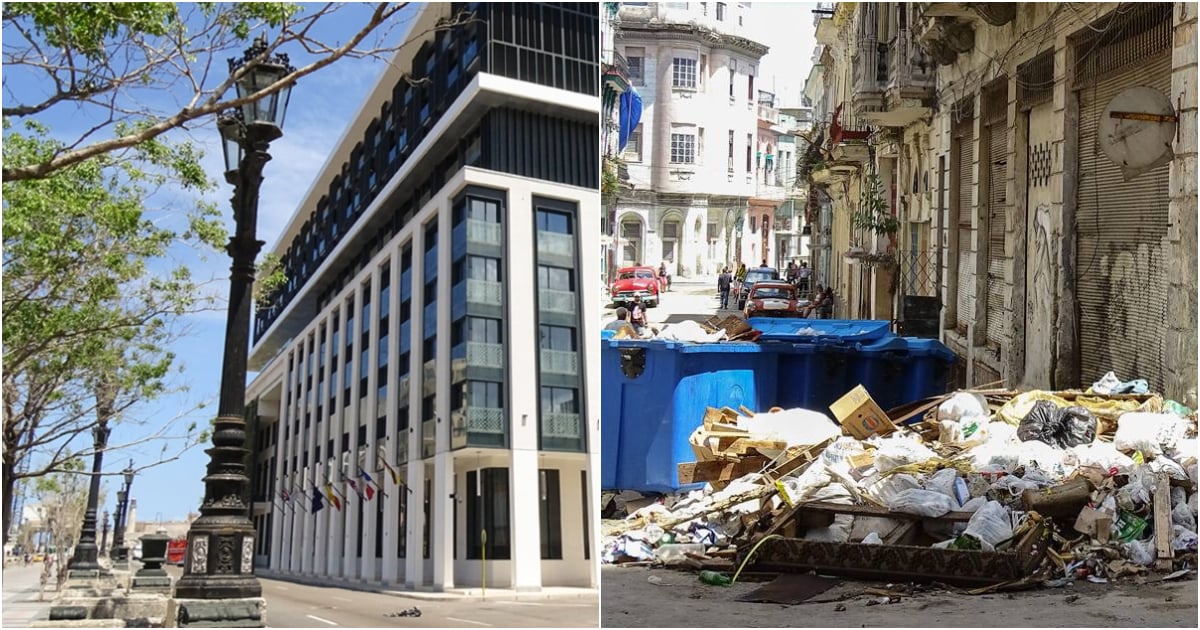
Experts and citizens have questioned this strategy, considering that it does not address the real demand or the urgencies of the country, while a devastating contrast deepens: majestic hotels being built while overflowing dumpsters proliferate at the corners of Havana, and more and more citizens are experiencing a life marked by misery.
Complaints about the deterioration of hotel infrastructure, lack of hygiene, poor customer service, and the poor quality of food are not isolated issues.
There have also been reports of theft and assaults on tourists, which has made insecurity a deterrent factor as well.
A Russian tourist recently shared her disappointing experience at a five-star hotel in Varadero: "The faucets were leaking, the hairdryers didn't work, and everything was dirty. I felt cheated," she said.
He also reported expired food, insects, and poor service: "They treat tourists like pigs."
Frequently Asked Questions About the Decline of Tourism in Cuba
Why has tourism fallen in Cuba in 2025?
Tourism in Cuba has experienced a significant decline due to multiple factors, such as the internal economic crisis, the deterioration of services, the lack of basic supplies in hotels, and the perception of insecurity. Additionally, low air connectivity and competition from other Caribbean destinations have contributed to the decrease in international visitors.
What is the hotel occupancy rate in Cuba in 2025?
The hotel occupancy rate in Cuba has dropped to a critical 21.5% in 2025, which means that a large part of the hotel infrastructure remains underutilized. This occurs in a context of million-dollar investments in the tourism sector, which have not managed to translate into a significant increase in visitors or an improvement in the services offered.
Which markets have shown a decline in tourism to Cuba?
The main source markets for tourism to Cuba have shown significant declines, including Russia, Canada, Germany, Spain, and the Cuban community abroad. Russia, in particular, has experienced the largest drop, with only 58.2% of visitors compared to the previous year.
Why does the Cuban government continue to invest in hotel construction?
Despite the low hotel occupancy and the crisis in tourism, the Cuban government continues to invest in the construction of hotels, a strategy that has been heavily criticized. These investments seem to primarily benefit state corporations that operate under a business model prioritizing the creation of financial assets and state monopoly, rather than responding to real demand or the urgent needs of the country.
What is the economic impact of the decline in tourism in Cuba?
The decline of tourism in Cuba has had a direct negative impact on the country's economy, as this sector is one of its main sources of income. The decrease in visitors has resulted in lower foreign currency generation, affecting economic sustainability and exacerbating the internal economic crisis.
Filed under: