
Related videos:
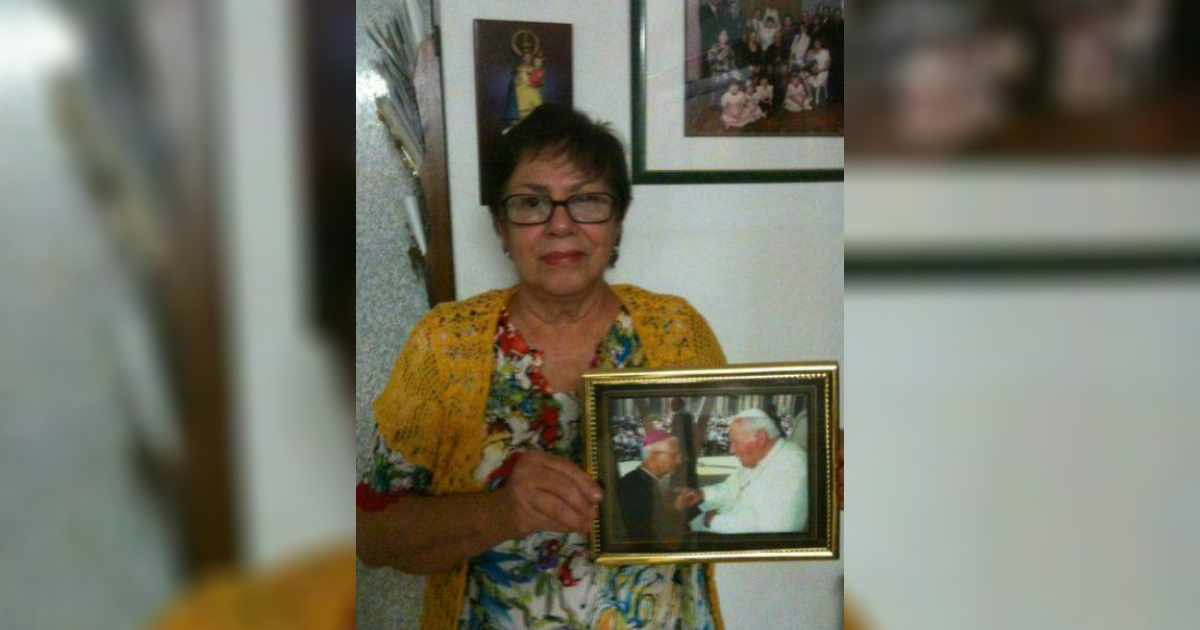
Iraida Román Martínez, the sister of Monsignor Agustín Román, the first Cuban bishop in the Catholic Church in the United States, passed away in Miami on August 16 at the age of 83.
Iraida was one of the closest collaborators of her brother, known as the Spiritual Father of the Cuban exile, according to the obituary published this Sunday by Daniel Shoer Roth for El Nuevo Herald.
Román Martínez, who passed away due to a stroke, was a confidant and caregiver to his brother for decades
"The funeral services were held on Tuesday at the Ermita de la Caridad, the sanctuary of the Virgen del Cobre, which became a symbol of the Cuban exile, and in whose construction Iraida played a silent yet essential role," the note emphasizes.
The woman arrived in Miami in 1967 with her two children, thanks to the efforts of her brother, but leaving behind her husband Jorge Luis Martínez, who was sentenced to prison and whom she could not reunite with until 1980.
The historian Julio Estorino told El Nuevo Herald that in Iradida's house “bulletins were reviewed and letters were drafted for the members of the Brotherhood of the Virgin of Charity, in order to raise funds for the construction of the Chapel.”
Similarly, women also played "a decisive role in the early pilgrimages of the Municipalities of Cuba, always from a background position, but firmly supporting the mechanism that brought the sanctuary of the patroness of Cuba in exile to life."
Her daughter Ileana stated that her mother was "a second mother to Monsignor."
"Our life revolved around him and the Hermitage. It was a sacrifice, but also a privilege," he added.
The spiritual father of the Cuban exile
Monsignor Agustín Román, emeritus auxiliary bishop of the Archdiocese of Miami, passed away in 2012 at the age of 83, victim of a cardiac arrest.
The bishop was at the Chapel of Charity when he suffered the cardiac arrest.
He left Cuba in 1961, expelled to Spain by Fidel Castro's regime along with 130 other clergy members. He settled in Miami in 1966, where he was almost immediately associated with the Sanctuary of Our Lady of Charity, patroness of Cuba.
Román oversaw its construction and remained active there even after stepping down as its rector and as auxiliary bishop of Miami, up until the final months of his life.
The bishop transformed the Ermita de la Caridad into a center for pilgrimage and prayer that attracts thousands of Cubans from all over the world.
The emeritus auxiliary bishop was born on May 5, 1928, in the town of San Antonio de los Baños, south of Havana. He was ordained a priest in Cuba in 1959. Resigned to the fact that he could not return to his homeland, Román said: “I know that when I am in heaven, I will be able to see Cuba much better.”
Frequently Asked Questions about the Legacy of Iraida Román Martínez and the Cuban Exile
Who was Iraida Román Martínez and what was her contribution to the Cuban exile community?
Iraida Román Martínez was the sister of Monsignor Agustín Román and an essential collaborator in the Cuban exile community in Miami. She was known for her role in the management and construction of the Hermita de la Caridad, an important symbol for Cubans in exile. Additionally, she worked on drafting newsletters and letters to support the construction of the sanctuary and organized pilgrimages from the Municipalities of Cuba.
What was the role of Monsignor Agustín Román in the Cuban community in Miami?
Monsignor Agustín Román was the first Cuban bishop in the Catholic Church of the United States and is remembered as the "Spiritual Father of the Cuban Exile." After being exiled from Cuba by Fidel Castro's regime, he settled in Miami, where he oversaw the construction of the Ermita de la Caridad and transformed it into a center of pilgrimage and prayer for thousands of Cubans in exile.
Why is the Hermita de la Caridad an important symbol for the Cuban exile community?
The Shrine of Our Lady of Charity is a symbol of the Cuban exile as it represents a spiritual refuge and a connection to their homeland for Cubans abroad. It was built thanks to the efforts of figures such as Monsignor Agustín Román and Iraida Román Martínez, who worked tirelessly to create a place where Cubans could honor their patroness, Our Lady of Charity of El Cobre, and keep their culture and traditions alive overseas.
Filed under: