
Related videos:
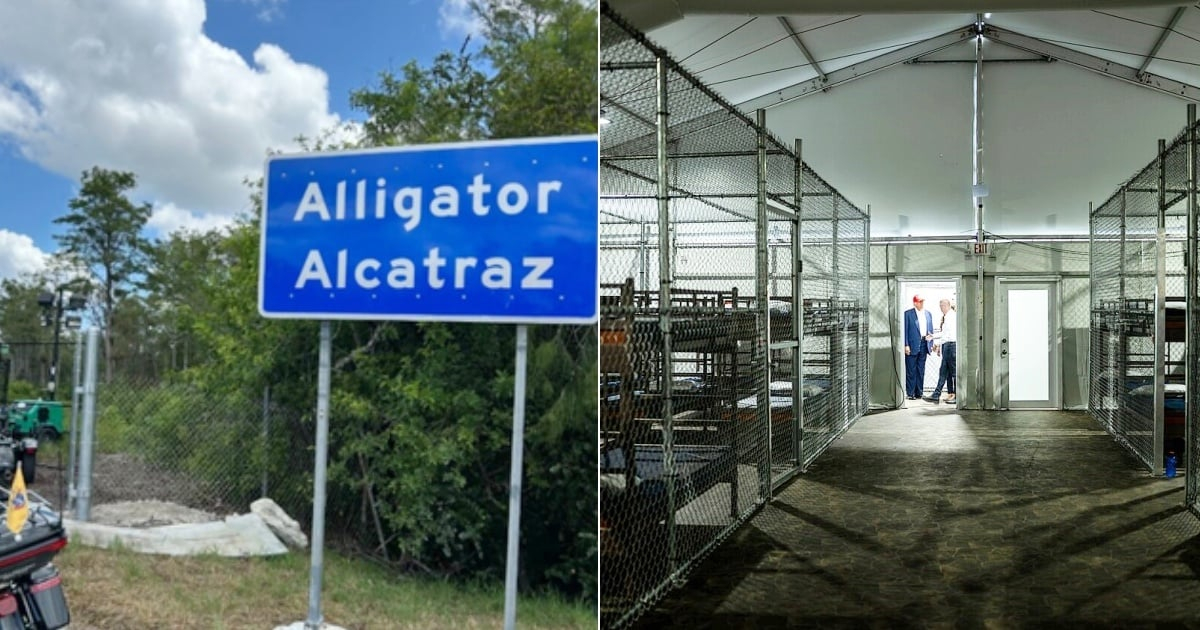
The future of the immigrant detention center known as Alligator Alcatraz, built in the Florida Everglades, has come into question following a court decision ordering its closure within 60 days.
Federal judge Kathleen Williams determined that the installation was erected without the environmental studies required by law, posing a risk to the ecosystems and water resources of the state.
He emphasized that Florida never justified why it was necessary to install a detention center in the midst of protected wetlands, ignoring warnings from ecologists and the Miccosukee tribe, who have sued the state for the damages caused.
What will happen to the detainees?
The court order states that the detainees must be transferred to other facilities before the dismantling.
Among the options are federal centers in Florida such as Krome North, Broward, and Baker, although they could also be sent out of state.
The governor Ron DeSantis, for his part, has announced the opening of a new facility called Deportation Depot, in a state prison near Jacksonville, with an initial capacity of 1,300 beds.
But Williams' ruling is not final.
The state prosecutor's office, led by James Uthmeier, has already filed an appeal and requested to suspend the closure order.
We will continue operating the facilities. This is an effort by environmentalists and Democrats to obstruct our immigration policies," stated Uthmeier, who defended the legality of the makeshift prison.
DeSantis himself called Williams "an activist judge" and promised to fight the decision.
Other local leaders, such as Miami-Dade Mayor Daniella Levine Cava, praised the court decision.
"The installation threatens our precious Everglades and our drinking water. The state ignored repeated warnings from this county," he pointed out.
What will happen to the hundreds of millions of dollars in contracts?
The financial aspect of the project is also unclear.
In July, the DeSantis administration signed contracts worth at least 245 million dollars with private companies to establish and operate the center, in a plan that could cost taxpayers up to 450 million annually.
In addition, five of the companies involved have been accused of fraud, price gouging and questionable practices in previous contracts, including SLSCO, Garner Environmental Services, GardaWorld, and CDW Government.
New lawsuits against the installation
The judge's ruling responds to a lawsuit filed by environmental organizations and the Miccosukee tribe, who warned that the facility violated basic environmental standards and endangered more than 30 protected species.
But Alligator Alcatraz not only faces environmental challenges, but also serious human rights allegations.
A lawsuit, filed last Friday by civil rights organizations, asserts that Florida lacks the legal authority to operate detention centers under 287(g) agreements, which only permit the training of state police to collaborate with ICE, but not to detain migrants on their own.
"In the thirty years since the enactment of Section 1357(g), no state has claimed the authority to operate detention centers. Florida is the first to attempt this, and it has done so without oversight, without trained staff, and by delegating immigration functions to private contractors," the complaint states.
Another federal lawsuit claims that migrants in Alligator Alcatraz face systematic violations: detentions without formal charges, lack of custody hearings, barriers to contacting lawyers, and exclusion from the official ICE system.
The conditions inside the center have also been heavily criticized. Testimonies from migrants describe tents without ventilation, collapsed bathrooms, power outages, swarms of mosquitoes, and food infested with worms.
It is not a definitive decision
The future of the center remains in the hands of the courts.
The order from federal judge Kathleen Williams is not a final decision, but a temporary measure to prevent potential harm while the filed lawsuits proceed.
For environmentalists and Indigenous people, the ruling represents a historic victory. For migrant advocates, it is an opportunity to set a precedent that limits state attempts to operate immigration detention centers outside of federal jurisdiction.
In contrast to the official narrative that portrayed it as a model of efficiency, Alligator Alcatraz has become a symbol of improvisation, abuse, and mismanagement.
What is at stake is not only the fate of the center, but also the extent of state authority regarding immigration, respect for Florida's ecosystems, and the human and economic cost of mass deportation policies.
Frequently Asked Questions about the Closure of Alligator Alcatraz
Why has the closure of Alligator Alcatraz been ordered?
The closure of Alligator Alcatraz was ordered by a federal judge because the detention center was built without the environmental studies required by law, posing a risk to the ecosystems and water resources of the Everglades. The facility disregards the warnings from environmentalists and the Miccosukee tribe, who have sued the state for the damages caused.
What will happen to the detainees at Alligator Alcatraz?
The detainees at Alligator Alcatraz will be transferred to other facilities before the dismantling of the center. Options include federal centers in Florida such as Krome North, Broward, and Baker, and possibly out of state. This process is part of the court order requiring the closure of the center within 60 days.
What are the financial implications of the detention center closure?
The closure of the Alligator Alcatraz detention center has significant financial implications as the Florida administration signed contracts for at least 245 million dollars to construct and operate the center, and the plan could cost taxpayers up to 450 million annually. Additionally, several contracted companies have been flagged for fraud and overpricing in previous contracts.
What are the criticisms regarding the conditions at Alligator Alcatraz?
The conditions in Alligator Alcatraz have been heavily criticized for violations of human rights. Reports have emerged of detentions without charges, lack of access to lawyers, tents without ventilation, collapsed bathrooms, and food infested with worms. These allegations have been made by civil and immigration rights organizations.
Filed under: