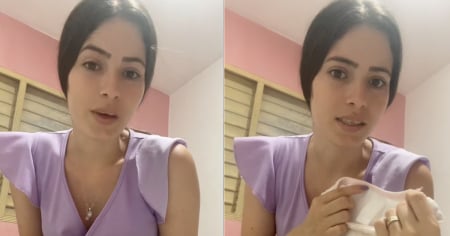
The Cuban user @yani.cubana99 shared a video on TikTok where she explains and demonstrates how she transforms old clothes into floor rugs using an old pedal sewing machine.
"I’m Cuban and I don’t throw away old clothes, I reuse them," she wrote in the description of the clip, which has amassed over 1,700 likes and dozens of comments.
In the images, Yani demonstrates the process: first, she cuts strips of fabric, then sews them onto denim and assembles the pieces of the rug. “Here where I live, old clothes aren’t thrown away, look at what I’ve been doing. I start by cutting little strips, about this size, and look at what I’m making; I was a bit ahead on this one. This is nothing more and nothing less than a rug for the floor,” she explained.
The young woman also showed the machine she uses: “It’s quite old, you might wonder, where did you get that? Well, yes, it’s a pedal machine because there’s hardly ever any electricity here, and I’ve already set up the thread for sewing.”
In the same video, he clarified that the process is slow and exhausting: “I spend many days doing it because honestly, putting little strips here is quite tiring, and well, look how these gray ones I’ve been putting on turned out, and you can use whatever colors you want and however you like.”
The video sparked multiple reactions on TikTok. Some users offered tips to make the crafting easier, while others pointed out spelling mistakes in the opening phrase. There were also plenty of supportive messages acknowledging her creativity: “a respected Cuban recycles everything,” commented one user.
Others shared family memories: "My grandmother used to make them to sell, she passed away a month ago and left us many at home, she always had orders for them," wrote another user. Messages of admiration and solidarity also came from different countries, such as Venezuela and Mexico.
Yani's ingenuity is not an isolated case. In recent months, other videos of Cubans showcasing how they reuse everything possible at home have gone viral on TikTok. In November 2024, creator @yaisyvega elicited laughter while explaining that “in the homes of Cubans, a towel dies and a mop cloth is born”, in a video that sparked nostalgia and reflections on recycling as a necessity.
Something similar was reported last January by the influencer @clau_tropiezos from Spain, when she mentioned that in Cuba, clothing is passed down from generation to generation and stretched to the limit: “If it's already destroyed, then it ends up as a kitchen cloth.”
Recently, user @anaisy_d showcased how she adapts her baby's clothing to extend its use amid the crisis, in a video titled “Ingenuity and Necessity: The Video of a Cuban Mother That Moves Hearts on TikTok”. Months earlier, another video highlighted mothers forced to reuse disposable diapers “not by choice, but by necessity”.
This list is complemented by the publication from @darmayic, which detailed household saving habits such as turning oil bottles upside down or cutting toothpaste tubes to make use of every last drop, practices commonly found in Cuba and other countries in the region.
These testimonies, varied in tone—sometimes humorous, sometimes touching—agree in showing how scarcity has turned creativity into a tool for daily survival.
Frequently Asked Questions about Creativity and Reuse in Cuba
How do Cubans reuse old clothes?
Cubans reuse old clothing by transforming it into new useful objects, such as rugs, kitchen cloths, or even adapted clothing to extend its use. This practice is common due to the scarcity of resources and has become a necessity for survival for many families on the island.
What techniques do Cubans use to recycle at home?
Cubans use various creative techniques to recycle at home, such as transforming old clothing into rugs, adapting furniture with reused materials, and repurposing discarded objects for new uses, like planters. This creativity is a result of a necessity imposed by scarcity and the lack of basic products.
Why is recycling a necessity in Cuba?
Recycling is a necessity in Cuba due to the chronic shortage of products and resources. The economic crisis facing the country compels families to make the most of what they have available, turning unused objects and materials into functional items for the home.
How does scarcity influence the daily life of Cubans?
Scarcity influences the daily lives of Cubans by fostering creativity and resource reuse. In the face of a shortage of basic products, Cubans have developed ingenious ways to recycle and adapt items to meet their daily needs, reflecting a culture of survival in a challenging economic context.
Filed under: