
Related videos:
The United States is advancing in its diplomatic and military offensive against the Cartel of the Suns and the regime of Nicolás Maduro.
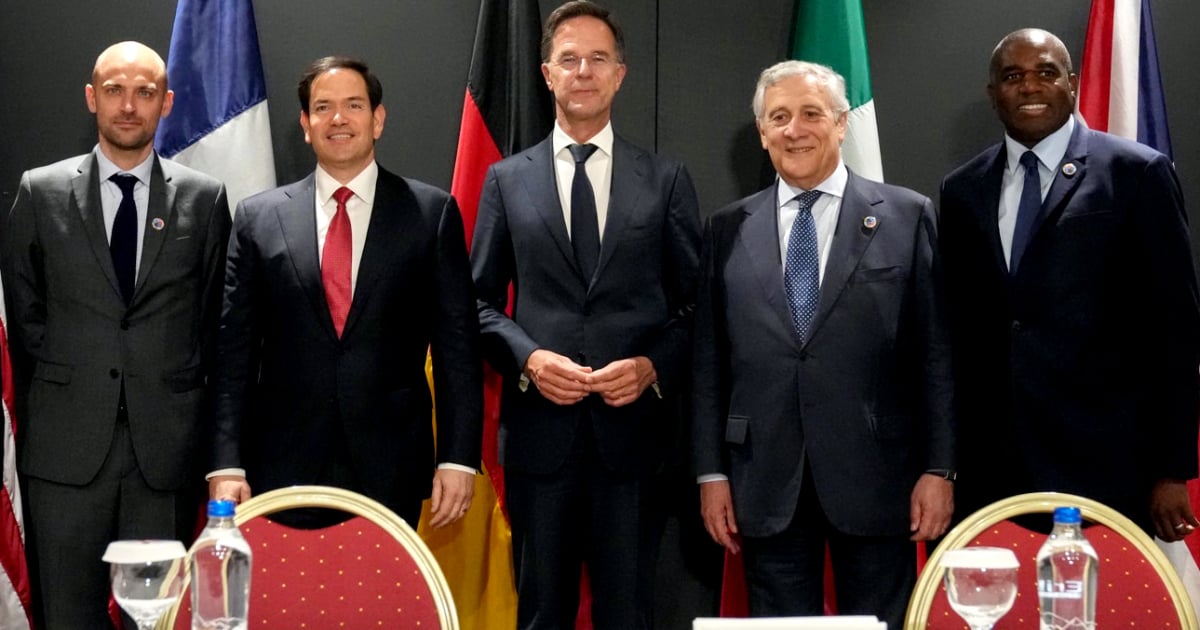
According to the newspaper ABC, Secretary of State Marco Rubio is in negotiations to include Mexico, Canada, Italy, the United Kingdom, and France in the Caribbean deployment, while Spain is currently excluded from the discussions due to political and strategic tensions with Washington.
Diplomatic sources consulted by the Spanish media indicate that the Trump administration is seeking a broad international front against Venezuelan drug trafficking, elevating the rank of the military operation in the Caribbean to a multinational coalition.
Spain's absence in this context has led to interpretations of a cooling of bilateral relations, at a time when Madrid's foreign policy is leaning towards China and maintaining connections with figures associated with chavismo.
Spain, in Washington's sights
The distancing is explained, according to ABC, by the agreements of the government of Pedro Sánchez with Huawei, which include the management of sensitive data related to police wiretaps. Two U.S. congressmen sent a letter last week warning that these contracts pose a national security risk.
The discomfort is further exacerbated by the influence of former president José Luis Rodríguez Zapatero on Spanish diplomacy. Zapatero, a key figure in the Puebla Group, has defended chavismo in international forums and remained silent after the 2024 Venezuelan elections, which were not recognized by a large part of the international community.
Military operation underway
In parallel with the diplomatic offensive, the White House continues to expand its naval deployment in the Caribbean.
In the coming days, the USS Lake Erie, a guided missile cruiser, and the USS Newport News, a fast attack nuclear submarine, will join the three destroyers already positioned off the coast of Venezuela and an amphibious squadron with 4,500 personnel, including 2,200 marines.
The stated objective, according to sources consulted by ABC, is to dismantle the infrastructure of Venezuelan drug trafficking: clandestine airstrips, logistics centers, weapon depots, and bridges used by the Cártel de los Soles.
Washington claims that this group, allegedly led by high-ranking officials of chavismo and Maduro himself, contributes about 500 million dollars a month to the regime.
Growing international support
France has already confirmed it will send naval and ground forces to Guadeloupe to enhance maritime surveillance, while Trinidad and Tobago has committed to provide its territory and territorial waters for the U.S. operation.
"For the first time in the modern era we are truly on the offensive against organized cartels,” Rubio assured President Donald Trump during a cabinet meeting, as reported by ABC.
Meanwhile, Italy and the United Kingdom have shown a willingness to consider their participation, while Mexico and Canada are assessing their involvement in a framework of expanded North American cooperation.
Caracas takes cover
From Caracas, the reaction was swift. Maduro announced the mobilization of 15,000 security personnel and the activation of 4.5 million militiamen across the country.
The Minister of Defense, Vladimir Padrino, detailed patrols with drones, warships, and river surveillance in strategic areas such as the Gulf of Venezuela and Lake Maracaibo.
At the same time, the Minister of the Interior, Diosdado Cabello, presented a map showing drug trafficking routes in the region, accusing Washington of carrying out a “colonial” operation to seize Venezuelan resources. “We are preparing for the worst”, he said in his most recent weekly program With the hammer striking.
A climb with an open horizon
The decision to exclude Spain highlights the new axis of transatlantic cooperation surrounding the Caribbean, where Washington is opting for partners it considers more reliable.
For analysts consulted by ABC, the movement aims to bolster the military operation with international legitimacy and further isolate the chavista regime.
Meanwhile, the risk of a direct confrontation is increasing. With U.S. warships already deployed, the militarization of the Caribbean creates a scenario reminiscent of the most tense episodes of the Cold War, but with a different protagonist: drug trafficking has become a global threat.
Filed under: