
Related videos:
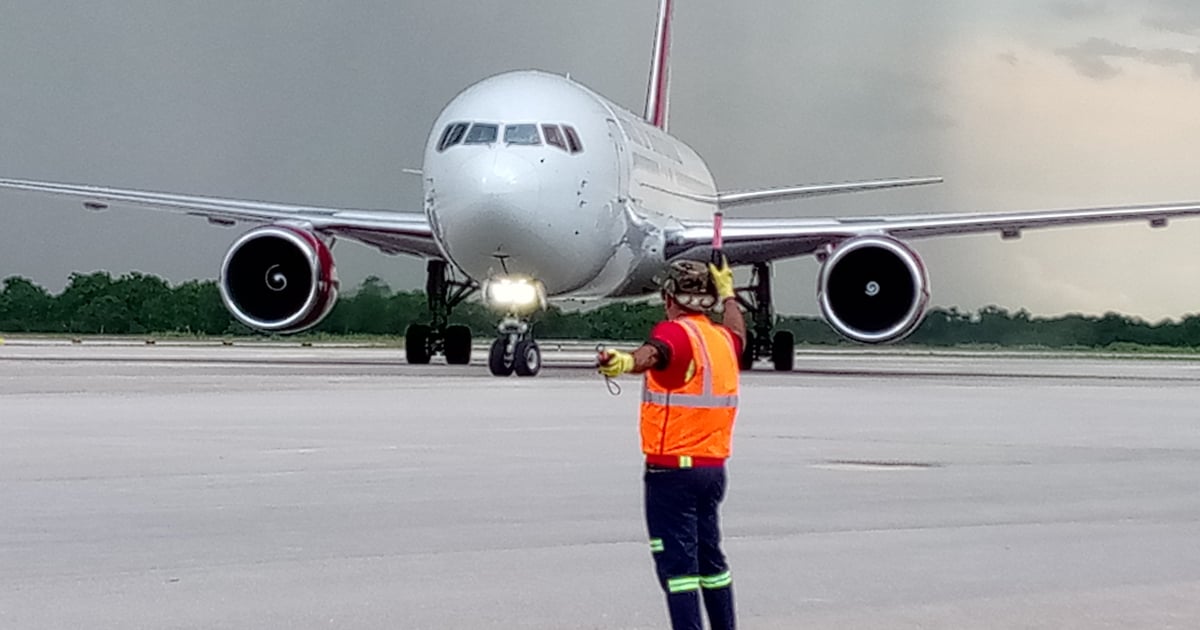
A new deportation flight arrived in Havana from the United States this Thursday, amidst the regime's informational silence and the growing uncertainty about the future of hundreds of Cubans held in U.S. immigration detention centers.
The Ministry of the Interior (MININT) only shared on its social media that this is the eighth repatriation operation so far in 2025 from the U.S. and the 33rd from various countries in the region, but did not provide details about how many Cubans were on board, their profiles, or the immediate destination of the returnees.
The message included just two images of the plane on the runway of the “José Martí” International Airport, further fueling the opacity surrounding these flights. However, a few hours later, state journalist Lázaro Manuel Alonso reported the arrival of 161 irregular migrants (37 women and 124 men), although without providing any details about them.
"Two of those individuals were transferred to the investigative body for being suspected perpetrators of criminal acts before leaving the country," wrote the journalist.
The lack of official information coincides with speculation surrounding the possible deportation of the Cuban ex-judge Melody González Pedraza, who may have traveled on this flight after being detained in Louisiana for more than two months, as reported by the independent media Diario de Cuba.
González was the president of the Municipal Court of Encrucijada in Villa Clara, and in 2024, she emigrated to the United States through humanitarian parole, but her application for political asylum was denied.
Since then, her case has become a symbol of the tension between the Cuban judicial system and those who denounce its control by the Communist Party and MININT.
Her husband was deported to the Island months ago, but González's return had been delayed, leading to speculation about Havana's refusal to accept her due to her statements against the Cuban judicial system.
Contrast with previous flights
The current hermeticism contrasts with the previous flight on July 31, where precise data was provided, with 118 Cubans deported, including 22 women, and three were detained upon arrival on the Island due to alleged connections with prior offenses.
That deportation then brought the number of repatriated individuals in 2025 to 833 from various countries, in a context of increased immigration restrictions under the Donald Trump administration.
The MININT has reiterated its commitment to a "safe and orderly" migration, but avoids providing information about the judicial or social status of the repatriated individuals, many of whom face stigmas, investigations, and the same precariousness that drove them to emigrate.
Each flight not only carries numbers but also lives in limbo, since they are Cubans who sold everything, went into debt, or traveled dangerous routes to escape the crisis, and now return to an island that doesn’t always welcome them with open arms.
In the case of Melody González, the drama takes on a political and judicial dimension that partly explains the official silence.
While Washington and Havana maintain a minimal channel of cooperation on migration issues, thousands of Cubans remain trapped in limbo, facing deportation orders in the United States, under supervised release, or in detention centers. For them, each flight represents a looming threat of returning to the reality they tried to leave behind.
Filed under: