
Related videos:
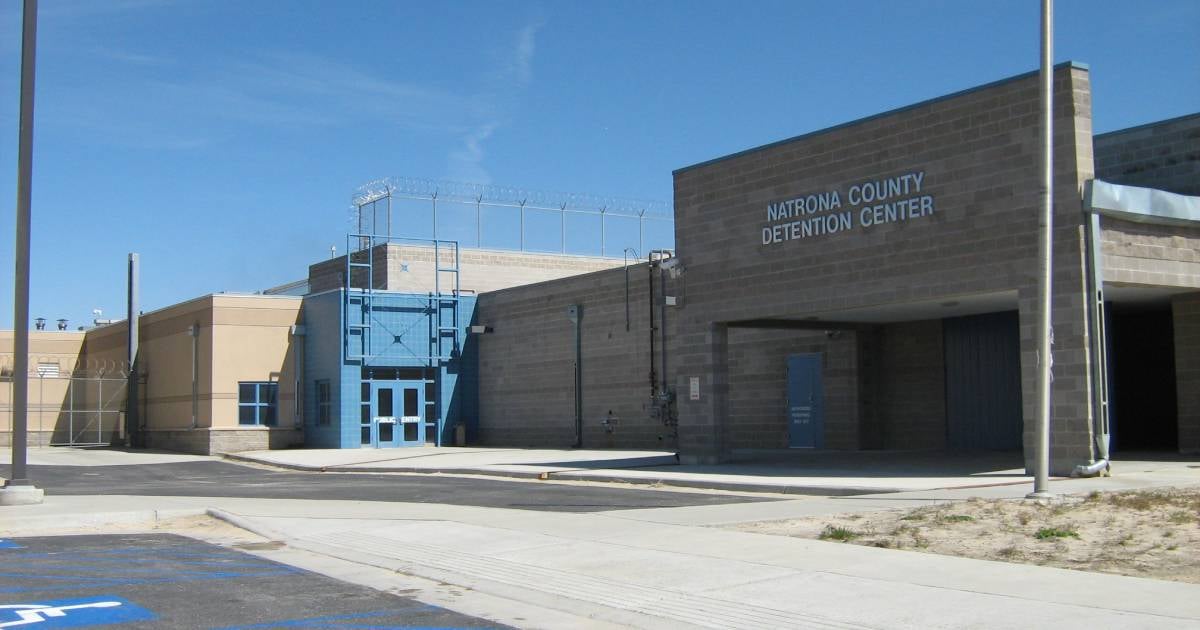
What started for Josué Rodríguez Pérez as a routine procedure with the Immigration and Customs Enforcement (ICE) in Miami has turned into a nightmare. He has been confined for over 40 days in a cell at the Natrona County jail in Casper, Wyoming, with no country willing to accept him and an unclear future ahead.
Rodríguez, who arrived as a teenager in the United States with his father to escape Fidel Castro's regime, has been in the country for over three decades. According to an interview with WyoFile, his life took a turn in 2012 when a conviction for credit card fraud caused him to lose his permanent residency. A judge ordered his deportation, but Cuba, like in many other cases, refused to accept him.
For eight years, he worked legally as a truck driver in Florida, built a family, and tried to rebuild his life. However, in June of this year, when he attended his annual appointment with ICE, he was detained along with more than a dozen Cubans, and a nightmare began that led him to be transferred between detention centers in Miami, Texas, Colorado, and finally, Wyoming.
“You want to die. You beg God not to wake up in the morning, feeling this isolated”, Rodríguez confessed in telephone interviews from prison to WyoFile.
Without a destination country
Although the courts ordered his deportation, not his imprisonment, the Cuban ended up chained, transferred from one center to another, and held without a defined direction.
ICE attempted to deport him to Mexico, but they never clarified why the neighboring country did not accept him. He was also not informed what the next step would be.
Uncertainty is growing because the Donald Trump administration is promoting agreements with third countries, including African nations such as Rwanda or South Sudan, where Rodríguez fears for his life. “With Trump, they can do whatever they want”, he said desperately.
Her sister, Monika Rodríguez, summarizes their experience starkly. “She has already served her time in prison, so she doesn't need any more years in prison. If she needs to be deported, so be it. Deportation,” she suggests.
At the age of 16, Rodríguez arrived in Miami with his family fleeing communism. Decades later, his life was marked by the loss of his first wife, a daughter, and a niece in a car accident. Overwhelmed by guilt, he fell into drugs and financial crimes.
However, in prison he found faith, studied, cared for other inmates, and left with the intention of rebuilding himself. "I felt free inside the prison, believe it or not. It was beautiful," he said. After his release, he financed his own truck, worked, remarried, and supported his two surviving daughters.
“Eight years of behaving well,” Monika recalled, until the new wave of immigration hit.
Broken family and fear of the future
In Florida, his wife, daughters, and sister live in distress, without income and uncertain about what will happen to him. “He is becoming increasingly desperate and depressed,” his family told WyoFile.
Rodríguez himself confessed that he considered a hunger strike. For 40 days in Casper, he did not see the sunlight or have any meaningful human contact. "It's terrible. I can't compare it to anything because I've never gone through something like this,” he recounted.
Meanwhile, the Supreme Court already determined in 2001 that the government cannot indefinitely detain an immigrant without a real deportation plan. However, attorneys warn that even if Rodríguez is able to be released, ICE could re-arrest him and attempt his deportation again.
"This is my home, but it no longer is."
Rodríguez's paradox encapsulates the struggle of thousands of Cubans who live in the hope of rebuilding their lives in the United States while constantly fearing being torn away from it.
“It’s not the same country, it’s not the same freedom I once knew”, he said sadly. “I feel a lot for this country. This is my home”.
Or at least it used to be. Now he just wants to escape from limbo and find a place that allows him to start over.
Filed under: