
Related videos:
The Cuban activist Ernesto Pérez Rodríguez has intensified his efforts to support the family of Anderson Matías, a baby only four months old who became motherless after the tragic passing of Lisandra Maceo García, who died due to complications experienced during childbirth.
Pérez Rodríguez, known for his humanitarian work, has been leading the campaign to support the children of Lisandra (who also had a seven-year-old daughter) who are now in the care of their paternal grandmother.
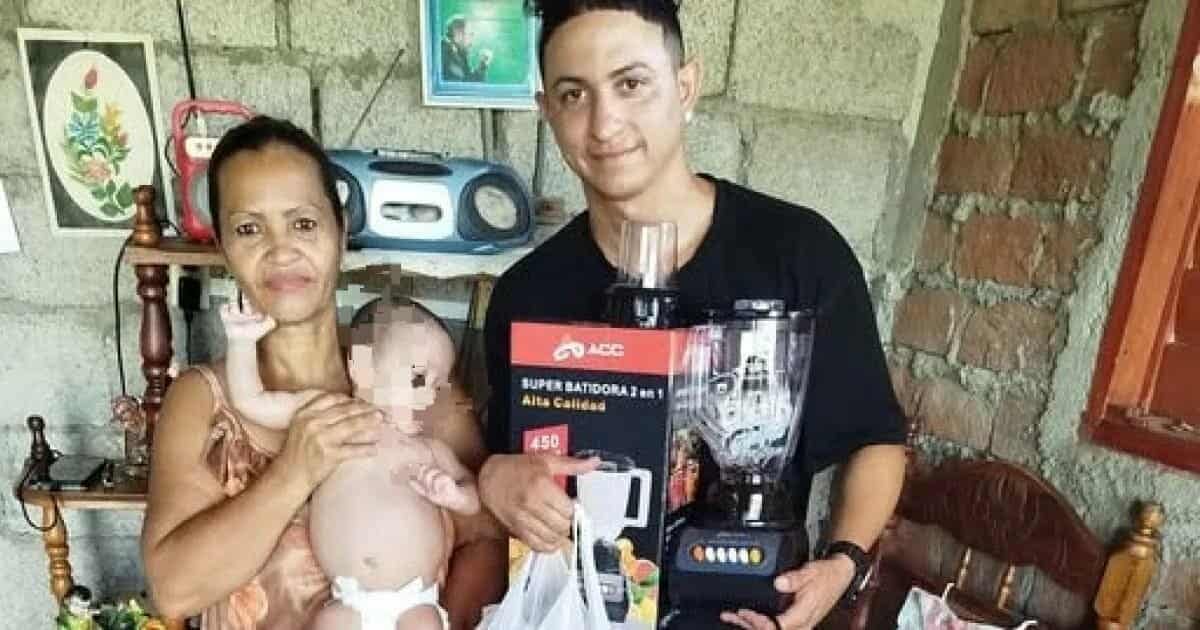
On Friday, Pérez Rodríguez visited Anderson Matías and his grandmother in Arroyo Ondo, a community in the province of Guantánamo, and gave them a new blender to help with the baby's food, as his grandmother wanted to start giving him puree.
"I decided to gift her a blender since they didn't have one. It cost 10,500 pesos, and it filled me with joy to see my grandmother's smile when she received it," he said on Facebook.
As a gesture of gratitude, the lady gifted him a "small bag with provisions," an act that the activist described as an example of her "kind heart and appreciation."
"It is impressive how solidarity and love are conveyed, even in moments of great sadness," he expressed.
The delivery is just one of the initiatives that have been implemented to support Lisandra's children.
Days earlier, the young man brought several 1 kg packages of milk, fruit purees, and sodas for the minor, and for the girl, he provided milk, candies, and 15,000 pesos sent by their paternal grandfather. With that amount, they were able to cover urgent needs, such as purchasing shoes and a backpack for school.
In addition to in-kind donations, the activist has organized a fundraising campaign to help the family obtain a decent home for the children.
Following the tragic death of her, more than one million Cuban pesos (about 2,500 dollars) were raised in order to purchase a house that would provide safety and comfort for the orphans.
However, Pérez Rodríguez calls on small and medium-sized enterprises (Mipymes) to collaborate in converting a portion of the funds into cash to facilitate the purchase of homes and other essential items such as appliances.
The case of Lisandra Maceo García has deeply touched the hearts of the Cuban community, both on the Island and abroad.
The 26-year-old young mother was in a vegetative state for three months after suffering a respiratory arrest for 35 minutes shortly after giving birth.
Her health deteriorated irreversibly, leaving her two children in a situation of extreme vulnerability: orphaned and living in precarious conditions, in a wooden house with a dirt floor.
This case has also highlighted the precarious conditions of the health and housing system in Cuba, where many families face immense difficulties in accessing proper medical care and a decent home.
Lisandra's story has become a symbol of struggle and resilience, inspiring many Cubans to join the cause and support orphans.
Thanks to the generosity of Pérez Rodríguez's supporters and the solidarity of the community, Lisandra's children are not only receiving emotional and material support, but they also have the opportunity to start a new life, with the hope that their mom, although no longer with them, can rest in peace knowing that they are well taken care of.
"Thank you all for your support; we will soon be able to deliver the little house that we have built with so much love for these children," concluded Pérez Rodríguez in his post, expressing gratitude to those who have made this act of solidarity possible, touching the lives of so many.
Frequent questions about solidarity in Cuba and the case of Lisandra Maceo García
Who is Ernesto Pérez Rodríguez and what is his role in the case of Lisandra Maceo García?
Ernesto Pérez Rodríguez is a Cuban activist known for his humanitarian work. In the case of Lisandra Maceo García, he has led a support campaign for her children, who were left orphaned after their mother passed away. Pérez Rodríguez has organized material and financial donations to improve the children's living conditions, including fundraising to purchase them a decent home.
How has the situation of Lisandra Maceo García affected the healthcare and housing system in Cuba?
The case of Lisandra Maceo García has highlighted the precarious conditions of the health and housing systems in Cuba. Her tragic death following complications during childbirth and the vulnerable situation in which her children were left have underscored the immense difficulties many families face in accessing adequate medical care and a decent home.
What kind of support has Lisandra Maceo García's family received since her passing?
The family of Lisandra Maceo García has received support through in-kind donations and fundraising campaigns. Food, appliances, and money have been provided to cover the basic needs of the children. Additionally, more than one million Cuban pesos have been raised to acquire a safe home for the orphans.
Why is solidarity important in cases like that of Lisandra Maceo García in Cuba?
Solidarity is crucial in cases like that of Lisandra Maceo García because it compensates for the deficiencies of the state system. The mobilization of citizens and supportive organizations allows families in extreme situations to receive the necessary support to improve their living conditions, especially when the State cannot guarantee basic resources.
Filed under: