
Related videos:
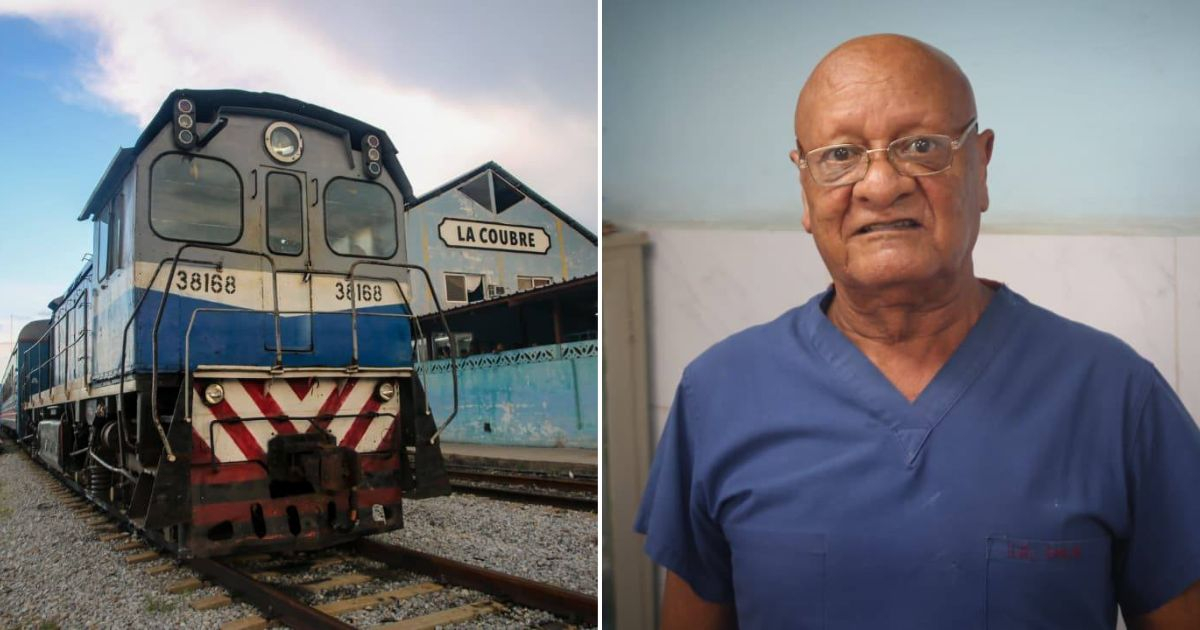
Carlos Manuel Echavarría Silva is the intensive care specialist responsible for assessing the physical and mental state of railway crews at the medical post of the La Coubre station in Havana, with the mission of ensuring that a train does not depart with a driver in poor condition.
“My role here at the medical station is to conduct preventive check-ups for the crew before the trip begins. They must leave without any alcohol in their system, in good overall condition, and physically fit, meaning they should be physically and mentally capable,” explained Eduardo Rodríguez Dávila, Minister of Transport, in statements published on Facebook.
Carlos works with three colleagues in 24-hour shifts: “If a crew member arrives with high blood pressure, they are not fit to drive. We declare them unfit, and someone else takes over the responsibility,” he explained.
Although its role is preventive, it is not underestimated: “It’s a beautiful job. You prevent chaotic situations that can arise from illnesses.”
Today, with years of experience in intensive care, he sees his work as a silent yet vital way to protect lives.
"What stands out the most is their physical exhaustion. They come in after working 20 or 18 hours..." comments the doctor, without mentioning that they, like the rest of the population, endure harsh living conditions due to food shortages, blackouts, water cuts, and other situations that make life precarious in Cuba.
In his free time, he focuses on what matters most: his home, his family, his peace of mind. "It is what it is," he says humbly.
But behind every journey that departs safely, there is him: the train doctor, in addition to the prayers of the passengers who plead not to suffer any accidents and also to avoid a breakdown, which are so common on the outdated Cuban railway lines that are also besieged by constant sabotage.
The Minister of Transportation recently shared on his social media the story of Carmen Miriam Jiménez Echavarría, a 26-year-old woman who, in a country where many dream of emigrating, has decided to stay and make the railway her life project. She left behind her passion for dance to become a train attendant on long-distance trains in Cuba.
In a country where public transportation is experiencing one of its worst crises, figures emerge that embody a deeply human work ethic and a commitment to service.
Norberto, a taxi driver from Viñales, has dedicated over half a century to driving along the Cuban roads, turning his car into a refuge and guide for lost travelers and residents with no other options.
At over 70 years old, his commitment is not driven by salary or recognition, but by the conviction that helping is also a form of everyday resistance.
Ricardo Palmero, in Havana, has been transporting people between neighborhoods, hospitals, and terminals for almost 40 years, even as fuel becomes scarce and prices fluctuate daily.
What drives him—according to his words—is the need for “someone to do the work that the State has stopped doing.” His taxi is not just a means of transportation, but a space for listening, emotional support, and even concrete solidarity when a passenger cannot pay.
Frequently asked questions about the railway system in Cuba
What is the role of the intensive care specialist on Cuban trains?
The intensive care specialist evaluates the physical and mental condition of the train crews to ensure they are fit to operate the trains. This includes checking for the absence of alcohol and ensuring that the drivers are in good physical and mental condition before starting the journey.
What challenges does the railway system in Cuba face?
The Cuban railway system faces numerous challenges, such as the obsolescence of the railway lines, frequent accidents and derailments, and deficiencies in infrastructure and maintenance. The deterioration of infrastructure and lack of adequate maintenance are common issues that affect the safety and punctuality of railway services.
How does the transportation crisis affect railway workers in Cuba?
Railway workers in Cuba face long working hours and harsh living conditions due to the transportation crisis. These issues include food shortages, blackouts, and lack of water, which contribute to the physical and emotional exhaustion of employees in the railway sector.
Filed under: