
Related videos:
Heartbreaking testimonies marked the arrival of 161 Cubans deported from the United States last week, including Yudierquis Reyes Merino, who was separated from her two-year-old daughter as she was unable to bring her to Cuba.
The woman reported to CNN that she was separated from her two-year-old daughter, born in the U.S., who could not be deported with her.
"I left my daughter, I lost her. They told me she was a U.S. citizen and could not leave the country," said Reyes.
For this mother, the immediate priority is to reunite with her daughter and rebuild the family separated by U.S. immigration policy. “Donald Trump is only three years old, I have the rest of my life. I will go after her, no matter if I get 20 years in prison,” she asserted.
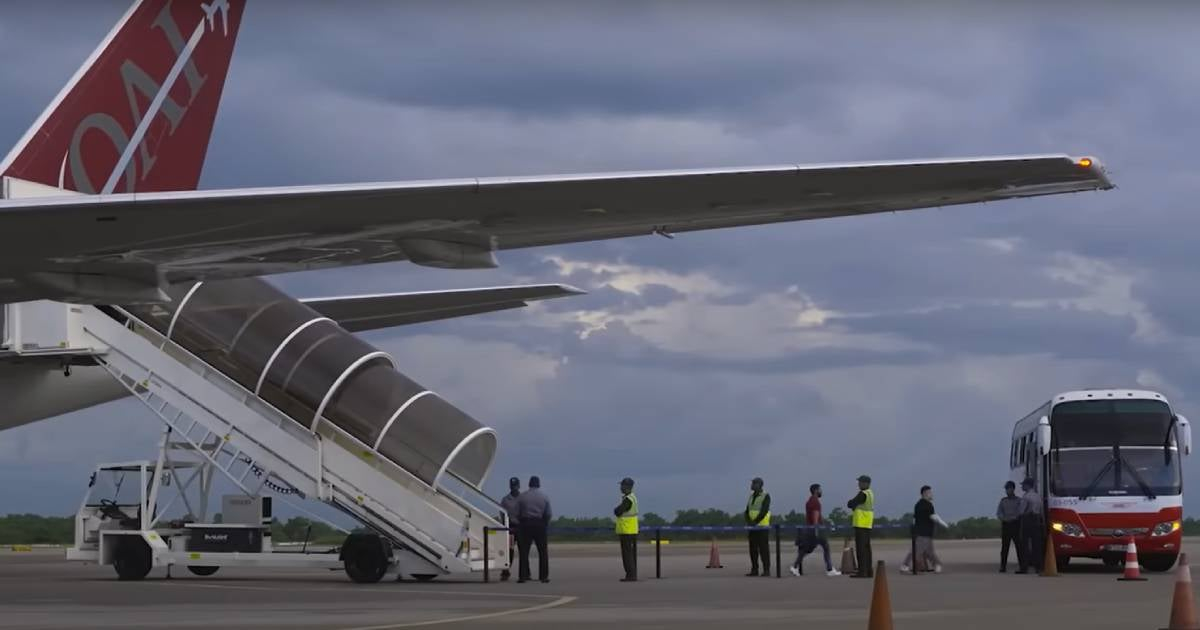
The report indicates that for many of the deportees, it was the first time they had set foot on Cuban soil in years. Upon their arrival at José Martí International Airport, they disembarked from the plane one by one to be reprocessed by Cuban authorities, displaying mixed emotions after weeks of detention and the difficult family separation.
Some appeared astonished after reuniting with their homeland, after years away and after weeks of detention in the United States, reported the outlet.
Another deportee, Tania Carbonell Cruz, recounted that after living in the U.S. for over three years with her children, she faced deportation due to changes in U.S. immigration policy and decided to return to avoid a prolonged imprisonment, leaving her family behind.
Deportations are occurring in the context of a policy change by the Trump administration, which revoked the preferential status of Cubans as political refugees, turning them into immigrants subject to detention and possible deportation.
For decades, Cubans had enjoyed accelerated access to legal residency in the U.S., a benefit that is now in jeopardy.
The deportees also face the challenge of reintegrating into Cuban society after years away, in a country marked by economic crisis and a shortage of basic resources.
Deportations will continue according to the plans of the U.S. administration, while Cuba continues to welcome its citizens despite internal economic difficulties and diplomatic tensions.
Frequently Asked Questions About the Deportations of Cubans from the United States
How many Cubans have been deported on the most recent flight from the United States?
A total of 161 Cubans were deported from the United States on the most recent flight, representing the highest number of deportees in a single flight to date.
Why have deportations of Cubans from the United States intensified?
Deportations have intensified due to changes in the immigration policy of the Donald Trump administration, which revoked the preferential status of Cubans as political refugees. They are now considered immigrants subject to detention and possible deportation, leading to an increase in repatriation flights.
What challenges do Cubans face when returning to the island after being deported?
Upon returning, the deported face the challenge of reintegrating into a Cuban society marked by economic crisis and a shortage of basic resources. Many encounter stigma and the uncertainty that drove them to emigrate.
What agreements exist between Cuba and the United States for the deportation of Cubans?
Deportations are carried out under the bilateral immigration agreements between Havana and Washington, which aim to deter irregular departures from the island and promote regular, safe, and orderly migration.
Why have some deported Cubans been separated from their families in the United States?
Some deported individuals, such as Yudierquis Reyes Merino, have been separated from their families because their children born in the United States are U.S. citizens and cannot be deported with them. This has led to fragmented families and a profound human drama.
Filed under: