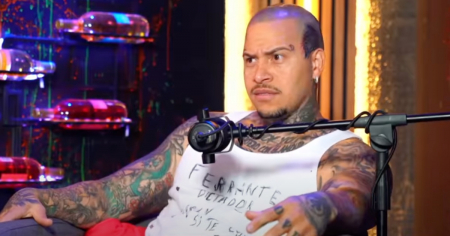
The interview with El Chulo on the show Destino Tolk has not only generated conversation but also sparked laughter, debate, and controversy in equal measure. The reggaeton artist not only talked about his wealth and lifestyle in Miami but also delved into sensitive territory when he was directly asked who, in his opinion, were the five reggaeton artists with the least money in the genre.
Without beating around the bush, El Chulo responded with specific names: Chocolate MC, Mawell, El Charly, and Candyman. The mention sparked a wave of laughter in the studio. It was one of the most talked-about moments of the interview, both for the mocking tone with which he said it and for what it implies within a Cuban urban scene filled with tensions.
Before revealing names, the artist had already made his financial status clear. He claimed to own three houses, three efficiencies, jewelry valued at half a million dollars, and a luxury car. As he explained, his monthly income exceeds 40,000 dollars, thanks to both his music and personal business ventures. "Should I keep going?" he said with a laugh.
The inclusion of Chocolate, Mawell, and El Charly in his list comes amid public confrontations with these artists, characterized by subtle jabs, cross statements, and a history of recent tensions. In the case of Candyman, his name generated even more surprise, as he has not been involved in any recent conflicts.
Social media exploded following the episode's release. Some users celebrated the moment as part of the show's usual "fun," but many others criticized the reggaeton artist for speaking publicly about his colleagues. Comments like "Thanks to Choco, you are who you are," "You went too far with Candyman," or "You bit the hand that fed you" were repeated across multiple platforms.
Others were more harsh: "You're sinking very low," "El Chulo is a traitor; Candyman always spoke well of him," or "Now he competes with money, not with music." Some even recalled, "El Choco was the one who brought him out of obscurity when he got out of prison in Tampa," and "That man is looking for trouble with those who helped him rise." The division of opinions has been clear: between those who see him as an unfiltered joker and those who believe he has crossed the line of respect.
Despite the criticism, the interview has been described by many as the best of the year on Destino Tolk. "I laughed like never before," "I couldn't stop laughing for a second," and "The best episode on the channel" are some of the most common remarks. Amid jabs, laughter, and unfiltered statements, El Chulo achieved what few can: remaining one of the most talked-about figures of the moment, both inside and outside the studio.
Frequently Asked Questions about El Chulo's interview on Destino Tolk
What did El Chulo say about other Cuban reggaeton artists in his interview?
El Chulo mentioned Chocolate MC, Mawell, El Charly, and Candyman as the reggaeton artists in the genre with the least money, in his opinion. This statement was met with laughter in the studio, but it also sparked controversy and criticism on social media.
How did El Chulo describe his economic situation during the interview?
El Chulo claimed to have three houses, three efficiencies, jewelry worth half a million dollars, and a luxury car. He also stated that his monthly income exceeds 40 thousand dollars, thanks to his music and other personal businesses.
What was the reaction on social media following El Chulo's statements?
Social media erupted with reactions following the interview. Some users criticized El Chulo for speaking publicly about his colleagues, while others viewed his remarks as part of the show's "fun." Opinions were split between those who saw him as an unfiltered jokester and those who believed he crossed the line of respect.
What recent conflicts has El Chulo had with other artists in the Cuban urban genre?
El Chulo has had public confrontations with El Charly, Chocolate MC, and the producer Roberto Ferrante. These tensions have been characterized by crossed statements, insinuations, and a history of recent clashes. The situation is reflected in the rivalry and ego battles within the Cuban urban genre.
Filed under: