
Related videos:
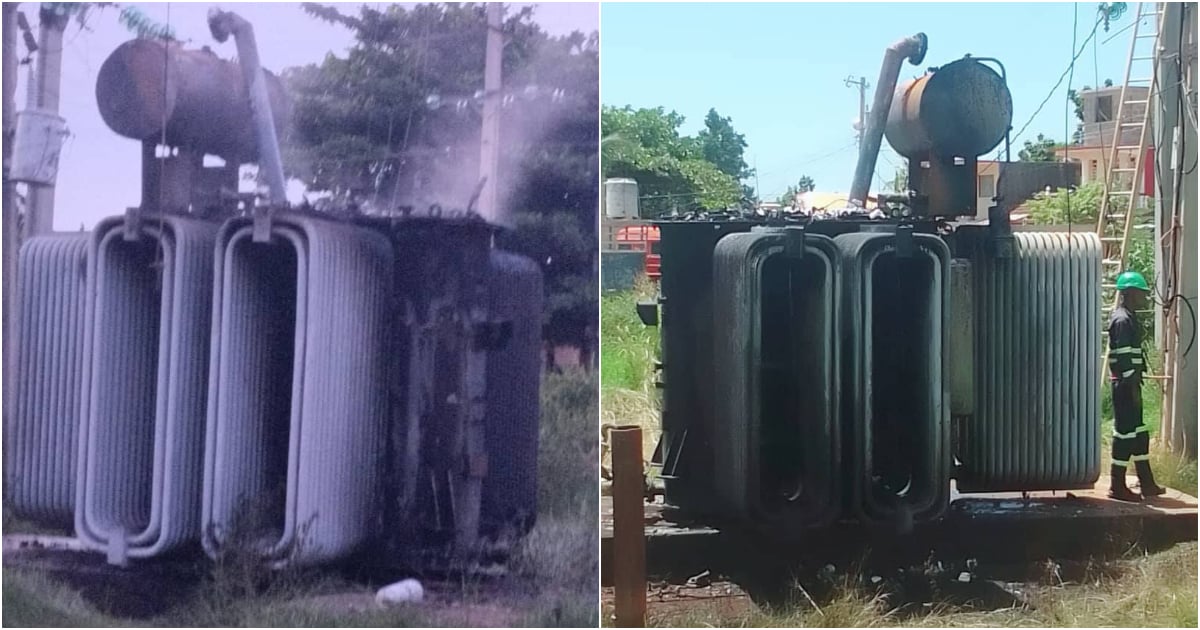
A man died on the night of September 4 in Santiago de Cuba after attempting to steal dielectric oil from a transformer on the Siboney Road. This incident also left an entire community without electricity and highlights the desperation of those who risk their lives in search of alternatives for survival.
Through its profile on Facebook, the provincial Electric Company confirmed that the citizen came into contact with the star closure of the equipment, resulting in a fatal accident and causing a power outage at the La Fortaleza farm, where customers were still without electricity at the time of reporting.
He also explained that transformer oil, known as dielectric or mineral oil, plays an essential role in the cooling and insulation of the electrical system, and its removal can lead to failures, explosions, and serious fire hazards. Additionally, it contains highly toxic substances that are very harmful to health.
The report specified that the matter is currently under investigation.
Although the authorities insist on classifying these acts as crimes against the community that cause losses for the country, the reality is that they reflect the deterioration of living conditions in Cuba, where the fuel scarcity and blackouts push the population towards deadly practices.
In this regard, independent journalist Yosmany Mayeta Labrada recalled on his Facebook account that the tragedy "is not an isolated event nor simply the result of individual desperation: it is the direct consequence of a system incapable of providing fuel, electricity, or the minimum conditions for a dignified life."
He reflected that the real problem does not lie with the transformers, but with government inefficiency and neglect that forces the people to risk their lives to survive.
In this regard, it was emphasized that the oil from transformers is not a household fuel, that handling it can cause fatal electric shocks, and its absence can lead to fires, explosions, and power outages.
In November, a theft of 300 liters of dielectric oil left the Dos Caminos community without electricity, in the municipality of San Luis, Santiago de Cuba, affecting both the population and the local economy.
At that moment, the official newspaper Sierra Maestra reported that such actions exacerbated power outages and affected thousands of citizens under extreme conditions, which would be met with a heavy hand by the government.
Weeks later, the authorities detained a resident of the Las Américas neighborhood in the municipality of Contramaestre for selling dielectric oil stolen from electrical transformers.
Frequently asked questions about the situation in Santiago de Cuba and electrical risks
Why are they trying to extract dielectric oil from transformers in Cuba?
The illegal extraction of dielectric oil reflects the desperation of the Cuban population due to the scarcity of fuel and constant blackouts. This oil is not suitable for household use, and its handling can be extremely dangerous, leading to deadly electric shocks and power supply failures, which increases the risk of fires and explosions.
What are the consequences of the removal of dielectric oil for the community?
The theft of dielectric oil leads to interruptions in electrical service, exposing communities to prolonged blackouts. Additionally, it increases the risk of failures and explosions in transformers, endangering residents' safety and further worsening living conditions on the island.
What is the role of the Cuban government in this critical situation?
The Cuban government has been unable to guarantee basic services such as electricity and fuel, forcing the population into extreme situations for survival. This inefficiency and governmental neglect have faced strong criticism, as they compel citizens to risk their lives in search of alternative solutions.
Filed under: