
Related videos:
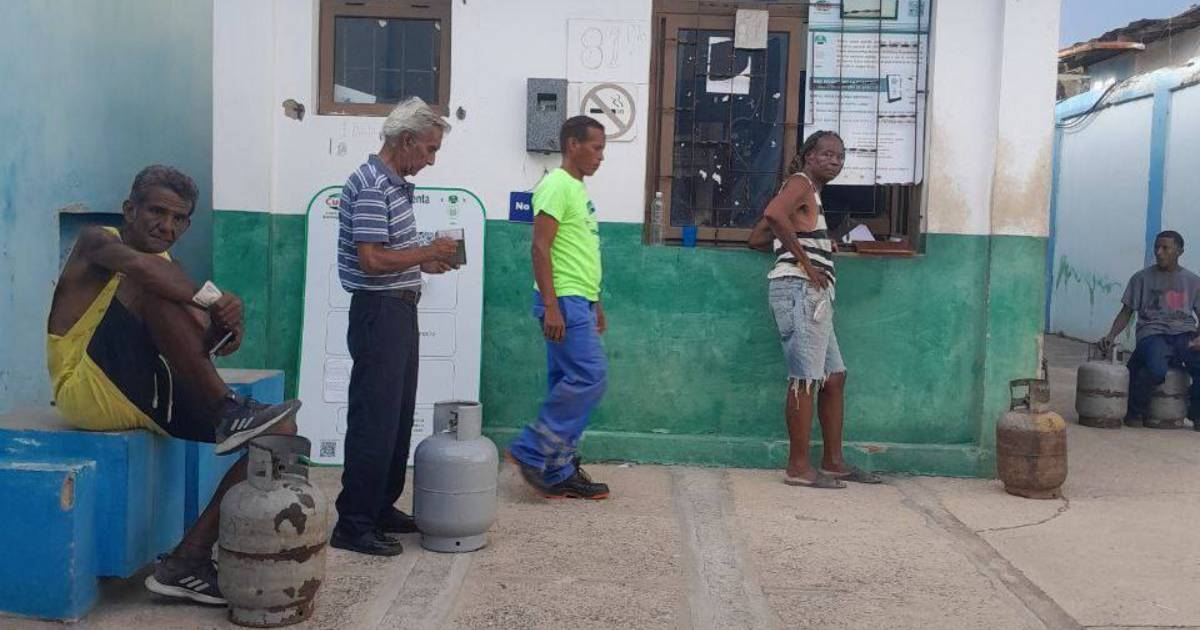
Residents of Santiago de Cuba have once again run out of liquefied gas less than two weeks after its sale was resumed, amid the severe energy crisis that the country is facing, which forces people to cook with more harmful and dangerous fuels for their health.
The state-owned company CUPET Santiago de Cuba informed this Tuesday, through its Telegram channel, that the inventory of the product in the province "has run out" and that distribution will only resume "when we have the product available."
The measure comes just 12 days after CUPET itself announced the resumption of sales on August 14, after several months of interruption.
At that time, it was noted that the distribution would be "gradual" and with limitations, although the extent of the shortage and the duration of the supply were not specified.
The shortage of liquefied gas—which serves as the primary cooking fuel for hundreds of thousands of families on the island—has become a recurring issue in recent years, characterized by a lack of imports and the government's inability to ensure stability in distribution.
The interruption particularly impacts households in Santiago that rely exclusively on bottled gas for cooking and do not have access to electric stoves or firewood, in a context where blackouts have also intensified.
The announcement has generated frustration among the population, which had hoped that the resumption of sales would bring at least some stability.
However, the scarcity remains a reminder of the fragility of basic services and the supply crisis affecting Cuba.
Nationwide, the situation is no different. The Liquefied Gas Company issued a mass notice to its customers, warning about the inability to ensure stability in the supply.
Days earlier, it was reported that several municipalities in Havana would experience a complete gas service cut, leaving thousands of families without gas amid increasingly frequent power outages.
Precarity is also reflected in the unequal treatment that citizens receive. In July, the case of a woman came to light who was denied a recharge on the grounds that she was "neither vulnerable nor bedridden."
The testimony, collected in a public complaint, revealed how bureaucrats invent arbitrary categories to justify shortages and exclude individuals from an essential resource.
In addition to the lack of supply, corruption exacerbates the problem. In Artemisa, a scandal erupted when the head of a distribution point faked the theft of 40 gas canisters to cover up a fraud.
The case highlighted how resources, already scarce, ultimately vanish amidst illegal maneuvers and complicity within the state system itself.
Frequently Asked Questions about the Liquefied Gas Crisis in Santiago de Cuba
Why was the sale of liquefied gas suspended in Santiago de Cuba?
The suspension is due to the liquefied gas inventory being depleted in the province. The state company CUPET Santiago de Cuba reported that distribution will only resume "when we have the product available." This situation reflects a broader energy crisis impacting the entire country due to a lack of imports and logistical issues.
What are the alternatives for cooking in Santiago de Cuba due to the gas shortage?
The alternatives are limited and often hazardous to health. Many families are forced to use charcoal or firewood, which is unhealthy and dangerous. Moreover, frequent power outages make it difficult to use electric stoves, leaving households in Santiago with very few viable options.
What has caused the liquefied gas crisis in Cuba?
The crisis is due to the lack of imports and financial issues of the Cuban state. The country relies heavily on the arrival of ships with liquefied gas, whose unloading is often delayed due to non-payment. This, combined with the low national production of LPG, has led to a critical shortage affecting the entire island.
Is there a distribution schedule for liquefied gas in Santiago de Cuba?
There is no clear schedule for the distribution of liquefied gas. Although CUPET had previously announced that the supply would be "gradual," no details were provided regarding the extent of the shortage or the duration of the supply. The lack of concrete information worsens the uncertainty and desperation of the population.
Filed under: