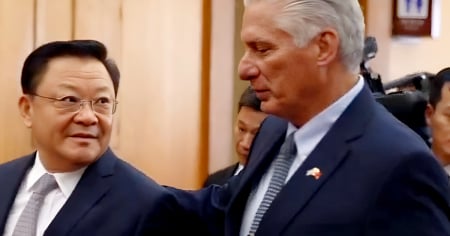
The Prime Minister of Nepal, K.P. Sharma Oli, resigned this Tuesday after two days of intense protests led by the youth movement known as "Generation Z," which took to the streets to denounce corruption and the recent ban on social media.
"I have resigned from the position of prime minister effective today (...) in order to adopt new measures towards a political solution and the resolution of issues in accordance with the Constitution, taking into account the extraordinary situation currently prevailing in the country," Oli stated in a letter addressed to the president.
Oli, leader of the Communist Party of Nepal (Unified Marxist-Leninist) (CPN-UML), took office in July 2024. He had previously served as the head of government from 2015 to 2016, and again from 2018 to 2021.
Outbreak of violence and first deaths
The protests began last week on social media with hashtags such as #NepoBabies, referring to nepotism and corruption within the political class. The trigger was the block on 26 platforms, including Facebook, Instagram, WhatsApp, and X, imposed by the government.
On Monday, the situation escalated with the death of 19 protesters and more than 300 injured, which triggered a wave of resignations within the Executive itself.
Attacks on residences and public buildings
This Tuesday, the violence intensified. Protesters set fire to the private residence of Oli in Balkot and vandalized the home of President Ram Chandra Poudel. The offices of the Nepali Congress and the CPN-UML itself were also attacked.
In a particularly tragic episode, Rajyalaxmi Chitrakar, the wife of former Prime Minister Jhalanath Khanal, died after suffering severe burns when protesters set her house on fire. She passed away at the Kirtipur Burn Hospital, bringing the confirmed death toll to 25.
Assault on Parliament and chaos in the capital
Despite Oli's resignation and the lifting of the social media ban early Tuesday morning, the situation did not calm down. Hundreds of young people stormed the Parliament of Nepal, which was subsequently set on fire.
The army, deployed in the area, did not intervene to stop the assault or extinguish the fire, according to a report by EFE.
Simultaneously, fires and attacks on the homes of other high-ranking leaders were reported, including former Prime Minister Sher Bahadur Deuba and his wife, Foreign Minister Arzu Rana Deuba.
Political crisis and call for an interim government
The Rastriya Swatantra Party (RSP) announced the mass resignation of 20 lawmakers, stating that Parliament has lost its legitimacy. They demanded the establishment of an interim civilian government and an independent judicial commission to investigate the repression.
International organizations such as Amnesty International and the United Nations condemned the violence and called for a peaceful resolution to the crisis. Meanwhile, air traffic was suspended nationwide for security reasons, as confirmed by the manager of Katmandu airport, Hansa Raj Pandey.
The Nepalese Army will assume responsibility for law and order starting at 10:00 p.m. local time this Tuesday.
The unrest is rapidly escalating across the country, and concerns about safety on the streets are also growing. Some media outlets report that there are protesters carrying small arms and grenades in the streets.
Frequently Asked Questions about the Fall of the Communist Government in Nepal and Its Implications
Why did the Prime Minister of Nepal, K.P. Sharma Oli, resign?
The Prime Minister of Nepal, K.P. Sharma Oli, resigned after two days of intense protests led by the youth movement "Generation Z." The demonstrations focused on denouncing corruption and the government's blocking of social media. The resignation was an attempt to adopt new political measures and address the issues in accordance with the Constitution.
What role did social media play in the protests in Nepal?
Social media played a crucial role in the protests in Nepal. The demonstrations began with hashtags like #NepoBabies, which gained popularity on social media in response to nepotism and corruption within the political class. The government's blocking of 26 platforms, including Facebook and Instagram, was a key trigger for the outbreak of the protests.
What impact did the violence have during the protests in Nepal?
The protests in Nepal resulted in the death of 25 people and over 300 injured. The violence escalated with attacks on residences and public buildings, including the burning of Oli's private residence and the Parliament of Nepal. The lack of military intervention during these events worsened the situation.
What measures have been requested following the political crisis in Nepal?
After the political crisis, the establishment of an interim civilian government has been requested. The Rastriya Swatantra Party called for an independent judicial commission to investigate the repression and demanded the collective resignation of 20 lawmakers, arguing that Parliament has lost its legitimacy. International organizations have condemned the violence and advocated for a peaceful resolution to the crisis.
Filed under: