
Related videos:
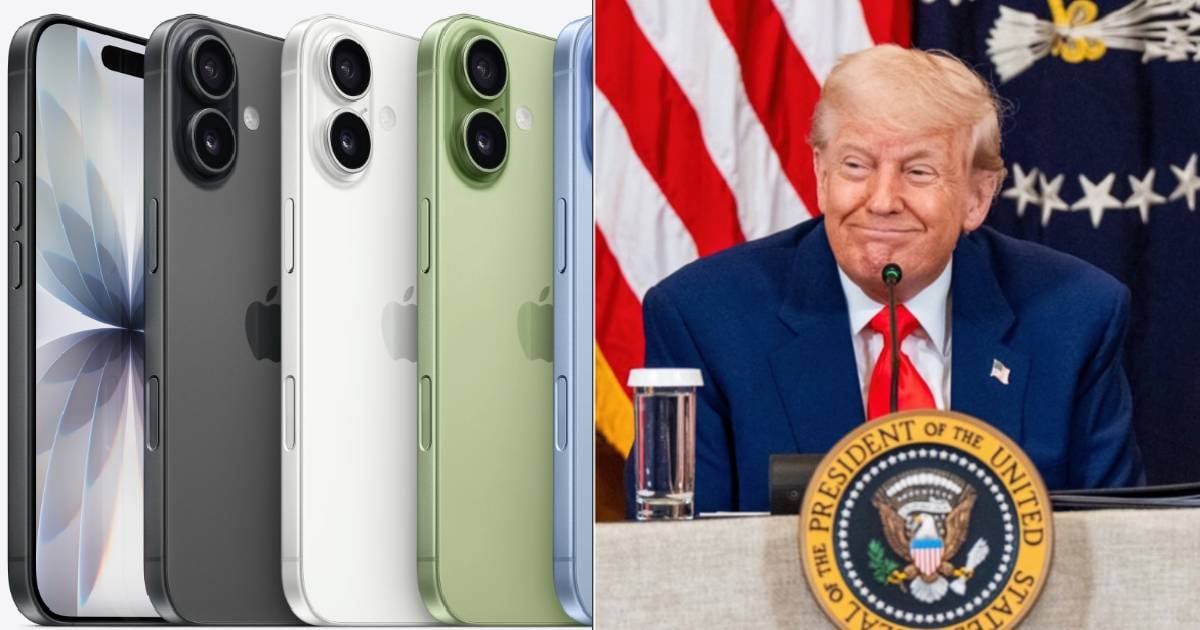
Apple unveiled its highly anticipated iPhone 17 this Tuesday, at an event marked by trade tensions between the company and the administration of President Donald Trump, who has pressured for devices to be manufactured in the United States rather than in Asia.
The new iPhone models arrive after Trump's tariff offensive, which imposed a 25% tax on products imported from China, including Apple phones.
Although the manufacturer has managed to evade the harshest sanctions, analysts anticipate that the company could implement its first general price increase in five years to maintain its profit margins.
So far, the base price of an iPhone has remained at $800, while the premium versions have been priced at $1,200. However, experts believe that the new models could cost between $50 and $100 more. The potential price increase comes just weeks after Google kept the prices of its Pixel line stable.
Although no revolutionary changes are expected, the iPhone 17 family will offer improvements in camera, battery, and a more streamlined design. The most striking announcement could be an ultra-thin model, named iPhone Air, in line with other product lines of the company.
According to the company, the iPhone 17 features a more durable design, a state-of-the-art camera system, the power of the A19 chip, the new iOS 26, and Apple Intelligence for AI-based functions that make a difference in daily use.
He noted that the iPhone 17 comes with a more durable Ceramic Shield 2, an 18 MP front camera with Center Stage perfect for group selfies, and a 48 MP rear camera system with 2x zoom and ultra-wide angle.
It also features the Clean Up function to remove unwanted objects from your photos, the powerful A19 chip with all-day battery life, and fast charging that reaches 50% in just 20 minutes.
Its 6.3-inch Super Retina XDR display with ProMotion 120 Hz promises a smooth experience, while the new Apple Intelligence introduces live translation, Genmoji, and writing tools. All of this is combined with iOS 26 and its Liquid Glass design, plus cutting-edge connectivity: Wi-Fi 7, 5G, eSIM, and satellite messaging.
However, experts point out that artificial intelligence remains a key issue. Apple did not manage to fulfill all the promises of innovation with the iPhone 16, such as a more advanced version of Siri, which led to lower sales than expected. The revamped assistant will be left for the next generation.
At the same time, Apple remains in the spotlight of U.S. trade policy. Both Trump and his Secretary of State, Marco Rubio, have insisted that production should move to the United States, something that experts consider unrealistic, as it would double or triple the current price of phones.
The CEO of Apple, Tim Cook, has tried to ease the pressure from the White House with commitments to invest $600 billion on U.S. soil and symbolic gestures towards Trump. So far, these maneuvers have allowed the company to dodge more severe retaliation.
Despite the uncertainty, Apple’s stocks have shown signs of recovery after an initial drop of 4% so far this year.
A recent court ruling also paved the way for the company to continue receiving $20 billion annually for keeping Google as the default search engine on its devices.
With the launch of the iPhone 17, Apple faces the challenge of proving that it can still innovate in the midst of the artificial intelligence era, while dealing with political and commercial pressures from Washington.
Frequently Asked Questions about the iPhone 17 and the Trade Tensions between Apple and the Trump Administration
What news does the iPhone 17 from Apple bring?
The iPhone 17 from Apple introduces improvements in camera, battery, design, and artificial intelligence technology. It features a 48 MP Fusion camera system, a 6.3-inch Super Retina XDR display, and the powerful A19 chip. It also boasts Ceramic Shield 2, an 18 MP front camera with Center Stage, and the Clean Up function for photo editing. Additionally, it includes iOS 26 and new artificial intelligence tools.
Why could the price of the iPhone 17 increase?
The price of the iPhone 17 could increase due to trade tensions between Apple and the Trump administration, which has imposed a 25% tariff on products imported from China. This has led Apple to consider a price increase to maintain its profit margins. Additionally, there is pressure to move production to the United States, which would further increase costs.
How does Trump's tariff policy affect Apple?
Trump's tariff policy significantly impacts Apple by increasing import costs from China, where most of its products are assembled. Although Apple has managed to secure some exemptions, the pressure to move production to the United States and additional tariffs raise economic uncertainty, which could affect the prices of its devices.
What measures has Apple taken to address trade tensions?
Apple has responded to trade tensions with significant investments in the United States, committing $600 billion to ease pressure from the White House. Additionally, it has diversified its supply chain, relocating part of its production to India to reduce dependence on China and mitigate the impact of tariffs.
Filed under: