
Related videos:
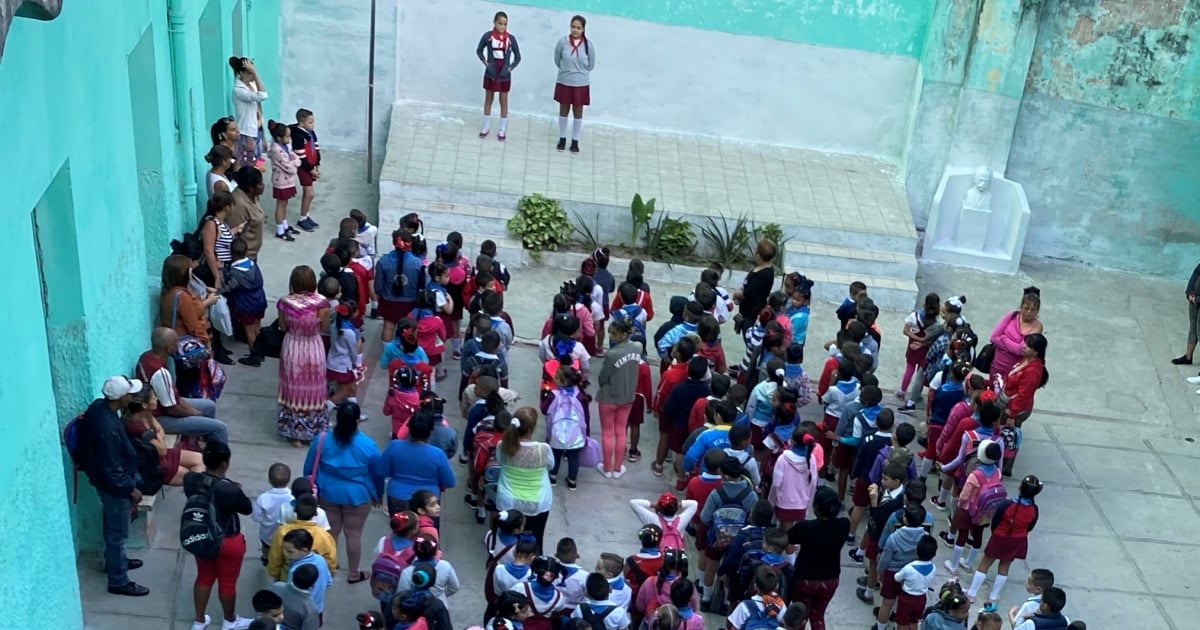
As Cuba faces its second general blackout of the year, leaving millions of people without electricity, the educational authorities in Villa Clara are attempting to convey a message of reassurance, stating that the teaching process is proceeding normally.
The official journalist Henry Omar Pérez reported that the General Directorate of Education in the province has taken measures to ensure the "vitality" of the schools.
Its director, Yamilet Herrera, stated that teaching is still ongoing in all institutions and that the internal centers have created conditions for lighting through alternative means.
Herrera added that management councils at the municipal and provincial levels have been strengthened and that there is ongoing communication with the authorities of the Party and the Government to monitor the situation.
He also warned that the situation could change depending on the development of the energy crisis, although he insisted that the priority is to maintain the protection of students and teaching staff.
In parallel, the spokesperson for the regime asserted that the University of Medical Sciences of Villa Clara continues its activities, according to statements from its rector, Calixto Orozco Muñoz, to the Cuban News Agency.
The official clarified that the institution has the necessary resources to sustain the educational process and ensure the feeding of the student residents.
He added that the center in Sagua la Grande is operating normally and that the sixth-year students play an essential role in the province's hospitals, where they directly support patient care.
Despite these reports of "normality," the reality is that the massive blackout worsens the already notable precariousness of the school year in Cuba.
The lack of electricity restricts access to basic teaching resources, hinders the feeding of boarding students, and impacts daily life in the classrooms.
While the official discourse insists on conveying stability, the energy crisis once again exposes the vulnerability of the education system on the island.
In the midst of the new massive blackout, the regime has insisted that the country's airports remain operational, as well as the various trains operating on the railway lines.
Frequently Asked Questions about the Energy Crisis and Its Impact on Education in Cuba
How does the general blackout affect the schools in Villa Clara?
The general blackout limits access to basic teaching resources and hampers the food supply for boarding students. Despite the official rhetoric that insists on normality, the lack of electricity exacerbates the precarity of the school year in Cuba, exposing the vulnerability of the educational system on the island.
What measures have the educational authorities in Villa Clara taken in response to the energy crisis?
The authorities have implemented measures to ensure the continuity of the teaching process, such as the use of alternative methods for lighting in internal centers. Furthermore, municipal and provincial leadership councils have been strengthened to monitor the situation. However, these measures may change depending on the evolution of the energy crisis.
How has the Villa Clara University of Medical Sciences responded to the electrical situation?
The Villa Clara University of Medical Sciences assures that it continues its normal activities, according to its rector Calixto Orozco Muñoz. The institution has the necessary resources to support the educational process and ensure the meals for the resident students.
What differences exist between the measures taken in Villa Clara and those in other provinces such as Artemisa?
In Artemisa, the Provincial Education Directorate has implemented flexible schedules and allowed students to attend without uniforms due to power outages. These measures aim to adapt the education system to the electricity crisis, in contrast to Villa Clara, where there is an insistence on maintaining an appearance of normalcy.
Filed under: