
Related videos:
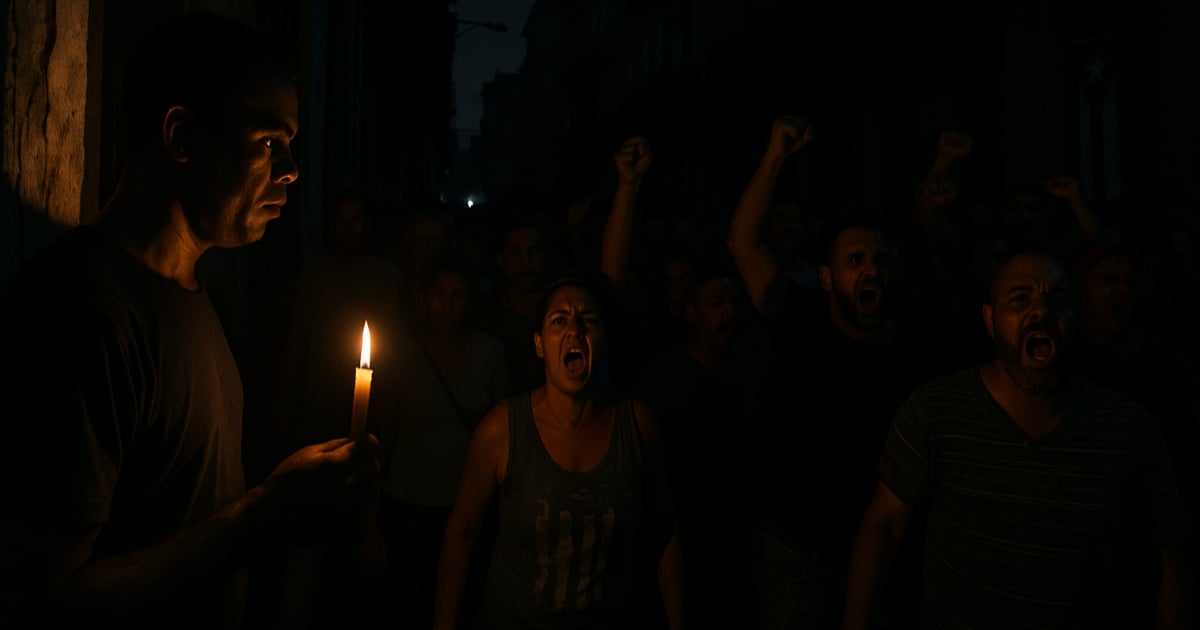
The collapse of the National Electric System this Wednesday at 9:14 a.m. caused a new blackout in Cuba and, along with it, a wave of reactions on social media that reflect the collective frustration and a complete loss of trust in the authorities.
Phrases like “this was expected,” “same old story,” or “the system that needs to fall doesn’t fall” dominated the comments posted on the Union Eléctrica (UNE) Facebook post, just minutes after the announcement. Within half an hour, the official message turned into a cathartic space for citizens who, amidst anger, sarcasm, and pain, not only denounced the energy collapse but also the moral and political collapse of the country.
"How delicious... we just need them not to be able to break the system anymore," wrote one user ironically. "We're already used to it. What kind of government is ruling us that can't handle anything?" complained another.
"What they need to overthrow is not the SEN, but the entire government," read a comment that garnered dozens of reactions. A woman posed a rhetorical question: "How long will this people be forced to live in this disaster?" while another demanded that "they let others who can resolve this negative situation take charge." "Why don't they just give away the country?" added an internet user with visible frustration.
The official publication from the UNE, brief and technical, contrasted with the flood of visceral responses from the public. Some mocked the language of the report: “Unexpected outage? They just pushed it,” wrote one person. “It didn't disconnect, they let us go,” said another. “The Piteras are up to their tricks,” commented a user referring to the Guiteras plant. “That’s as far as guaranteed summer went,” lamented a young mother.
Others pointed out the repetitive pattern of these blackouts: “It’s always the same in September. And then October and November,” a Habana resident quipped. “This country is in constant collapse,” stated a visibly affected man, before concluding: “If there were the slightest bit of shame in the ruling class, they would resign.”
The messages were not limited to a single platform. Even on the news post on the CiberCuba Noticias page, expressions of fatigue, anger, and helplessness multiplied. “This is a total disaster,” wrote one user. “There’s no solution to this, it has gone too far,” said another. “What’s happening in this country looks like a horror movie,” commented someone else. “The head of the system is the one that needs to collapse,” stated an internet user, while another summed up the collective sentiment with a simple phrase: “This is unbearable. We can't take it anymore.”
Amid the darkness, social media was filled with references to Nepal, dictatorships, protest songs, and direct calls for change. "There’s no solution to this. The only way out is for them to leave," one user commented. "It seems the UNE is in love with my family. The system went down on my youngest daughter's birthday on March 15. Today, on my birthday, it’s down again," shared another internet user. A young woman from Holguín remarked, "This was announced days ago at all the workplaces. We were told the system was going to go down. It wasn’t unexpected; it was planned."
In recent days, dozens of testimonies have sounded the alarm about the critical state of the electrical system, with reports of power outages lasting 40 hours, children suffering from the heat, mothers lacking resources to feed their children, and a shared perception that there is neither the will nor the capacity to reverse the situation. “Life has become a race against the clock every time the power comes on: washing, cooking, charging phones… surviving,” said a woman from Matanzas. Another citizen pointed directly at those responsible: “What needs to be stopped is not the Guiteras, but the incompetent people who run it.” A third person concluded bitterly: “They have plants, gasoline, food. The people, just endure.”
This Wednesday, the official confirmation of the collapse of the electrical system heightened a wave of frustration that has been building for months. Not only because of its magnitude, but because it confirms that the collapse of the electrical system has ceased to be an exceptional event and has turned into an unbearable routine. While the government announced that "the process of restoration has begun," Cubans, once again, were left waiting. In the dark. And without answers.
Frequently Asked Questions about the Energy Crisis in Cuba
Why are there frequent blackouts in Cuba?
Power outages in Cuba are a consequence of a continuous collapse of the National Electric System (SEN), worsened by a lack of investment, the technological obsolescence of the plants, and a deficit in energy generation. This problem is exacerbated by the scarcity of fuel and inadequate maintenance of the electrical infrastructure.
What has caused the recent blackout in Cuba?
The most recent general blackout was caused by the unexpected shutdown of the Antonio Guiteras Thermal Power Plant, the most important plant on the island. This incident is part of a series of collapses in the electrical system that have occurred repeatedly in recent months, reflecting the critical situation of the energy sector in Cuba.
What do Cubans think about the management of the electrical system?
Public opinion in Cuba reflects a deep discontent and frustration with the government's management of the electric system. Citizens express a lack of trust in the authorities, criticize the official misinformation, and report inequality in access to electricity, with comments that often call for structural changes in the country.
What are the social consequences of blackouts in Cuba?
Blackouts have a devastating impact on the daily lives of Cubans, affecting food preservation, access to water, children's education, and the health of vulnerable individuals. They also contribute to social unrest and despair, turning into a psychological and economic burden that the Cuban people find unsustainable.
Filed under: