
Related videos:
The confusion surrounding the causes of the power outage that left eastern provinces of Cuba without electricity on the night of September 7 grew on Monday, following a new episode of contradictions in the official communication.
The newspaper Sierra Maestra, the official organ of the Communist Party in Santiago de Cuba, initially published a note in which it attributed the collapse of the National Electric System (SEN) to sabotage at facilities in Nuevitas, citing Governor Manuel Falcón Hernández.
The text, which was also published by the government-affiliated Ahora, was removed minutes later and replaced with a shortened version that only reported on the restoration of the service.
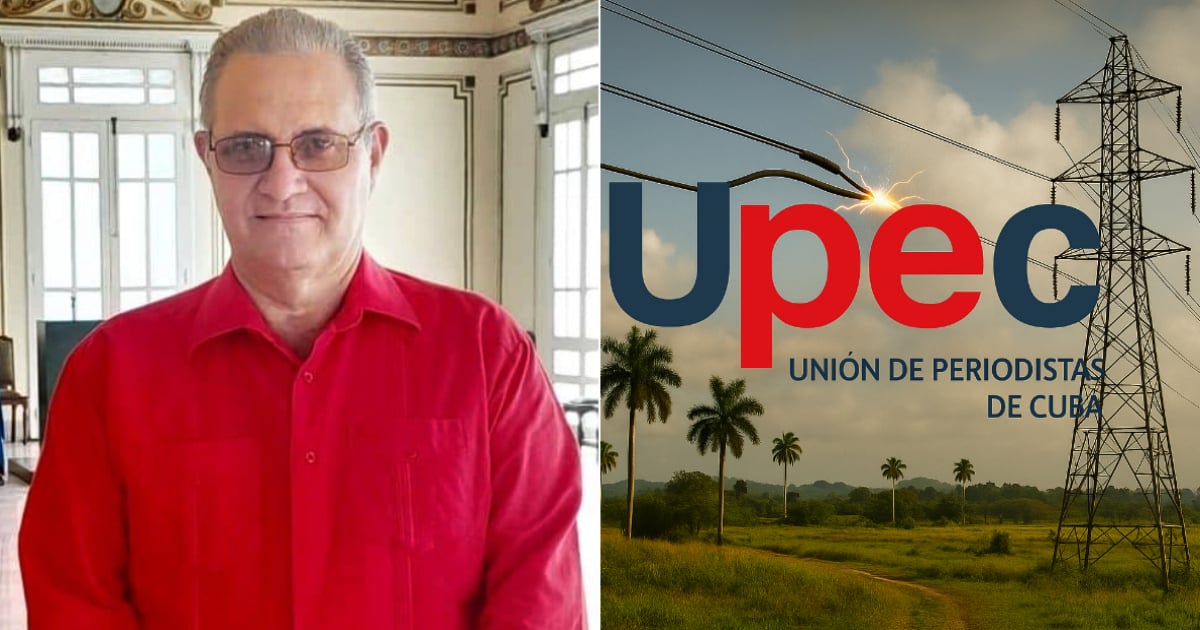
The surprising slip caught the attention of the Vice President of the Union of Journalists of Cuba (UPEC), Francisco Rodríguez Cruz, who commented under the new publication: “What was that?”, accompanying his words with a screenshot of the original note that mentioned sabotage.
The controversy escalated when the Provincial Government of Santiago de Cuba took to to refute the alleged version of the sabotage.
“The information recently spread on a fake profile in the name of the Governor (…) is false and lacks credibility,” he warned in a statement, in which he urged not to disseminate unverified content to avoid “confusion or harming the reputation of the parties involved.”
Falcón Hernández himself reacted on his official social media: “Fake profiles have been created in my name, spreading false information with the aim of misleading the public. Acts like this are reprehensible,” he said, thanking those who reported the fraudulent account.
Meanwhile, Granma provided the technical version of the event. According to engineer Lázaro Guerra Hernández, director of Electricity at the Ministry of Energy and Mines, the malfunction was a result of adverse weather conditions. One of the 220 kV lines in the region was already de-energized, and the storm caused the second line to go down, which led to a transfer cut and separated the eastern area from the rest of the country.
Guerra Hernández clarified that the failure was temporary and did not cause any permanent damage to the infrastructure. However, the temporary disconnection of the eastern provinces coincided with the shutdown of unit six of the Máximo Gómez thermoelectric plant in Mariel, although this unit was in the process of being restarted to synchronize again with the national grid.
According to the official from MINEM, at 1:25 a.m. on Monday, the service was restored in all eastern provinces, although a structural deficit of over 1,600 MW persisted, with limitations in both thermal plants and distributed generation.
The episode of the false sabotage once again highlights the fragility of the Cuban electrical system and the contradictions in the management of information during a crisis that keeps millions of Cubans on edge, enduring prolonged and recurring blackouts.
At the time of writing this note, none of the official media involved in the publication of the "fake news" regarding the alleged sabotage have offered explanations or apologies for what happened. Neither have authorities or leaders of the Communist Party, to which the official press is subordinate in the Cuban regime.
Filed under: